Field Guide · The Stable
Honda DCT Explained: The Automatic Motorcycle Transmission, Demystified
Fifteen years in, Honda's dual-clutch gearbox is still the only automatic that serious touring riders argue in favor of. Here is what it actually does and what it actually costs.
By The Outpost CrewUpdated 6 min read
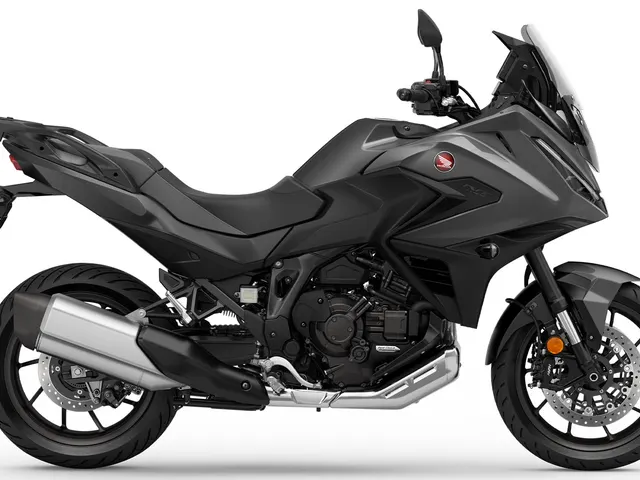
Honda’s Dual Clutch Transmission is a real automatic gearbox with two clutches inside it. One clutch handles the odd-numbered gears, the other handles the even ones, and the next ratio is always pre-selected and waiting. Changing gear means releasing one clutch and taking up the other, which happens fast enough that the bike keeps pulling through the shift.
Who it is for: touring riders, commuters, anyone who covers real distance in traffic, and riders for whom a clutch lever is a physical problem rather than a preference. Who it is not for: anyone who thinks of shifting as part of the ride, and anyone counting every pound and every dollar.
The one thing to know: there is no clutch lever on a DCT motorcycle. Not a hidden one, not a backup one. Honda deleted it, and everything the system does follows from that decision.
How Honda DCT is different from a scooter and from E-Clutch
A CVT scooter has no gears at all — a belt runs between two variable pulleys and the ratio changes continuously. It is smooth and it is cheap to build, and it caps out where the belt and the engine run out of ideas.
A DCT bike has six real gears, real ratios, and the engine braking that comes with them. It behaves like a motorcycle that shifts itself, not like an appliance.
And Honda E-Clutch, the newer system on the CB650R and CB750 Hornet, is a third thing entirely: a conventional manual gearbox where motors operate the ordinary clutch, with the lever and the foot shifter both still present. E-Clutch automates the clutch. DCT automates the whole transmission. If you want to keep choosing gears, you want E-Clutch. If you want to stop choosing them, you want this.
D, S, and the paddles
You get two automatic modes and a manual one.
D is the economy-minded automatic mode. It shifts up early, keeps revs low, and is the setting for the Tamiami Trail at 45 mph and for two hundred miles of interstate.
S holds gears longer and downshifts more eagerly, so the engine stays where the torque is. It is the mode for a twisty road or for towing a passenger and luggage up an overpass.
Manual hands every shift to paddles on the left bar. Riders who bought a DCT bike expecting to hate it often end up here for the first month, then drift into D and never go back.
The important part is that switching between them takes a thumb, mid-ride, at speed. You are not committing to an automatic for the duration of the journey.
What reviewers and owners actually say
The professional verdict on DCT has been unusually consistent for a decade and a half. RideApart’s Africa Twin piece is titled, without hedging, “The Honda Africa Twin DCT really is that good,” and the reason given in test after test is the same: on a long day, not shifting is restful, and the gearbox is better at choosing ratios than a tired rider is.
RideApart’s first ride of the Rebel 1100 — a DCT bike in the version we have on the floor — described the big parallel twin it shares with the Africa Twin as “one of the best engines in adventure bike history,” retuned for the street, and observed better than 50 mpg. Adventure-riding forums show the same pattern from owners: DCT loyalty is strongest among people who ride in traffic and people who ride all day.
The complaints are real and they are specific.
The low-speed lurch. Owners consistently raise it — parking-lot speeds, U-turns, walking the bike into a space, where the transmission is deciding between engaged and not. Honda has improved the behavior through software over successive model years, and it remains the thing to test for yourself in a parking lot before you sign anything.
Weight. DCT adds roughly twenty pounds over the same bike with a manual gearbox. The Rebel 1100 DCT carries about 509 pounds at the curb. On a cruiser with a 27.5-inch seat you barely notice it moving; on a tall adventure bike in sand you notice it a lot.
Price. Honda’s 2026 pricing puts the Africa Twin at $15,199 MSRP for the standard bike and $15,999 for the DCT version — an $800 gap for the transmission.
Which Hondas on our floor have DCT
Two motorcycles, as of September 2026.
The 2026 Honda NT1100 DCT is the sport-tourer built on the Africa Twin’s 1,084cc parallel twin, sold in the United States in DCT form and listed at $11,999, which matches its MSRP in our feed. It is a European long-haul favorite arriving here late; American coverage of it is still thin, so check the specific unit’s screen, luggage fitment, and connectivity on the spec card rather than on a European review.
The 2025 Honda Rebel 1100 DCT SE is the automatic cruiser, listed at $9,399 against an $11,099 MSRP for that model year. It gets its own page: Honda Rebel 1100 DCT review.
One thing to be careful about, because the shopping mistake is easy to make. Both Africa Twins in the building — a standard bike and an Adventure Sports ES — are listed at $15,199 and $17,799, and those are Honda’s published prices for the manual-transmission versions of those trims. Honda absolutely builds an Africa Twin DCT. Neither unit here is priced as one. Read the spec card on the actual bike before you assume.
There is one more place the badge shows up, and it surprises people: Honda puts DCT on ATVs. The FourTrax Foreman Rubicon and the FourTrax Rancher on the off-road side of the building both carry it, and if that is the direction you are heading, start with the Honda Foreman Rubicon DCT review or the Rancher review.
DCT in Southwest Florida
Two local realities make the case better than any spec sheet.
Traffic. Season runs roughly November through April and turns US-41 between Bonita Springs and Naples into a signal-to-signal crawl. On a manual bike that is several hundred clutch pulls in an afternoon. On a DCT bike it is none. That is the entire pitch, and in February it is a good one.
Heat. A big twin between your knees in August is a heat source no transmission fixes, but a hand that is not working a lever is a hand that can adjust a vent, and a rider not managing a friction zone at every light has attention left over for the pickup truck merging without a signal. Our Florida heat and rain playbook covers the rest of it.
The one honest counterweight: sand. A heavy adventure bike is a handful in soft going, and DCT adds to the weight rather than subtracting from it. That matters more on the beach-adjacent tracks than on the Trail.
What to check before you buy
Ask what the transmission adds to the service schedule for the specific model. It is a normal question with a specific answer per bike, and our service department can pull the maintenance chart for the unit in front of you rather than a generic one.
On recalls: none found for the 2025 Rebel 1100 in the NHTSA database as of September 2026. A 2021 radiator-cap campaign touched Rebel 1100 units from that model year only. Run the VIN of the bike you are actually looking at through nhtsa.gov/recalls — a model name is not a machine.
And if you have not settled the bigger question yet, the automatic motorcycles guide puts DCT next to E-Clutch, the hybrid, the scooters, and the electric bike, and says which rider each one is for. Whichever you land on, Florida still requires a motorcycle endorsement — an automatic transmission changes nothing about that, and the endorsement guide has the path.
Live inventory and today's price on the NT1100 DCT and Rebel 1100 DCT SE.
Quick answers
- How does Honda DCT work?
- Two clutches share one six-speed gearbox. One holds the odd gears, one holds the even gears, so the next ratio is already engaged and waiting. The bike swaps clutches to change gear, which is why shifts are quick and why there is no clutch lever on the handlebar at all.
- Is Honda DCT good?
- For touring, commuting, and heavy traffic, yes — it is the most convincing automatic motorcycle transmission anyone sells, and it has been in production since 2010. The common complaints are added weight, added price, and a low-speed lurch in parking-lot maneuvers.
- Can you shift a Honda DCT manually?
- Yes. Paddles on the left bar let you take every shift yourself, and you can leave the bike in manual mode permanently. What you cannot do is slip a clutch by hand, because there is no lever to slip.
- How much does Honda DCT add to the price?
- On the 2026 Africa Twin it is $800 — Honda lists the standard bike at $15,199 and the DCT version at $15,999. The gap varies by model, and some bikes, like the NT1100, are sold in the United States only as DCT.
- Which Honda motorcycles have DCT?
- On the Power Lodge floor in September 2026, the NT1100 DCT and a 2025 Rebel 1100 DCT SE. Honda also offers DCT on the Africa Twin, and uses the DCT name on the FourTrax Foreman Rubicon and Rancher ATVs in our off-road building.
- Can you stall a Honda DCT?
- No. There is no clutch lever to release badly and the transmission manages engagement itself, so the failure mode that ends most new riders' first month does not exist on a DCT bike. It is one of the strongest arguments for the system.