Review · The Trailhead
Honda Rancher Review: Every Trim Explained (4x4, DCT, IRS, EPS) and Which One to Buy
One nameplate, four very different machines, and a $3,000 spread between them. Most of the confusion in the mid-size quad class starts here.
By The Outpost CrewUpdated 8 min read
How this review was built: from Honda's published specs, professional road tests, owner reports, and what the Power Lodge crew sees on the showroom floor and in the service bay — not a first-hand test ride. Prices are MSRP unless the live listing below says otherwise.How we review →
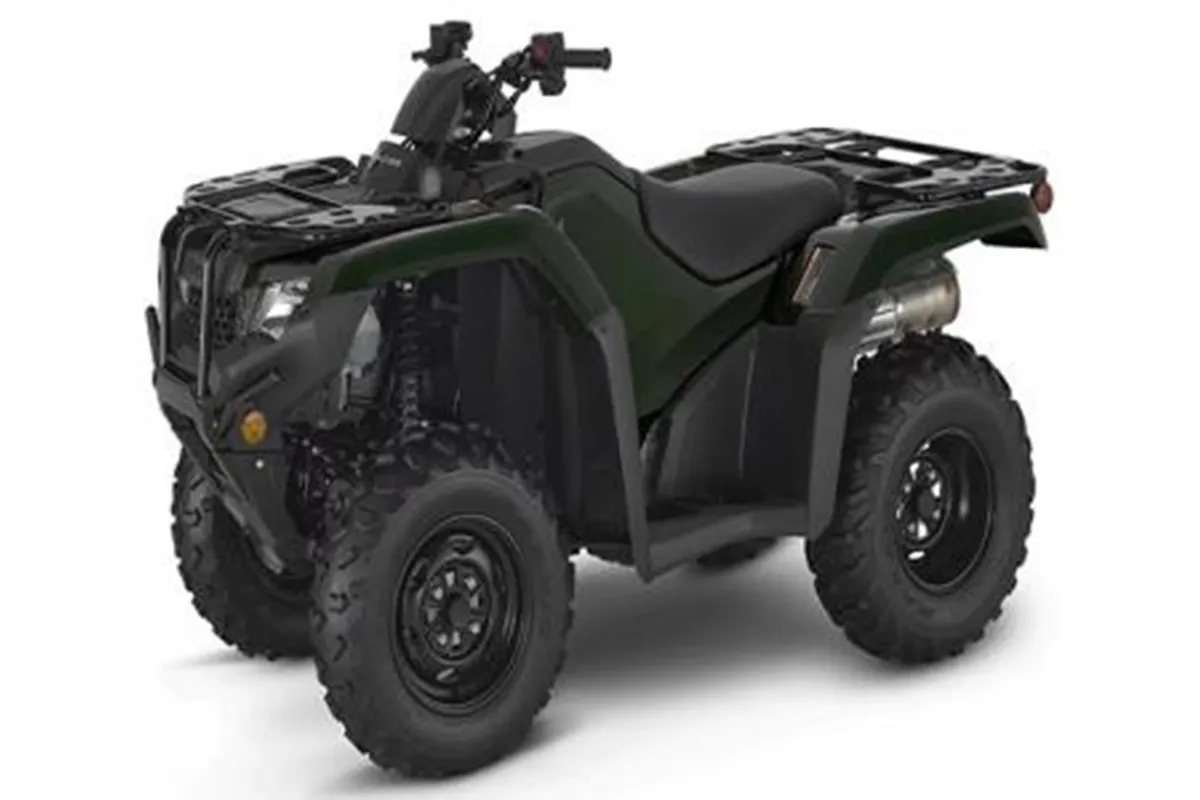
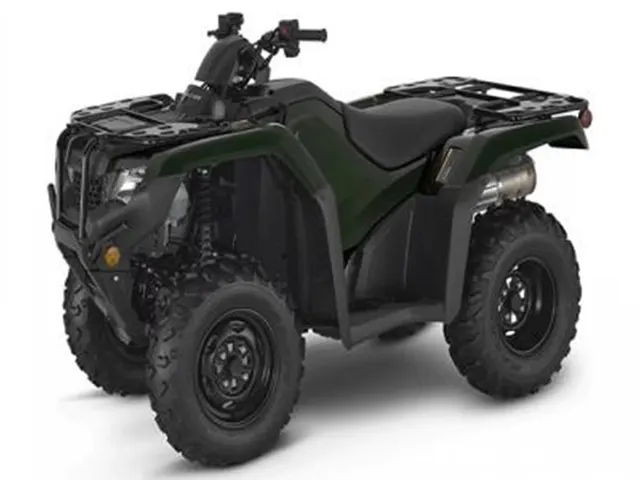
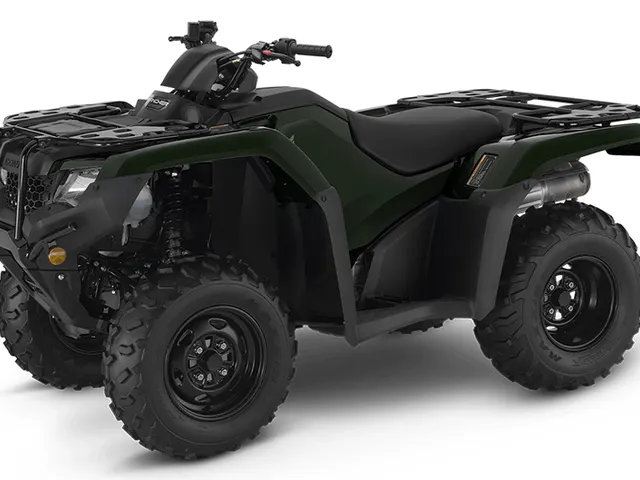
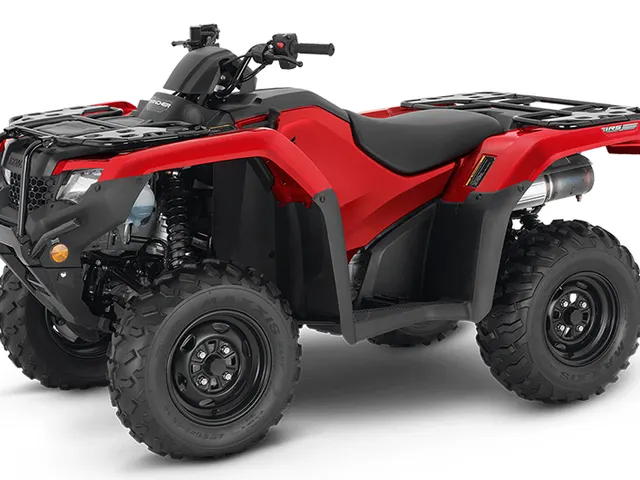
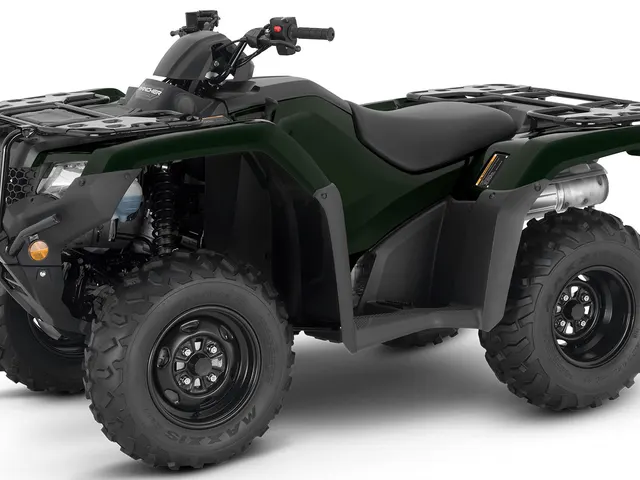
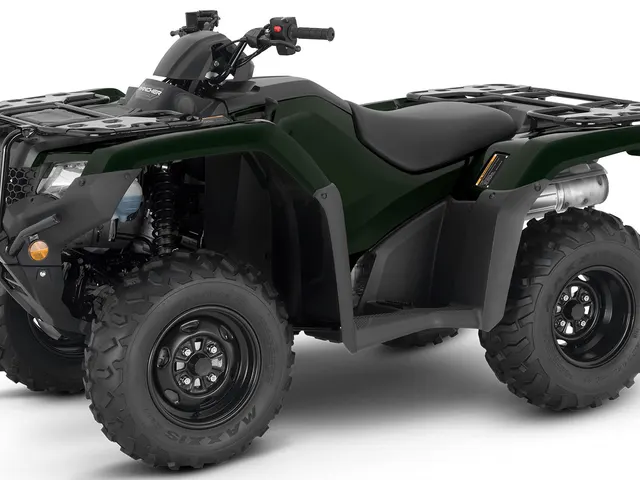
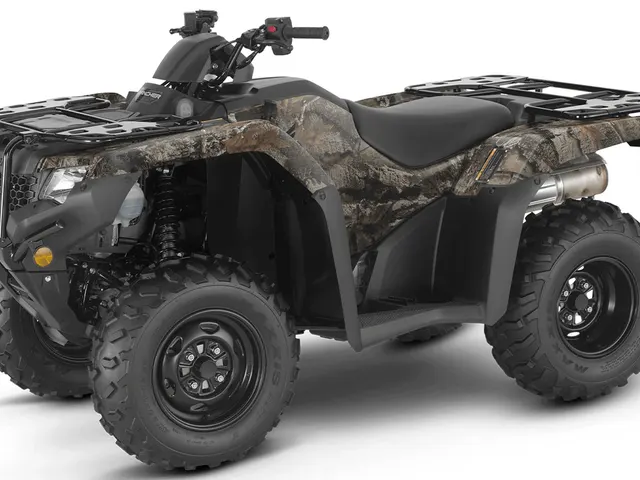
The Rancher is the quad that made “mid-size utility ATV” a category, and it is four machines wearing one badge. Two-wheel drive or four. Foot-shift or dual-clutch automatic. Swingarm rear or independent. Power steering or none. The spread on the Bonita Springs floor as of September 2026 runs from $6,249 to $9,799 as listed, and picking wrong is the most common mistake shoppers make in this class.
All four share the same core: a 420cc liquid-cooled single, direct front and rear driveshafts, a 615-pound curb weight in 4x4 form, and 66 pounds of front rack and 133 pounds of rear. There is no CVT belt in any of them, which is the reason people who have owned one buy another.
This page is the trim matrix, translated. Six Ranchers are in the building and they are not interchangeable.
What the Honda FourTrax Rancher is
Mid-size, single-rider utility ATV — the tier below the 518cc Foreman Rubicon and above the 229cc Recon. It is a chore machine: feed, fence, feeders, a light trailer, and a way down a two-track that a truck cannot use. It is not a sport quad and it is not a mud quad.
ATV Rider’s coverage of the 2026 FourTrax reveal puts the range start at $6,249 with manual or DCT transmissions available, and their follow-up on the 2027 models reports the line carrying over spec-identical with new pricing. In practice that means the 2026 and 2027 Ranchers on the floor are the same machine with different stickers.
| Engine | 420cc longitudinally mounted single, four-stroke OHV, two valves, liquid-cooled |
|---|---|
| Transmission | Five-speed manual with reverse (DCT automatic on upper trims) |
| Drive | 4x4 with direct front and rear driveshafts, TraxLok and a torque-sensitive front differential |
| Suspension | Independent double-wishbone front; swingarm with single shock rear (IRS on top trim) |
| Suspension travel | 6.7 in front / 6.7 in rear |
| Ground clearance | 7.1 in |
| Curb weight | 615 lb |
| Rack capacity | 66 lb front / 133 lb rear |
| Tires | 24 x 8-12 front / 24 x 10-11 rear |
| Dimensions | 82.8 in long × 47.4 in wide × 46.2 in high; 50-in wheelbase |
| Turning radius | 9.2 ft |
| Fuel capacity | 3.9 gal, including 1.3 gal reserve |
| MSRP | From $6,249 (2026 model, base 2WD manual) |
Source: powerlodgefl.com. Specs and pricing are the manufacturer's published figures and can change by model year.
The trim matrix, translated
Four decisions stack on top of each other, and each one costs money. Here is what each buys, with what is on the floor beside it.
| Trim | Drive | Transmission | Rear suspension | EPS | On the floor, as listed |
|---|---|---|---|---|---|
| FourTrax Rancher | 2WD | 5-speed foot-shift | Swingarm | No | 1× 2026 at $6,249 |
| Rancher 4x4 | 4x4 TraxLok | 5-speed foot-shift | Swingarm | No | 2× 2026–2027 at $7,849–7,899 |
| Rancher 4x4 Automatic DCT EPS | 4x4 TraxLok | 5-speed DCT automatic | Swingarm | Yes | 2× 2027 at $8,649 |
| Rancher 4x4 Automatic DCT IRS EPS | 4x4 TraxLok | 5-speed DCT automatic | Independent | Yes | 1× 2026 at $9,799 |
The first jump — 2WD to 4x4, roughly $1,600 as listed — is the one nobody should skip in this state. A two-wheel-drive quad is a fine yard machine and a poor lease machine, and wet-season Florida turns the second job into the first one faster than you expect.
The second jump, foot-shift to DCT, is about $800 as listed and buys two things: the automatic and the power steering that comes with it. Honda does not sell EPS on the foot-shift trims. On a 615-pound quad with a loaded front rack that bundling matters more than the transmission does.
The third jump, to independent rear suspension, is the smallest change on paper and the largest one under you. Every other Rancher runs a swingarm rear with 6.7 inches of travel; the IRS trim lets the rear wheels move separately. If your ground is rutted rather than graded, that is where the money goes.
Engine and performance
Four hundred twenty cubic centimeters, one cylinder, liquid-cooled, fuel-injected, mounted longitudinally so the crank lines up with the driveshafts. Honda publishes no horsepower figure, so treat quoted numbers as guesses. It is a torque-first engine with a low, narrow usable band — correct for a work quad and unremarkable anywhere else.
The transmission choice is the real character decision. The foot-shift five-speed is the simplest driveline in the building: an automatic-clutch gearbox you shift with your boot, with reverse, and almost nothing to go wrong. The DCT is the same five gears with two clutches and a computer, shifting itself in automatic or holding a gear on the paddles. Both drive through shafts. Neither has a belt.
That last point is worth one sentence and not more, because it is the subject of its own page: in a state that spends five months wet, a driveline with no CVT belt gives the wet season one less thing to ruin. The trade-offs in both directions are on CVT belt versus gear drive, explained.
One figure this page will not give you: a tow rating. Honda’s rec-utility page was unreachable during this research pass, and the OEM specification sheet on the dealer listing does not publish a towing number for the Rancher. Rather than repeat a figure we cannot source, we are leaving it out. Ask for the owner’s manual figure on the specific unit before you hitch anything to it.
On the trail and on the property
Seven and one-tenth inches of ground clearance and 6.7 inches of travel at both ends is a modest, honest setup. The Rancher goes down a graded grove road comfortably, crosses a wet pasture without drama, and gets pushed around by deep ruts in a way the Foreman Rubicon does not. The 9.2-foot turning radius is genuinely tight and pays off every time you are working a fence line.
The rack numbers are the ceiling that catches people out. Sixty-six pounds on the front and 133 on the rear is modest by big-bore standards and typical for this displacement class. A sprayer, a feed bag, a chainsaw, a cooler: yes. Two bags of concrete on the back rack: no, and the suspension will tell you before the rack does.
At 47.4 inches wide it threads gaps a side-by-side does not, which is the whole argument for buying a quad in the first place. That argument, in full, is our ATV versus UTV buyer’s guide.
What the Rancher is not built for is deep water and mud-park duty. No snorkel, 24-inch tires, 7.1 inches of clearance. Riders headed that direction should read our mud and sand setup guide and be honest about which machine they are actually shopping for.
What reviewers and owners say
The enthusiast press treats the Rancher as settled furniture, which is its own verdict. ATV Rider covers the pricing and the carryover status rather than re-testing the machine, because there is nothing new to test. No independent instrumented test of the current generation surfaced in this research pass.
Owner sentiment is where the reputation lives. Honda ATV boards treat the Rancher as the default reliability pick in the class, and the traffic skews toward maintenance how-tos rather than problem threads — people asking how to do a valve adjustment, not asking why the machine stopped. Thread-level detail was not reachable during this pass, so take that as the shape of the discussion rather than a survey of it.
The consistent criticism is not about durability. It is about equipment: no winch at any trim, no power steering below the DCT trims, and a spec sheet that reads thin next to what the value brands include at the same money. That criticism is correct, and it is the entire subject of the CFMOTO comparison below.
Living with it in Southwest Florida
Wash it after brackish or muddy work and chase the water back out of the brakes and boots. Grease on schedule. Keep it shaded — UV is the patient enemy of every seat and fender in this county. A geared driveline shortens the service list; it does not empty it.
The 3.9-gallon tank, with 1.3 gallons of it reserve, is small for a full day on a big lease — plan fuel or carry it. And between June 1 and November 30, a 615-pound quad you can push, winch, or trailer easily is a useful thing to own the week after a storm; the rest of that kit is on our hurricane prep guide. Titling is a title and no plate — see OHV title and registration.
Recalls and known issues
None found for the current-generation Honda FourTrax Rancher in the CPSC recall database as of September 2026. Off-highway vehicles are recalled through the Consumer Product Safety Commission rather than NHTSA, so search cpsc.gov and saferproducts.gov, and register the VIN with Honda so notices reach you.
Used buyers should know one historical campaign: recall #13-713, an expanded 2013 action covering TRX420 FourTrax models for a suspension weld that could fail and cause a crash. It does not reach current units, but it is worth running a VIN against on anything from that era.
Price and what is on the floor
The 2026 Rancher range opens at $6,249 MSRP and tops out at $9,099 for the DCT IRS EPS trim. On the Bonita Springs floor as of September 2026 there are six Ranchers: one 2026 base at $6,249, two Rancher 4x4s at $7,849 and $7,899, two 2027 DCT EPS units at $8,649, and one 2026 DCT IRS EPS listed at $9,799 — a listing above that trim’s $9,099 MSRP, quoted here exactly as listed. Freight, prep, and Florida sales tax are separate; the math is on our sales tax guide.
How it compares
Inside Honda’s range, the step up is the Foreman Rubicon: 518cc instead of 420, IRS and DCT and EPS standard rather than optional, 9.7 inches of clearance, and a published 1,322-pound tow rating. It costs roughly $1,150 more as listed than a Rancher DCT EPS, and for anyone whose ground is genuinely rough it is the better buy.
Across the floor, the comparison that actually happens is the CFMOTO CFORCE 600, and it is not close on equipment: 44 published horsepower, speed-sensitive power steering, a 3,500-pound winch, alloy wheels, and 1,500 pounds of towing, listed under $7,200 for a 2026 unit. That is Rancher 4x4 money for a considerably longer spec sheet. The Honda answers with a geared driveline, a parts network nobody worries about, and resale that has never needed defending. We put the two side by side on CFORCE 600 versus Honda Rancher.
Yamaha’s Kodiak 450 is the third name in the conversation, at $6,899 MSRP for the 2027 base model, with an Ultramatic CVT — belt-driven, but with a reputation for belt life that is the exception in this class.
Highs
- Geared foot-shift or DCT driveline with no CVT belt
- Four trims cover a genuine $3,000 range of needs
- 47.4 in wide and a 9.2-ft turning radius for tight work
- Reliability reputation and parts availability nobody questions
Lows
- No winch at any trim and no EPS below the DCT trims
- Honda publishes no horsepower or tow rating we could source
- 7.1 in of clearance and 6.7 in of travel limit rough ground
- Value brands include far more equipment at the same price
Six on the floor in Bonita Springs across all four trims, with live pricing.
Quick answers
- Is the $6,249 Honda Rancher a 4x4?
- No. The base FourTrax Rancher at $6,249 MSRP for the 2026 model is two-wheel drive with a five-speed foot-shift gearbox. Four-wheel drive starts at the Rancher 4x4, listed at $7,849 to $7,899 on the Bonita Springs floor as of September 2026.
- What is the difference between the Honda Rancher DCT and the manual?
- The manual is a five-speed foot-shift gearbox with reverse. The DCT is a five-speed automatic dual-clutch with the same gears, shifting itself or on paddles. Both are geared and shaft-driven; neither uses a CVT belt. DCT trims also add electric power steering.
- Which Honda Rancher has independent rear suspension?
- Only the Rancher 4x4 Automatic DCT IRS EPS, the top trim. Every other Rancher uses a swingarm rear with 6.7 inches of travel. If ride quality over rutted ground is the priority, IRS is the trim line that matters most.
- How much does a Honda Rancher weigh?
- 615 pounds curb weight in 4x4 form, per Honda's specification sheet, on an 82.8-inch-long body 47.4 inches wide with 7.1 inches of ground clearance and a 9.2-foot turning radius.
- Is the Honda Rancher a good first ATV?
- It is the class benchmark for a reason: geared drive with no belt, a 420cc engine that is hard to get in trouble with, and parts availability nobody questions. The trade is equipment — no winch and no power steering below the DCT trims, where value brands include both.