Head-to-Head · The Stable
Yamaha XMAX vs Honda PCX vs Honda ADV160: Which Scooter for Bonita–Naples Life?
Two of these are excellent surface-street machines. One of them actually belongs on I-75. Which sentence describes your commute is the entire decision.
By The Outpost CrewUpdated 7 min read
How this review was built: from Yamaha's published specs, professional road tests, owner reports, and what the Power Lodge crew sees on the showroom floor and in the service bay — not a first-hand test ride. Prices are MSRP unless the live listing below says otherwise.How we review →
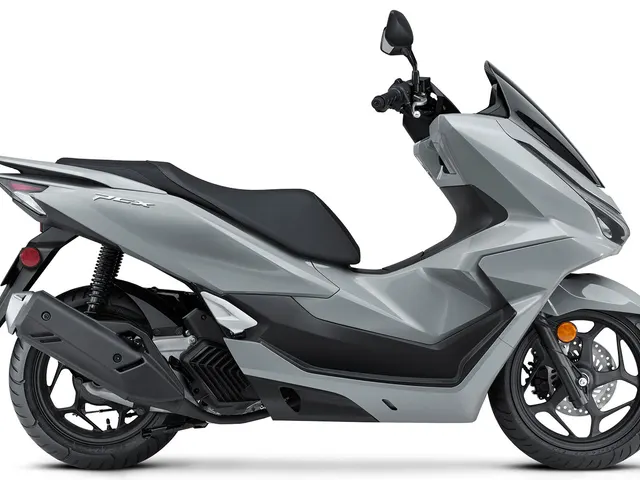
If your commute touches I-75 or Alligator Alley even briefly, buy the 2026 Yamaha XMAX and stop reading. If it does not, the 2026 Honda PCX is the better-value machine and the 2027 Honda ADV160 is the same scooter with better manners on bad pavement.
That is the whole comparison, and it is decided by 135cc. The XMAX runs a 292cc engine; both Hondas run 157cc. Everything else — storage, seat height, dash, price — is secondary to whether the machine can hold traffic speed on a road posted at 70.
One legal point before the specs, because it catches people: all three of these are motorcycles under Florida law. Not mopeds. That means an endorsement, a tag, and the helmet and eye-protection rules that come with the word. The full sorting is in Florida scooter and moped laws, which is the page to read before you buy any of them.
The short version
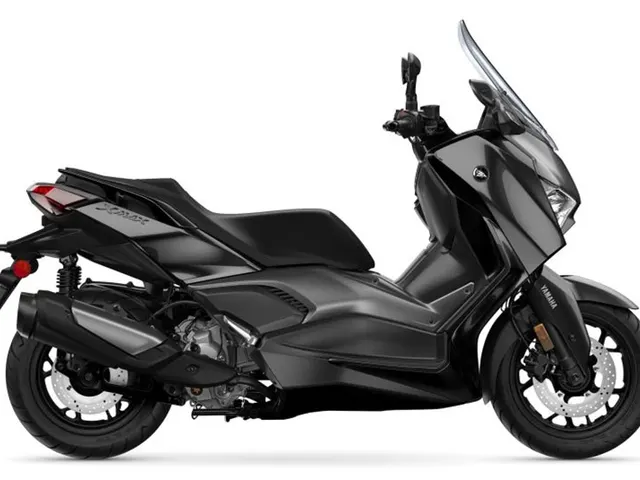
- XMAX for highway commutes. 292cc, a genuine 75-plus mph cruise per maxi-scooter testing, the biggest storage, and the best dash. It is also about $2,050 more than the PCX as listed.
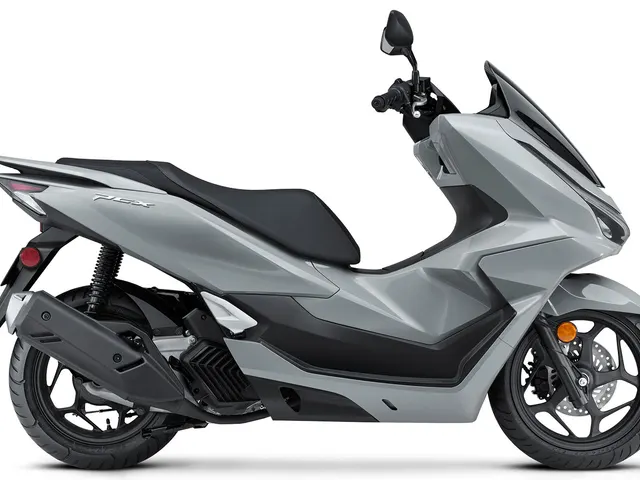
- PCX for surface-street value. 157cc, roughly 281 pounds, the lowest price of the three, and a fuel-economy record no car answers.
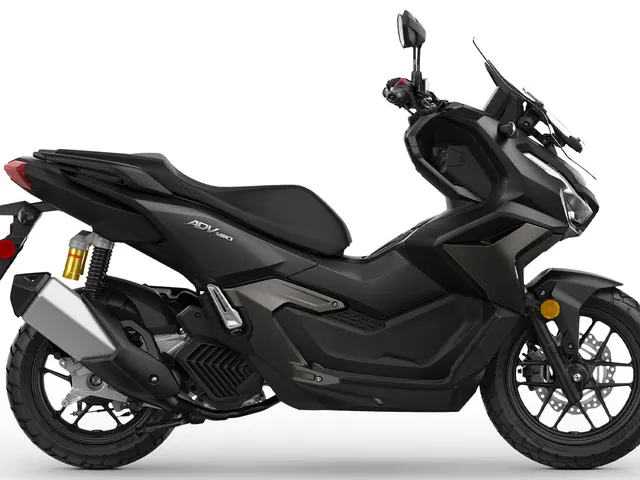
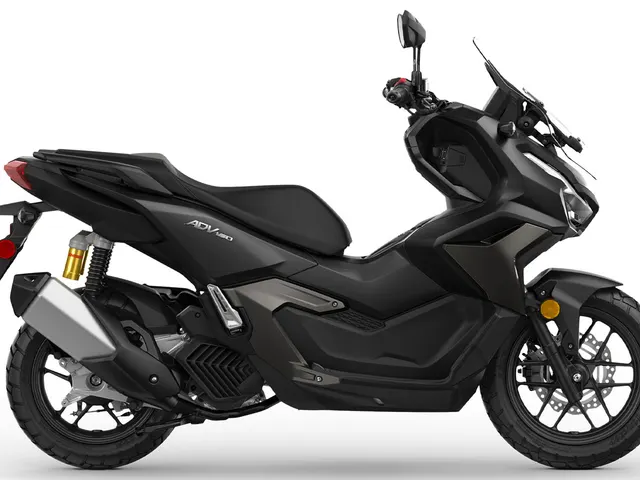
- ADV160 for rough pavement. Same engine as the PCX with more suspension compliance, an adjustable screen, and rugged styling, for $150 more at MSRP.
- Neither Honda belongs on the interstate. Press testing puts both near a 65 to 70 mph ceiling, which is the limit rather than margin.
- The Navi is the budget outlier, and it is a different conversation — see below.
| XMAX | PCX | ADV160 | |
|---|---|---|---|
| Model year on our floor | 2026 | 2026 | 2027 |
| Engine | 292cc liquid-cooled Blue Core single | 157cc eSP+ single | 157cc eSP+ single |
| Horsepower | About 28 hp (press/EU figures) | About 16 hp (press) | About 16 hp (press) |
| Transmission | CVT automatic | CVT automatic | CVT automatic |
| Seat height | 31.3 in | 30.1 in | About 30.1 in |
| Weight | 403 lb wet | About 281 lb curb | About 294 lb curb |
| Brakes | Disc with ABS | Disc with ABS | Disc with ABS |
| Traction control | Standard | Honda Selectable Torque Control | Honda Selectable Torque Control |
| Display | 4.2-inch TFT plus 3.2-inch LCD | LCD instrument panel | LCD instrument panel |
| Keyless | Yamaha Smart Key | Honda Smart Key | Honda Smart Key |
| Screen | Electrically adjustable | Fixed | Two-position adjustable |
| Highway capable | Yes — 75-plus mph in testing | Marginal — about 65 to 70 mph | Marginal — about 65 to 70 mph |
| MSRP | $6,399 plus $650 destination | $4,349 | $4,499 |
| Listed on our floor | $6,399 (two units) | $4,349 (two units) | $4,499 (two units) |
Source: yamahamotorsports.com. Specs and pricing are the manufacturer's published figures and can change by model year.
Honda’s site blocks the automated verification our research pass runs, so the PCX and ADV160 figures come from Honda’s 2026 model-year information as reported by the motorcycle press and from published testing. The XMAX figures come from a direct read of Yamaha’s model page on September 3, 2026.
Engines: 292cc against 157cc twice
The two Hondas share a drivetrain. Both use Honda’s 157cc eSP+ single with a CVT, and both make roughly 16 horsepower in press figures. It is a genuinely excellent small engine — smooth, quiet, and famous for fuel economy that owners regularly report in the 90-to-100 mpg range. Around Bonita Springs, Estero, and Naples, running errands and commuting on surface roads, it is more than adequate and cheaper to feed than anything else on four wheels or two.
The Yamaha XMAX runs a 292cc liquid-cooled Blue Core single making about 28 horsepower in European figures. That is nearly double the displacement and nearly double the power, and it changes the machine’s category rather than just its acceleration. Owner reporting on fuel economy lands in the 65-to-75 mpg range — worse than the Hondas, still excellent by any other measure.
All three are twist-and-go CVT automatics, which is worth stating plainly because it is most of the appeal. There is no clutch and no shifting. If that is the feature you are actually shopping for, the broader map of clutchless options — scooters, Honda’s E-Clutch and DCT, hybrids, electric — is in the automatic motorcycles guide.
Highway capability, and the Florida rule that decides it
This is the section that should determine your purchase.
Florida does not sort machines by displacement for interstate access. It sorts them by capability. Under § 316.091(2), Fla. Stat. (2026), no person may operate on a limited-access facility “any bicycle, motor-driven cycle, animal-drawn vehicle, or any other vehicle which by its design or condition is incompatible with the safe and expedient movement of traffic.” I-75 and Alligator Alley are limited-access facilities.
Press testing puts both 157cc Hondas near a 65-to-70 mph ceiling. On a road posted at 70, a ceiling of 65 to 70 is not margin — it is the machine’s limit, with nothing left for a merge or a pass, and it is exactly the condition that clause describes.
The XMAX is the one built for it. Maxi-scooter testing consistently credits the 292cc engine with 75-plus mph capability — real margin over the posted 70 — and a 403-pound machine is stable at highway speed in a way a 281-pound one is not. If any stretch of your daily route is interstate, the roughly $2,050 difference between the XMAX and the PCX as listed is not optional spending; it is the price of the correct tool.
Ride, comfort, and the seat-height question
PCX. The refined one. Honda has been iterating this scooter for years and it shows in the quietness of the CVT and the smoothness of the throttle. At roughly 281 pounds it is the lightest and easiest of the three to manage at a standstill, and its 30.1-inch seat suits nearly everyone. The consistent owner complaint is a rear suspension that gets busy two-up.
ADV160. The same machine with more suspension travel and compliance, an adjustable two-position screen, and body panels styled after Honda’s big adventure scooter. RideApart’s coverage of the US debut noted the seat sits about half an inch lower than the previous ADV150’s. What the “adventure” styling buys you here is not trail ability — it is that brick pavers, gravel shoulders, and the potholes that appear after a wet season are less unpleasant. That is a real Southwest Florida advantage and it costs $150 at MSRP.
XMAX. The most comfortable at speed and the most machine to handle at rest. The 31.3-inch seat is over an inch taller than the Hondas and 403 pounds is a genuinely substantial scooter, so shorter riders should sit on it before committing. In exchange you get an electrically adjustable windscreen, a 4.2-inch TFT paired with a 3.2-inch LCD, and Yamaha’s Smart Key running the ignition, the storage compartments, the fuel filler, and the bar lock.
Storage and everyday practicality
Storage is the reason to buy a scooter rather than a motorcycle, and the XMAX wins it. Its underseat compartment is the largest of the three by a wide margin and is the defining feature of the maxi-scooter category.
Both Hondas offer good underseat storage for the class — a full-face helmet plus a modest grocery run. Neither is in the XMAX’s league, and neither needs to be for a machine used to cover eight miles at a time.
All three carry keyless ignition and LED lighting, and the PCX and ADV160 add a USB-C socket. Every one of them will take a top box, which is the cheapest upgrade any scooter owner makes and the one that changes daily usefulness most.
Price and ownership
As listed on the Power Lodge floor in September 2026:
| Machine | Model year | Listed | MSRP |
|---|---|---|---|
| Honda PCX | 2026 | $4,349 | $4,349 |
| Honda ADV160 | 2027 | $4,499 | $4,499 |
| Yamaha XMAX | 2026 | $6,399 | $6,399 |
Freight, prep, tax, and tag are separate on all three; Yamaha lists a $650 destination charge on the XMAX. Two units of each are in the building.
Registration is the cheap part. Florida charges $10 a year to register a motorcycle and does not apply the $225 initial registration fee that hits cars and trucks, so putting a scooter on the road costs a fraction of putting a car on it. The endorsement and the rest of the paperwork are in the scooter and moped law guide.
And the budget outlier. Two 2025 Honda Navi units are listed at $2,099, matching MSRP — 109cc, 234 pounds, drum brakes, and no ABS. RideApart’s review called it “fun, nimble, uncomplicated” and concluded the “MSRP simply can’t be ignored.” It is a legitimate first machine for campus and beach errands and it is legally a motorcycle like the rest, but it is not a commuter and it is not in the same conversation as the three above. Buy it as a second vehicle, not a first one.
Which one for which rider
Buy the Yamaha XMAX if any part of your regular route is a limited-access highway, if you ride two-up, if you carry more than a helmet, or if you want the best dash and the most comfortable machine at 65 mph.
Buy the Honda PCX if your riding is surface streets, if you want the lowest purchase price and the best fuel economy, or if the lightest machine at a standstill matters to you.
Buy the Honda ADV160 if you were going to buy a PCX but your route includes rough pavement, brick, or gravel shoulders — $150 is a small premium for suspension that makes those disappear.
Buy the Navi if the budget is the constraint and the mission is short, slow, and local.
Buy none of them if what you actually want is a motorcycle. A scooter is the right answer to a specific question about parking, storage, and clutch levers, and the wrong answer to “what should my first bike be.” That question is answered in the beginner motorcycle guide, and the rest of the street coverage lives in The Stable.
Everything on this page comes from published manufacturer specifications, Honda’s 2026 model-year information as reported by the motorcycle press, Florida statutes, professional testing, and what the crew sees on the floor and in the service bay. Our standard is on how we review.
XMAX, PCX, ADV160, and Navi on the floor. Live inventory and today's price.
Quick answers
- Can you ride a Honda PCX on the highway in Florida?
- Legally it turns on capability, not displacement, and a 157cc scooter that tops out near 65 to 70 mph is marginal on a road posted at 70. Florida law bars vehicles that "by its design or condition" cannot move safely with traffic from limited-access roads. Treat the PCX as a surface-street machine.
- Is the Yamaha XMAX highway capable?
- Yes, and it is the only one of these three that is. Maxi-scooter testing consistently credits the 292cc XMAX with a genuine 75-plus mph cruise, which is real margin over a posted 70 rather than a top speed you are pinned against.
- What is the difference between the Honda PCX and the ADV160?
- The same 157cc eSP+ engine and drivetrain in different bodywork. The ADV160 adds rugged styling, a two-position adjustable screen, and more suspension compliance for bad pavement, at about 13 pounds more and $150 more at MSRP.
- Do you need a motorcycle license for a scooter in Florida?
- For all three of these, yes. FLHSMV requires a motorcycle endorsement to operate any two or three-wheeler over 50cc, and every scooter on this page is well over that. None of them is a moped under Florida law, whatever the shape suggests.
- Which scooter has the most storage?
- The Yamaha XMAX, by a clear margin — its underseat compartment is the largest of the three and the reason maxi-scooters exist. Both Hondas hold a full-face helmet and a grocery run; the XMAX holds more than that.