Head-to-Head · The Stable
Honda Africa Twin vs Yamaha Ténéré 700: Big-Bore Comfort or Mid-Weight Simplicity?
One of these is a touring bike that goes off pavement. The other is an off-pavement bike that tours. Both are on the floor, which makes this an unusually easy decision to test.
By The Outpost CrewUpdated 7 min read
How this review was built: from Honda's published specs, professional road tests, owner reports, and what the Power Lodge crew sees on the showroom floor and in the service bay — not a first-hand test ride. Prices are MSRP unless the live listing below says otherwise.How we review →
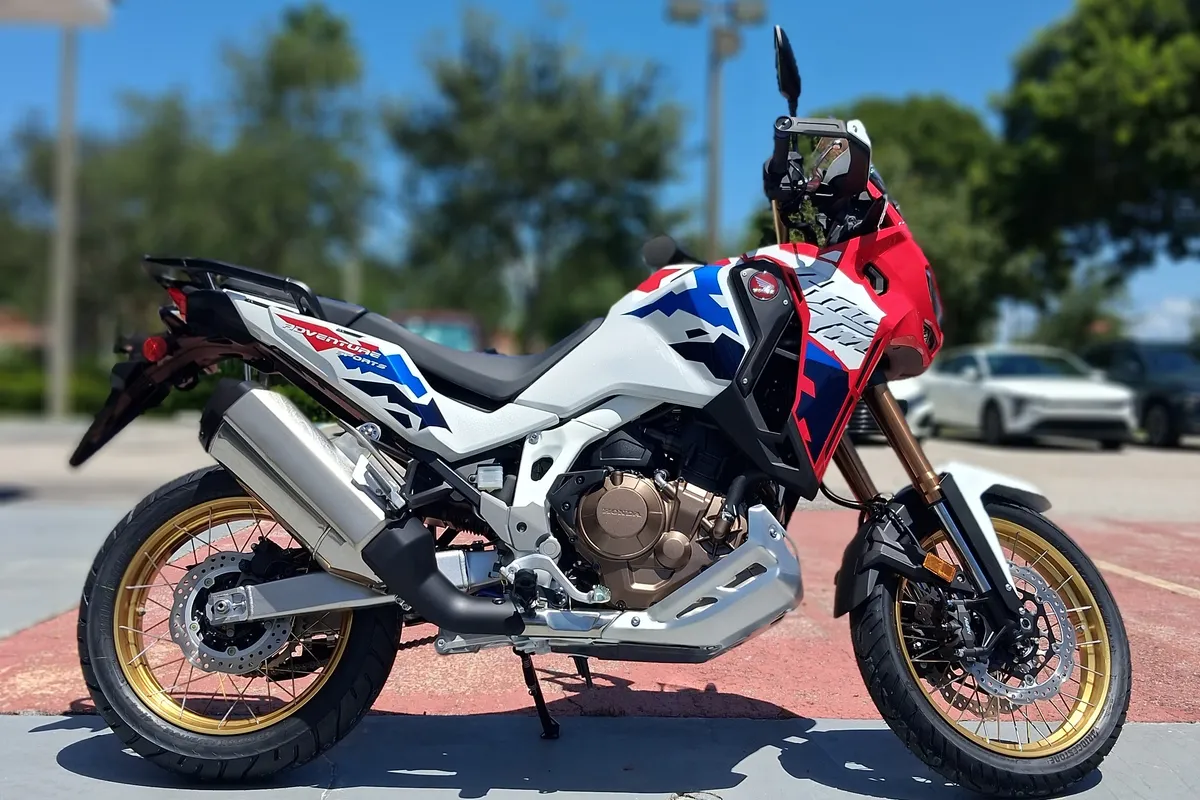
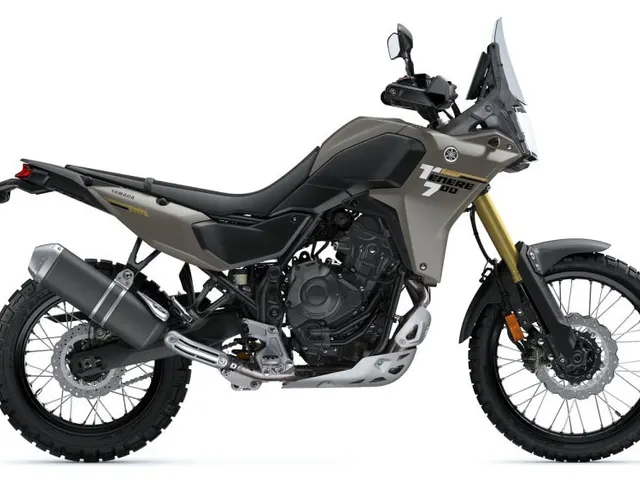
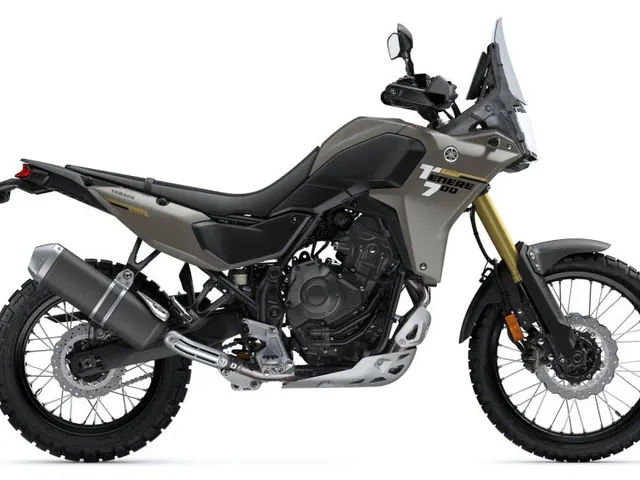
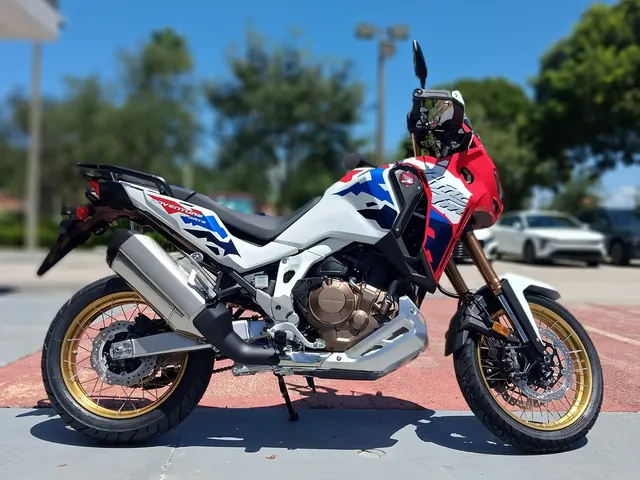
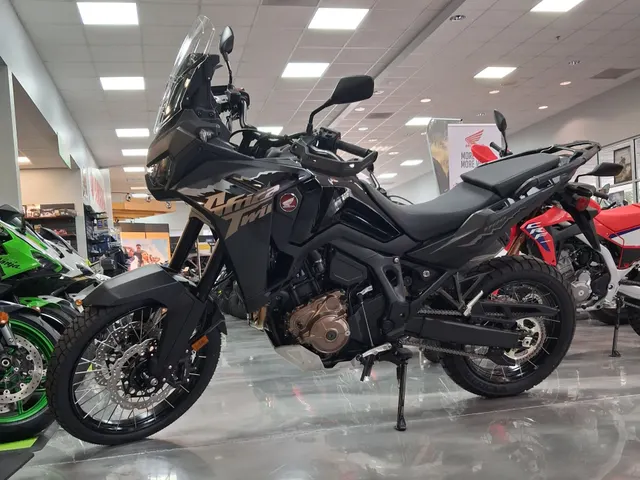
If you are choosing between these two, the short answer is about weight and money. The 2026 Yamaha Ténéré 700 is roughly 60 pounds lighter and about $4,950 cheaper as listed, and it is the better motorcycle the moment the pavement ends. The 2026 Honda Africa Twin has roughly 100 horsepower against the Yamaha’s 72, a larger tank, a full electronics suite, and it is the better motorcycle for every hour you spend on a highway.
Both are physically on the Power Lodge floor in September 2026, which makes this one of the few adventure-bike comparisons you can settle by sitting on the machines in the same twenty minutes.
One measurement note before the numbers, because it is where comparisons like this usually go wrong: every weight below is a full-fluids figure. Honda’s is a curb weight and Yamaha’s is a wet weight, and those measure the same thing. No dry weight appears anywhere on this page.
The short version
- Ténéré 700 wins on weight, price, and simplicity. About 60 pounds lighter, roughly $4,950 less as listed, and a machine you can pick up alone.
- Africa Twin wins on power, comfort, and electronics. Roughly 100 horsepower, a bigger tank, cruise control, and an IMU-supervised rider-aid package.
- The seat heights are closer than the bikes are. Yamaha has published 34.4 inches; the Africa Twin’s standard seat is adjustable in the mid-33 to mid-34-inch range. Neither is a short-rider motorcycle.
- DCT only exists on one side. Honda’s dual-clutch automatic is an option on the Africa Twin and has no equivalent on the Yamaha. If that is what you want, this comparison is already over.
- Transmission is not in the dealer feed. Both Africa Twin units are listed at Honda’s manual-trim prices. Confirm the specific machine before you assume.
| Africa Twin | Ténéré 700 | |
|---|---|---|
| Engine | 1,084cc Unicam parallel twin | 689cc CP2 parallel twin |
| Horsepower | Right around 100 hp (Honda via RideApart) | About 72 hp (press figures) |
| Weight, full fluids | About 510 lb curb | About 452 lb wet (prior US figure) |
| Seat height | About 34.3 in, adjustable | Published at 34.4 in |
| Fuel capacity | 5.0 gal (6.5 gal on Adventure Sports) | 4.2 gal |
| Suspension travel | Long-travel Showa; EERA semi-active on Adventure Sports ES | 8.3 in front / 7.9 in rear |
| Rider aids | Six-axis IMU, ride modes, HSTC, cornering ABS | Three-mode ABS, switchable traction control, two throttle maps |
| Automatic option | DCT available | None |
| Cruise control | Yes | Not listed on the model page, September 2026 |
| MSRP, 2026 manual | $15,199 standard / $17,799 Adventure Sports ES | From $10,999 |
| Listed on our floor | $15,199 / $17,799 | $10,249 |
Source: yamahamotorsports.com. Specs and pricing are the manufacturer's published figures and can change by model year.
Honda’s own site blocks the automated verification our research pass runs, so the Africa Twin figures above come from Honda’s 2026 model-year announcement as reported by RideApart and from published testing rather than from a manufacturer page we could read on the day. The Yamaha figures come from a direct read of its model page on September 3, 2026.
Engine: 1,084cc versus 689cc, and what the gap actually feels like
Honda’s 1,084cc Unicam parallel twin is the more sophisticated engine and the more entertaining one on pavement. RideApart’s reporting on the 2026 lineup puts it at “right around 100 horsepower,” and the character is big-twin torque with a top end that keeps pulling — the sort of engine that makes a 500-mile day feel shorter than it was.
Yamaha’s 689cc CP2 makes roughly 72 horsepower in press figures and is doing an entirely different job. Its virtue is low-rpm tractability — a delivery that never surprises the rear tire — and off pavement, an engine you can trust at 2,500 rpm is worth more than 30 horsepower of headroom you cannot use.
On the Tamiami Trail at 70, both are relaxed. The Africa Twin is relaxed with a lot in reserve; the Ténéré is relaxed with enough. On Loop Road — 24 miles through cypress swamp per the National Park Service, and flooded through the summer wet season — the Yamaha’s manners are the ones you want.
The Africa Twin also offers something the Ténéré cannot: Honda’s dual-clutch transmission. DCT is a genuine automatic with a manual override, it has fifteen years of touring riders arguing in its favor, and in stop-and-go traffic on US-41 it is transformative. It is also about $800 more and adds weight. We explain what it does and what it costs in Honda DCT explained.
Ride and handling: sixty pounds is the whole story
Off pavement, weight beats horsepower and it is not close. The Ténéré 700’s roughly 452-pound wet weight against the Africa Twin’s roughly 510-pound curb weight is about a 60-pound gap, and every one of those pounds shows up in the three places that matter: turning the bike at walking pace, catching it when the front tucks in sand, and picking it up after it goes over.
That last one is not a hypothetical. Adventure riders drop adventure bikes. A 452-pound machine with a rider of average strength is a solvable problem on a soft shoulder. A 510-pound machine, on a slope, in the heat, alone, is a different afternoon.
What the Africa Twin gives back is stability and plushness. On pavement it is the calmer bike at speed, it handles crosswinds on the causeways better by virtue of mass, and on the Adventure Sports ES the Showa EERA semi-active suspension adjusts damping on the move — a real advantage on the mixed surfaces where you would otherwise be compromising.
Seat height is the third variable and the one people underweight. Yamaha has published 34.4 inches for the Ténéré; the Africa Twin’s standard seat adjusts within roughly the same band. Neither is a low motorcycle, and a spec-sheet inch matters less than how each seat is shaped where it meets your legs — which is why twenty minutes on both machines answers more than any spec sheet. If you end up on one toe at every light, the heavier bike is the one that punishes it.
For most Southwest Florida riding, that trade lands in a specific place. The rides that justify an adventure bike here are unpaved preserve roads and long straight two-lane, and they are covered in the best motorcycle rides in Southwest Florida. The unpaved half of that list favors the Yamaha; the long-straight half favors the Honda.
Comfort, storage, and tech
This is where the Africa Twin runs away with it.
Wind protection. The Honda has a proper fairing and screen. The Ténéré’s screen buffeting is its most consistent owner complaint, and it is the reason people fit aftermarket screens in the first month.
Cruise control. The Africa Twin has it. Yamaha’s Ténéré 700 model page did not list it when we read it on September 3, 2026. On a 55-mile straight run to Everglades City, that is a real difference in how tired you arrive.
Range. The Africa Twin’s 5.0-gallon tank, and the Adventure Sports ES’s 6.5 gallons, against 4.2 on the Yamaha. Both are adequate for the fuel gaps east of Naples; the Honda is comfortable about it.
Electronics. The Africa Twin’s six-axis IMU drives cornering ABS, ride modes, and Honda Selectable Torque Control. The Ténéré answers with three-mode ABS, switchable traction control, two throttle maps, and a 6.3-inch vertical TFT with Y-Connect phone pairing. The Yamaha’s package is well chosen rather than extensive, which is the whole philosophy of the bike.
Luggage. Both take hard cases. The Africa Twin, and particularly the Adventure Sports ES with its tubeless spoked wheels and larger tank, is the one built around the assumption that you will load it.
Price and ownership
As listed on the Power Lodge floor in September 2026:
| Machine | Model year | Listed | 2026 MSRP, manual |
|---|---|---|---|
| Yamaha Ténéré 700 | 2026 | $10,249 | $10,999 |
| Honda Africa Twin | 2026 | $15,199 | $15,199 |
| Honda Africa Twin Adventure Sports ES | 2026 | $17,799 | $17,799 |
Freight, prep, tax, and tag are separate on all three. Yamaha lists a $675 destination charge on the Ténéré.
The transmission caveat, stated plainly. Our dealer feed records the model name but not the transmission, and both Africa Twin units are listed at the prices Honda announced for the manual trims. Honda’s 2026 pricing put the standard bike at $15,199 manual and $15,999 with DCT, with the Adventure Sports ES starting at $17,799. So the listed prices point at manual bikes — but a price is a hint, not a spec card. If DCT is the reason you are buying, confirm it on the specific unit before you go any further.
On running costs, the Ténéré 700 is the cheaper motorcycle to own in every direction: fewer components, smaller tires, less fuel, and a simpler service list. The Africa Twin is not expensive for its class; it is simply a bigger machine with more on it.
Which one for which rider
Buy the Ténéré 700 if your riding actually leaves the pavement, if you ride alone in places where dropping the bike is your problem to solve, if the budget matters, or if you like machines that do one thing extremely well.
Buy the Africa Twin if most of your miles are pavement, if you tour two-up or loaded, if you want cruise control and a fairing, or if DCT is the feature that got you interested in the first place.
Buy the Adventure Sports ES if you have already decided on the Honda and the semi-active suspension and 6.5-gallon tank are worth $2,600 to you — which they are if you are riding to north Georgia twice a year, and are not if you are riding to Immokalee.
Buy neither if what you actually want is a lighter, cheaper way into the segment. The Kawasaki KLE500 exists for exactly that rider, listed at $7,499 for the SE, and it is worth ten minutes before you spend five figures.
For a fuller account of the Yamaha on its own terms, the Ténéré 700 review has the detail, and the rest of the street coverage lives in The Stable.
Everything on this page comes from published manufacturer specifications, Honda’s 2026 model-year announcement as reported by the motorcycle press, National Park Service information on the preserve roads, professional road tests, and what the crew sees on the floor and in the service bay. Our standard is on how we review. Neither of these has an open recall we could find in the NHTSA database as of September 2026 — check your own VIN at nhtsa.gov/recalls before you sign.
Africa Twin, Adventure Sports ES, and two Ténéré 700s on the floor. Live inventory and today's price.
Quick answers
- Is the Africa Twin or the Ténéré 700 better off-road?
- The Ténéré 700, for most riders. It is roughly 60 pounds lighter on the same full-fluids basis, simpler, and easier to pick up. The Africa Twin is more capable in the hands of a strong, experienced rider and considerably more work in sand.
- How much more does the Africa Twin cost than the Ténéré 700?
- About $4,950 as listed. The 2026 Africa Twin on our floor is listed at $15,199 and the 2026 Ténéré 700 at $10,249, as of September 2026. The Adventure Sports ES is listed at $17,799, which puts it roughly $7,550 above the Yamaha.
- Does the Africa Twin on the floor have DCT?
- Ask before you assume. The dealer feed does not record the transmission, and both Africa Twin units are listed at Honda's manual-trim prices for 2026. Honda announced DCT versions at $15,999 for the standard bike and higher for the Adventure Sports ES, so the listed price is a strong hint rather than proof.
- Which is more comfortable for touring?
- The Africa Twin, clearly, and the Adventure Sports ES more so. It has a larger fairing, a bigger tank, cruise control, and a plusher ride. The Ténéré 700's model page does not list cruise control, and screen buffeting is its most common owner complaint.
- Are they both good for Florida riding?
- Yes, for different weeks. The Ténéré 700 is the better bike for Big Cypress limerock and wet-season shoulders. The Africa Twin is the better bike for a 500-mile day up to north Georgia. Almost nobody needs both, and most people are honest about which one they actually do.