Review · The Stable
Kawasaki KLE500 Review: The Approachable Adventure Bike Florida Has Been Waiting For
A revived nameplate on a brand-new bike, built from parts Kawasaki already knew worked. The interesting number is not the horsepower, it is the price.
By The Outpost CrewUpdated 8 min read
How this review was built: from Kawasaki's published specs, professional road tests, owner reports, and what the Power Lodge crew sees on the showroom floor and in the service bay — not a first-hand test ride. Prices are MSRP unless the live listing below says otherwise.How we review →
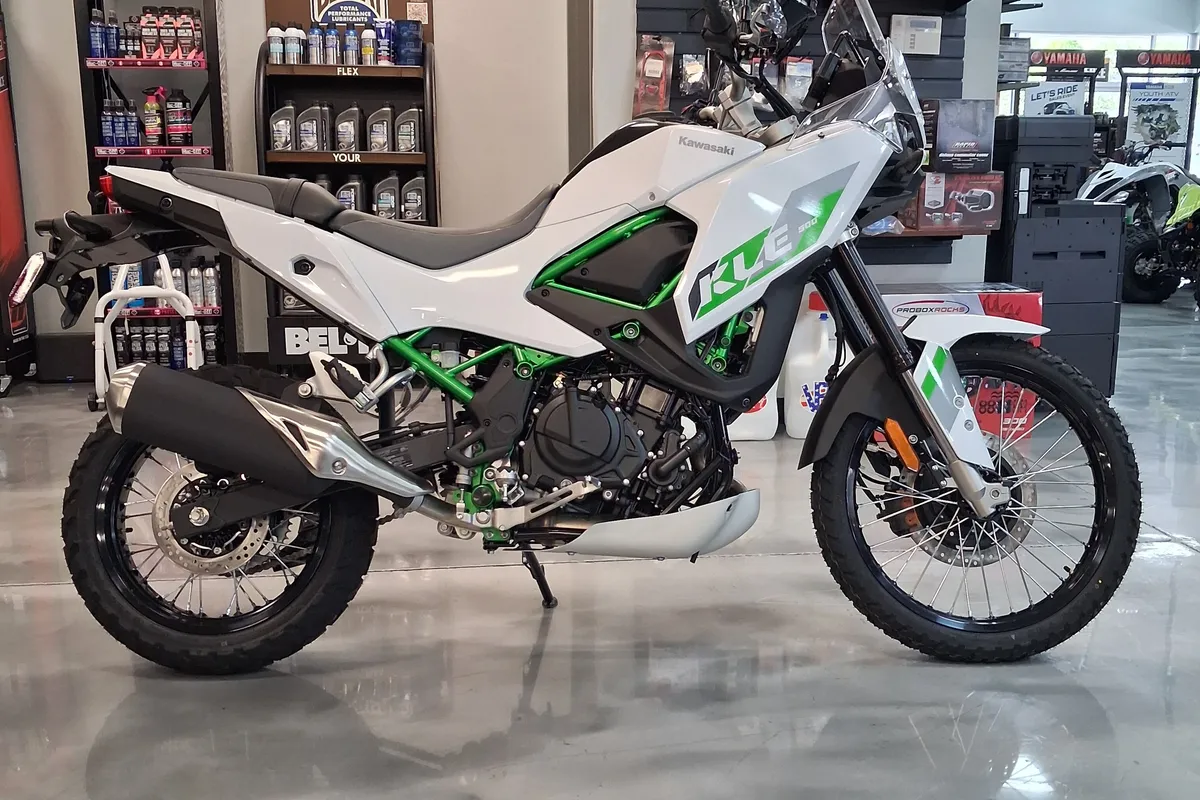
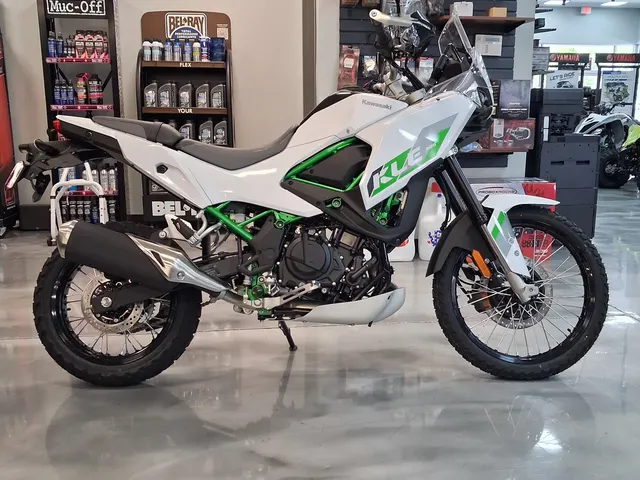
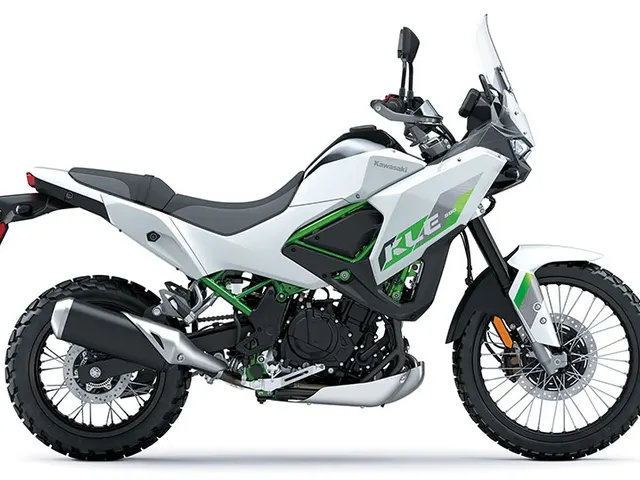
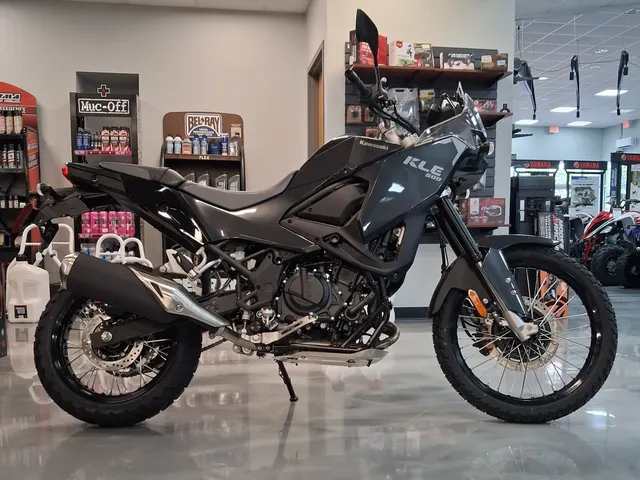
The 2026 Kawasaki KLE500 is the adventure bike for the rider who wants one and does not want to spend five figures finding out whether they meant it. Kawasaki took the 451cc twin from the Ninja 500 — a published 51 horsepower and 31.7 lb-ft — and built a rally-styled chassis around it with a long 61.2-inch wheelbase, a 4.2-gallon tank, and a 428 to 430-pound curb weight.
Who it is for: a street rider curious about limerock and forest road, a commuter who wants an upright bike with real suspension travel, and anyone priced out of a Ténéré 700. Who it is not for: a short rider, a first-time rider, and anybody planning serious off-road mileage on a first-year model with no track record yet.
The one thing to know is the price. RideApart’s launch coverage summed the pitch up in a sentence — “the whole package costs just $6,599” for the base bike — and that number is what makes the KLE500 interesting. Everything else about it is competent rather than remarkable, and competent at $6,599 is a different proposition than competent at $11,000.
What the Kawasaki KLE500 is
An all-new 2026 model on a revived nameplate. Kawasaki used the KLE500 name in other markets decades ago; this bike shares nothing with it but the badge and the general idea.
Two trims sit on the Power Lodge floor as of September 2026: one base KLE500 ABS listed at $6,599, and two KLE500 SE ABS units listed at $7,499. What the SE adds is a short and specific list — a taller 4.1-inch windshield, a larger skid plate, metal-reinforced hand guards, and a 4.3-inch color TFT display. Engine, chassis, brakes, and suspension are identical.
That $900 gap is unusually easy to evaluate, because it is mostly protection rather than trim. If your riding will include unpaved surfaces, the skid plate and the reinforced hand guards are the parts you would otherwise buy in the accessory department for more money. If your riding is pavement, the SE is a windshield and a screen.
The engine underneath is one of the most familiar drivetrains in the building. The same 451cc twin powers the Ninja 500 and the Eliminator, which means three bikes on this floor share a service manual.
| Engine | 451cc liquid-cooled parallel twin, four-stroke |
|---|---|
| Horsepower (Kawasaki published) | 51 hp @ 10,000 rpm |
| Torque (Kawasaki published) | 31.7 lb-ft @ 7,500 rpm |
| Transmission | Six-speed |
| Seat height | 34.3 in |
| Wheels | 21-in front / 17-in rear |
| Suspension travel | 8.3 in front (43mm inverted fork) / 7.7 in rear (preload-adjustable) |
| Wheelbase | 61.2 in |
| Curb weight | 428 to 430 lb |
| Fuel capacity | 4.2 gal |
| Brakes | Front and rear disc with ABS |
| SE additions | 4.1-inch taller windshield, larger skid plate, metal-reinforced hand guards, 4.3-inch TFT |
| MSRP, 2026 base ABS | $6,599 |
| MSRP, 2026 SE ABS | $7,499 |
| Listed on our floor, September 2026 | $6,599 base (one unit) / $7,499 SE (two units) |
Source: kawasaki.com. Specs and pricing are the manufacturer's published figures and can change by model year.
Two numbers that early coverage skipped are on Kawasaki’s page, and they answer the intent question directly: the KLE500 rolls a 21-inch front wheel and a 17-inch rear, with 8.3 inches of front travel from a 43mm inverted fork and 7.7 inches at the rear from a preload-adjustable Uni-Trak shock. A 21-inch front is the dirt-serious choice, and eight-plus inches of travel puts this chassis in Ténéré territory rather than commuter-bike territory.
Engine and performance: a familiar twin doing an unfamiliar job
Fifty-one horsepower is not much for an adventure bike, and it is entirely enough for this one. The 451cc twin makes its torque broadly and its power high, so at trail speeds it is unfussy and at highway speeds it has margin — the same characteristics that made it the default beginner engine, applied to a taller chassis.
What that means practically on Southwest Florida roads is that the KLE500 is genuinely comfortable at the posted 70 on I-75 and Alligator Alley, which a 300-class dual sport is not. That is the whole reason this category exists here: the good unpaved riding is 40 to 60 miles east of Bonita Springs, and you have to get there on a highway first.
The 4.2-gallon tank is the underrated spec. It is half a gallon more than the Ninja 500 carries and nearly a gallon more than the Eliminator, which makes the KLE the long-range member of the 451 family — and range is precisely what the fuel gaps east of Naples demand.
Where the engine shows its limits is loaded and two-up. Fifty-one horsepower carrying a passenger, luggage, and a full tank into a headwind is working, and it will feel like it.
On the road and on the limerock
The riding position is classic adventure: upright, wide bars, tall screen, feet under you. The 61.2-inch wheelbase is long for the displacement, which trades some low-speed agility for stability — a reasonable choice on a bike aimed at riders who are new to loose surfaces and do not want a nervous front end.
At 428 to 430 pounds it sits about 25 pounds under a Ténéré 700 on the same full-fluids basis, at essentially the same seat height. That combination is worth understanding: the KLE is not a low bike, but it is a lighter one, so the moment when you are on one toe on a sandy shoulder is less consequential than it would be on something heavier.
The surfaces this bike is actually for in this region are limerock, packed sand, graded county road, and the unpaved preserve roads that branch off US-41. Those are covered properly in the best motorcycle rides in Southwest Florida, and the honest framing is that they ask for ground clearance and suspension travel rather than for skill. That is the segment this bike was built to serve.
The SE’s hand guards are worth a specific mention. In this state the thing they protect against is not a rock strike, it is palmetto and scrub brush leaning into a narrow track, and the metal reinforcement is what makes them useful rather than decorative.
What reviewers and owners say
This is the honest weak section of the page, and pretending otherwise would be a disservice.
The KLE500 is a 2026 model and the ride reviews are still thin. Launch coverage framed it as an accessible-adventure price disruptor and reported the specs, which is where the record currently stops. There is no body of long-term testing and no owner consensus yet, because there are not yet enough owners.
The launch framing was about price, not performance. RideApart’s coverage led with the $6,599 base figure, which tells you how the industry read the bike: as an argument about what an adventure bike ought to cost rather than a claim to beat anything on capability.
The engine has a track record even if the motorcycle does not. The 451cc twin has been in the market since 2024 in the Ninja 500 and the Eliminator, with a reputation for being unremarkable in the way you want an engine to be. That is a meaningful head start for a new model, and it is the single strongest thing on this page.
What we do not know yet. First-year build quality, long-term suspension durability, and how the chassis holds up to genuine off-road use are open questions. If you need those answered before you buy, this is a bike to look at again in a year.
Living with a KLE500 in Southwest Florida
Parts commonality is a real advantage here. Three motorcycles in one building share this drivetrain. That means the service department sees the engine constantly, consumables move, and a wait for a part is less likely than it would be for a low-volume model. On a first-year machine, that matters more than usual.
Buy the SE if you will leave pavement, and the base if you will not. The skid plate and reinforced hand guards are cheaper as factory equipment than as accessories, and they are exactly what protects a new adventure bike from the two things that damage them here: a rock kicked up on graded limerock, and brush on a narrow track.
The taller SE windshield earns its keep twice a year. Lovebug hatches in May and September coat everything forward-facing, and a screen that puts the airflow above your chest is the difference between wearing them and watching them. Carry a wet cloth in the tank bag from late April.
Range, then route. With 4.2 gallons this is the member of the 451 family you can actually plan an Everglades day around. Fill at the coast anyway — the gaps on US-41 east of Naples and on the Immokalee back roads are longer than they look on a map.
Tall bike, hot state, heavy traffic. A 34.3-inch seat in stop-and-go on US-41 in August means you are working at every light and the sun is on all of you. Start early, and read the heat and rain playbook before the first summer ride.
Recalls and known issues
For the 2026 Kawasaki KLE500 and KLE500 SE, none found in the NHTSA database as of September 2026.
Read that with the appropriate caution. This is a first-year model, so a clean record reflects how new the bike is as much as how well it was built. Absence of a recall on a machine that has been on sale for months is a much weaker signal than absence of one on a model that has been out for five years.
Run the VIN at nhtsa.gov/recalls before you sign, and check it again after a year of ownership. First-year models are where campaigns most often turn up.
Price and what is on the floor
As of September 2026 the Power Lodge floor holds one 2026 KLE500 ABS listed at $6,599 and two 2026 KLE500 SE ABS units listed at $7,499. Both match their respective 2026 MSRPs.
Freight, prep, tax, and tag are separate. Ask for an out-the-door number before you compare the KLE to anything you saw online, because on a bike whose entire pitch is the price, the difference between the tag and the contract is the whole conversation.
How it compares
Yamaha Ténéré 700, two 2026 units listed at $10,249 against a $10,999 MSRP, is the bike this one is priced against. It brings a 689cc twin at roughly 72 horsepower, 8.3 inches of front travel, and a decade of proven off-road reputation, for about $2,750 more than the KLE500 SE as listed. If you know you are going to ride difficult terrain, buy that. The Ténéré 700 review makes the case.
CFMOTO Ibex 450, two 2025 units listed at $6,499 matching MSRP, is the direct value rival and it is on the same floor. A 449cc twin, roughly 385 pounds, and an adjustable 31 to 32-inch seat — which is the meaningful difference, because it is a considerably more reachable motorcycle. Kawasaki counters with the published 51 horsepower, a fifty-year service network, and predictable resale. The brand question behind the Ibex is answered in is CFMOTO a good brand.
Kawasaki Versys-X 300 ABS, two 2025 units listed at $4,699 to $5,699 against a $5,699 MSRP, is the smaller, lower, cheaper Kawasaki alternative. It gives up 155cc and about 12 horsepower to the KLE for roughly $900 less at MSRP, and it is the better choice if highway margin is not a priority.
Kawasaki KLX230 S ABS, two 2026 units listed at $5,199 to $5,499, is the dual sport rather than the adventure bike: lighter, more capable on genuinely rough ground, and much less comfortable getting there. See the KLX230 review.
Highs
- Proven 451cc twin with a published 51 hp and 31.7 lb-ft
- Genuinely comfortable at the posted 70 on I-75 and the Alley
- 4.2-gallon tank gives the best range in the 451 family
- SE skid plate and reinforced hand guards cost less as factory kit
- Shares a drivetrain with two other bikes on the floor
Lows
- 34.3-inch seat is as tall as a Ténéré 700
- First-year model with no long-term record yet
- Windshield adjusts between two set positions, not on the fly
- Works hard loaded or two-up
- Ride reviews are still thin — the bike is newer than the coverage
Everything on this page comes from Kawasaki’s published specifications, launch coverage of the model, and what the crew sees on the floor and in the service bay — this bike is new enough that the usual body of long-term owner reporting does not exist yet, and we have said so where it matters. Our standard is on how we review, and the rest of the street coverage lives in The Stable.
Base and SE, three 2026 units. Live inventory and today's price.
Quick answers
- Is the Kawasaki KLE500 a good first adventure bike?
- Yes, and that is exactly what it was built for. It uses the 451cc twin from the Ninja 500 — 51 published horsepower, gentle delivery — in a 428 to 430-pound rally-styled chassis. The one obstacle is the 34.3-inch seat, which is tall regardless of how friendly the engine is.
- What is the difference between the KLE500 and the KLE500 SE?
- The SE adds a taller 4.1-inch windshield, a larger skid plate, metal-reinforced hand guards, and a 4.3-inch color TFT display. The engine, chassis, and brakes are the same. At MSRP the SE is $900 more — $7,499 against $6,599 for the 2026 model year.
- How much horsepower does the Kawasaki KLE500 have?
- Kawasaki publishes 51 horsepower at 10,000 rpm and 31.7 lb-ft at 7,500 rpm — the same 451cc parallel twin used in the Ninja 500 and the Eliminator. It is not a fast adventure bike, and the delivery is the point rather than the peak.
- Is the KLE500 tall?
- Yes. Kawasaki lists a 34.3-inch seat height, which is within a tenth of an inch of the Yamaha Ténéré 700. Riders under about five foot ten should expect to be on one toe at a stop. Sit on it before you get attached to the price.
- How much is a Kawasaki KLE500?
- The base 2026 KLE500 ABS is listed at $6,599 on the Power Lodge floor as of September 2026, matching its MSRP, and two 2026 KLE500 SE ABS units are listed at $7,499, also matching MSRP. Freight, prep, tax, and tag are extra.