Field Guide · The Stable
Two-Stroke vs Four-Stroke Dirt Bikes: The Real Differences (YZ250 vs YZ250F and Friends)
One fires every revolution. The other fires every other one. Almost everything people argue about downstream of that is a preference dressed up as a fact.
By The Outpost CrewUpdated 7 min read
Yamaha at Power Lodge →Kawasaki at Power Lodge →Honda at Power Lodge →
The mechanical difference is one sentence: a two-stroke makes power on every crankshaft revolution, and a four-stroke makes it on every other one. Everything else — the weight, the sound, the way the power arrives, the shape of the maintenance bill — falls out of that.
Which one you want depends on one honest question: do you already keep an engine in its powerband without thinking about it? If yes, a two-stroke is lighter, cheaper, and more fun. If no, a four-stroke will make you faster and less tired, and you will enjoy the ride more.
Both are on the Power Lodge floor right now, which makes this a comparison you can settle with your hands rather than a forum.
How a two-stroke works
There are no valves. Instead there are ports cut into the cylinder wall, and the piston itself opens and closes them as it travels. Fresh mixture comes in, the piston rises and compresses it, the plug fires, the piston is driven down, and on its way down it uncovers the exhaust and transfer ports so that the incoming charge pushes the spent gases out. One revolution, one power stroke.
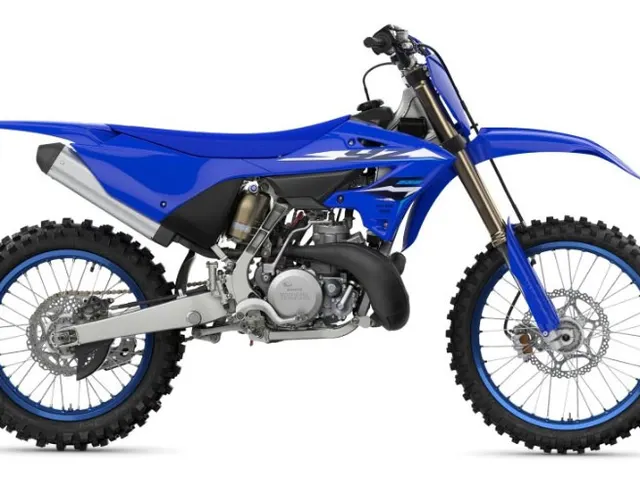
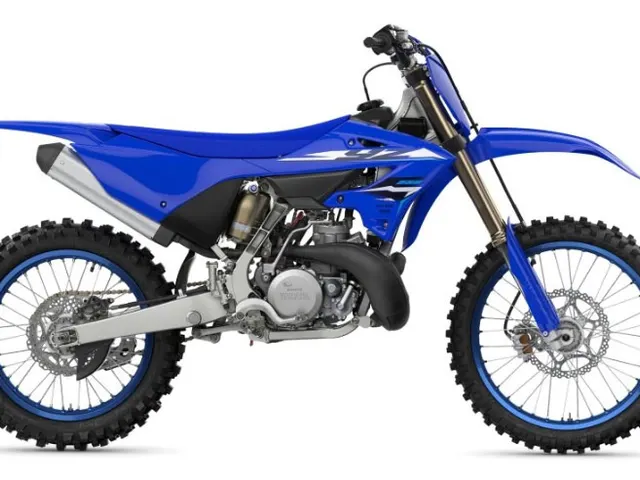
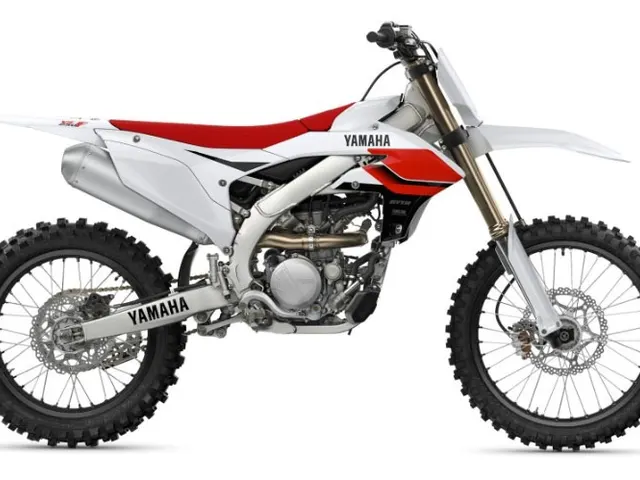
That means no camshaft, no valve springs, no timing chain, and no separate oiling system for a valve train — the oil goes through the engine with the fuel, either premixed in the tank or injected. Yamaha’s YZ250 is the classic execution: a 249cc liquid-cooled two-stroke with reed-valve induction and the Yamaha Power Valve System, which varies exhaust port timing so the engine pulls in more of the rev range than a fixed port would allow. Kawasaki uses the same idea on the 84cc KX85 under the name KIPS.
The consequence people care about is the power. A two-stroke’s torque curve has a distinct step in it — below the powerband it is unremarkable, and inside it the bike accelerates hard. Riders call this the hit. Learning to keep the engine there, using the clutch and the gearbox rather than the throttle, is the skill the engine demands.
How a four-stroke works
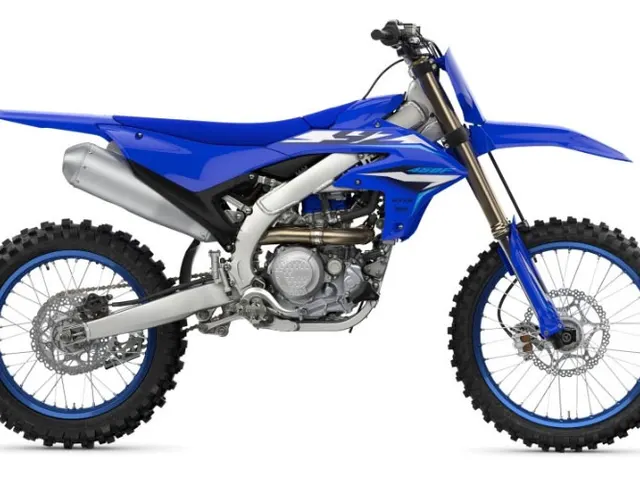
Intake, compression, power, exhaust, over two crankshaft revolutions, with poppet valves opened by a camshaft. Modern motocross four-strokes are elaborate: Yamaha’s YZ450F uses a reversed cylinder head layout, 39-millimeter titanium valves, a forged aluminum piston, dry-sump lubrication, and electronic fuel injection, and it is tuned through a phone app that also handles traction control and launch control.
That complexity buys behavior. Power builds progressively instead of arriving. The engine brakes hard when you close the throttle, which settles the chassis into corners and gives you a second way to slow down. Traction is better because the torque is delivered more evenly to a spinning rear tire — a real advantage on the loose sand that makes up most Southwest Florida riding.
The costs are weight and parts count. A four-stroke carries a valve train, more oil, and usually a heavier crank, and every one of those is something that eventually needs attention.
What the difference feels like, in numbers
| Bike | Engine | Seat height | Weight | Listed price, September 2026 |
|---|---|---|---|---|
| Yamaha YZ250 | 249cc two-stroke, YPVS | 38.2 in | 227 lb wet | $7,499–$7,599 (MSRP $7,999) |
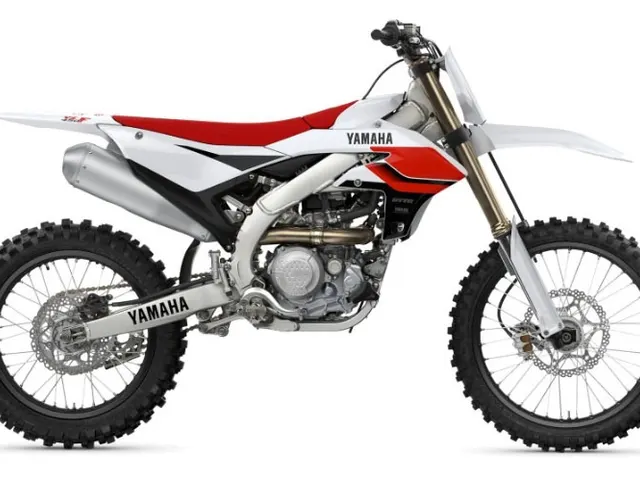
| Yamaha YZ250F | 250cc four-stroke | 38.0 in | 234 lb | $8,599 (MY26, MSRP $9,099) |
| Yamaha YZ450F | 450cc four-stroke | 38.0 in | 245 lb | $9,299 (MY26, MSRP $10,299) |
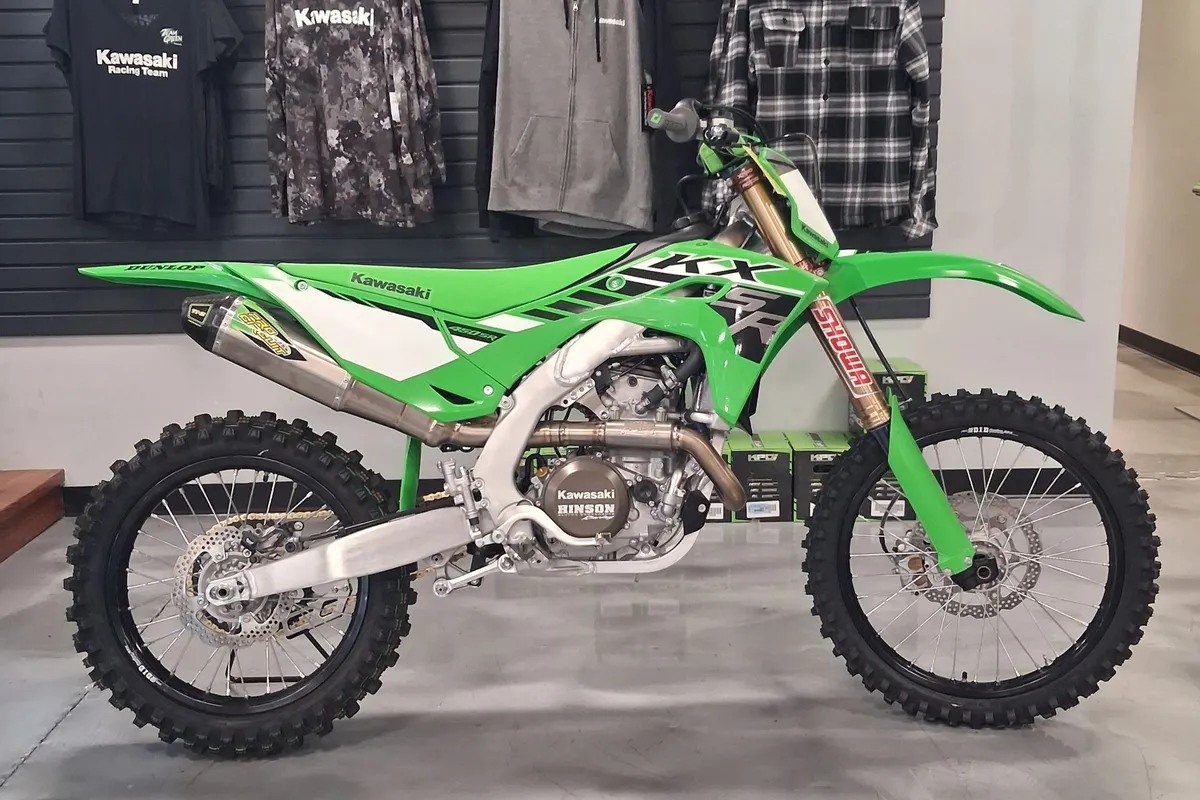
| Kawasaki KX450 | 449cc four-stroke | 37.8 in | 248.2 lb curb | $7,999–$8,499 |
| Yamaha WR250F | 250cc four-stroke, wide-ratio | 37.6 in | about 255 lb | $8,799–$9,199 (MSRP $9,099) |
| Honda CRF450RL | 450cc four-stroke, street legal | 37.0 in | about 291 lb | $10,099 (MY26, MSRP $10,099) |
| Kawasaki KX85 | 84cc two-stroke, KIPS | 32.7 in | 168.4 lb curb | $4,999 (MSRP $4,999) |
Look at the two 250s at the top. Seven pounds separate the YZ250 from the YZ250F, and $1,100 separates them at MSRP. The weight gap in this class is smaller than the argument suggests; the price gap is not, and it comes straight from the parts count.
The bigger gap is between a race four-stroke and a trail one. The WR250F carries about 20 pounds over the YZ250F for a wide-ratio six-speed and enduro equipment, and the street-legal CRF450RL carries about 45 pounds over the YZ450F for lights, a plate, and the hardware that makes it road legal. Those are the pounds you pay for usefulness.
Maintenance, rebuilds, and the numbers nobody publishes
This is where the internet is least reliable, so here is the honest version.
A two-stroke’s top end is a consumable. The piston and rings live in a hot, hard-working environment with no valve train above them, and they are designed to be replaced periodically. The job is comparatively simple and comparatively cheap, and a home mechanic with a torque wrench and a manual can do it.
A four-stroke’s valve train is the scheduled item. Valve clearances need checking, oil needs changing on a schedule, and the work is more involved when it does come due — but the intervals are longer.
What neither Yamaha nor Kawasaki publishes on the model pages is a rebuild interval in hours. There is no manufacturer number that says “top end at forty hours” or anything like it, and any specific figure you find is somebody’s experience with their bike, their track, and their throttle hand. The authority is the maintenance schedule in your owner’s manual and an hour meter on the bike. Buy the meter.
Cost, over a season
The two-stroke’s case is straightforward. Cheaper to buy, cheaper in parts, simpler in the shop, and lighter to pick up when it is upside down in a berm. Against that, it burns premix or injected oil, and its top end comes due more often.
The four-stroke’s case is that it is faster for the same rider and gentler on the rider’s body over a long day, at a higher purchase price and a bigger bill when the valve work does arrive.
There is a third factor that decides more purchases than either: model-year clearance. The floor as of September 2026 has 2025 and 2026 four-strokes listed well under MSRP, and the machines nearest the discount are the big ones. That does not change the mechanical argument, but it does change the arithmetic in front of you.
Which one for which rider
Motocross, intermediate or expert. The four-strokes: the YZ450F with its Power Tuner app, launch control, and traction control, or the KX450 with its hydraulic clutch. Both are 449cc or 450cc race bikes with 37.8 and 38.0-inch seats, and neither is a machine for a new rider.
Motocross, on a budget, with the skill to use it. The YZ250 two-stroke. Lighter, cheaper to buy, cheaper to keep, and more entertaining per dollar than anything else on the floor if you can ride it. It is kick-start, which is a genuine consideration on a hot day at the end of a moto.
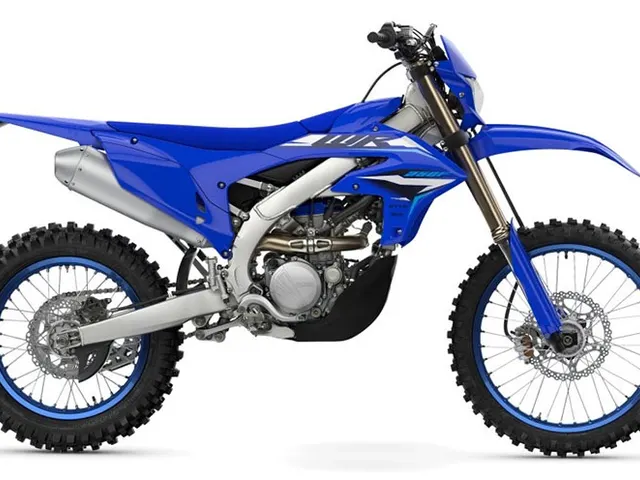
Trail and cross-country. The WR250F, which takes the YZ250F engine and gives it a wide-ratio six-speed gearbox, electric start, and enduro suspension settings. It is not street legal — it is a closed-course and off-road machine, titled in Florida as an off-highway motorcycle.
Trail, but you want to ride there on the road. The CRF450RL, or something calmer and much cheaper to own: the Kawasaki KLX230 dual-sport, which is a 233cc air-cooled single rather than a detuned race bike and is far better suited to a rider who wants to ride to the trail rather than trailer to it.
Youth motocross. The KX85, an 84cc two-stroke with a KIPS power valve, six speeds, and a 32.7-inch seat. It is a small race bike, not a small trail bike, and it belongs to a rider who already has a clutch and a track. Where it sits against the four-stroke trail bikes for kids is laid out in the kids’ dirt bike size guide.
When to call the service department
Three moments are worth a phone call rather than a forum thread. The first is when an hour meter passes whatever your manual says and you are not sure what the job involves on your specific engine. The second is when a two-stroke starts to feel flat at the top and you want to know whether it is the top end, the power valve, or the exhaust. The third is when you buy used and want a compression and leak-down check before you find out the expensive way.
None of those needs to happen at a race weekend, which is exactly when they usually do.
Before you commit either way, the other question worth settling is where any of this happens. Lee and Collier counties have no public trail system, and the honest map of what is within driving distance is in where to ride an ATV or UTV in Southwest Florida — the same drive times apply to a dirt bike. Every machine on this page is titled in Florida as an off-highway vehicle rather than registered for the road, which our OHV title and registration guide walks through.
Bonita Springs — YZ250 two-strokes and the 250 and 450 four-strokes on the floor together.
Quick answers
- What is the difference between a two-stroke and a four-stroke dirt bike?
- A two-stroke completes its cycle in one crankshaft revolution using ports in the cylinder wall; a four-stroke takes two revolutions and uses poppet valves and a camshaft. The two-stroke is lighter and hits harder in a narrower band. The four-stroke is heavier, smoother, and easier to ride fast.
- Is a two-stroke or four-stroke better for a beginner?
- A four-stroke, in most cases. Its power arrives gradually and it slows down when you close the throttle, which is forgiving. A two-stroke rewards a rider who already keeps the engine in its powerband and punishes one who does not.
- Do two-strokes need more maintenance than four-strokes?
- Different maintenance, not simply more. A two-stroke has no valve train to adjust but a top end that wears as a consumable. A four-stroke needs valve clearance checks and oil changes. Follow the interval in your owner's manual — the model pages do not publish rebuild schedules.
- Why is a YZ250 cheaper than a YZ250F?
- Fewer parts. The two-stroke has no camshaft, no valves, no valve springs, and no fuel injection, so it costs less to build. On the Power Lodge floor as of September 2026, 2025 and 2026 YZ250 two-strokes are listed at $7,499 to $7,599 against a $7,999 MSRP.
- Are two-strokes still made in 2026?
- Yes. Yamaha still builds the 249cc YZ250 with reed-valve induction and the Yamaha Power Valve System, and Kawasaki still builds the 84cc KX85 for youth motocross. Both are on our floor. The category shrank in the 2000s but never disappeared.