Buyer's Guide · The Stable
Kids' Dirt Bike Size Guide: Seat Heights, Engine Sizes, and Which Bike Fits Which Kid
Size the bike with a tape measure, not a birthday. The manufacturers publish seat heights, not age charts, and there is a reason for that.
By The Outpost CrewUpdated 12 min read
Yamaha at Power Lodge →Honda at Power Lodge →Kawasaki at Power Lodge →
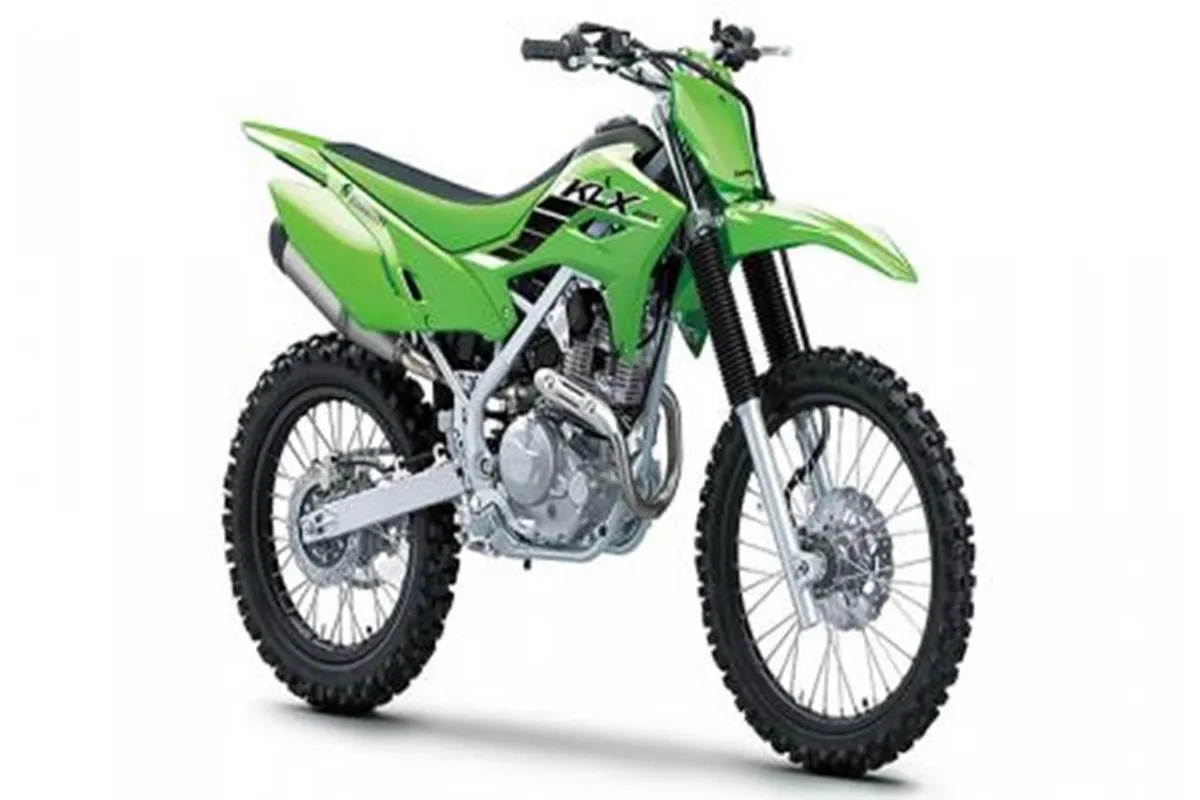
Size a kids’ dirt bike with a tape measure, not a birthday. Measure your child’s inseam in the boots they will actually ride in, compare it against the bike’s published seat height, and buy the machine they can hold up by themselves. Engine size, wheel size, and whether there is a clutch lever all follow from that one number.
The ladder is short and it has not changed much in twenty years. A first-timer with no experience starts on a fully automatic 49cc PW50. A child who can already balance moves to a 110cc bike with an automatic clutch — the Yamaha TT-R110E or the Kawasaki KLX110R. The clutch lever arrives next, on a Honda CRF125F or a Yamaha TT-R125LE. After that it splits: a 230cc trail bike for a teenager who wants to ride all day in the woods, or an 85cc two-stroke race bike for one who wants to ride a track for thirty minutes at a time.
Ten machines cover that whole span on the Power Lodge floor, and their seat heights run from 18.7 inches to 34.4 inches. Here is how to find the one your kid fits.
How to measure a kid for a dirt bike
Four measurements, in order of how much they matter.
Inseam against seat height. Have your child stand against a wall in riding boots with a book pulled up snug between their legs, and measure from the floor to the top of the book. That is the working inseam. Sit them on the bike with the suspension settled under their weight. A rider who can plant the balls of both feet is well matched. A rider who can only get one toe down is on too much bike, and a rider who is flat-footed with bent knees will outgrow it inside a season.
Reach to the bars and the levers. Seat height gets all the attention, but a child who cannot cover the front brake lever with two fingers without shifting their grip cannot use the front brake in the moment they need it. Sit them on the bike and watch their hands, not their feet. On the 110s, lever reach is usually fine; on the 125s and up it is worth checking.
The weight of the bike against the weight of the kid. A PW50 weighs 90 pounds wet. A KLX230R S weighs 262.4 pounds. Picking a dropped bike up out of a rut is part of learning to ride, and a child who physically cannot lift their own machine will wait for you every time — which changes what riding feels like to them.
Whether there is a clutch to learn. This is a skill question rather than a size question, and it is the one parents most often get backwards. More on it below.
Every youth dirt bike on the Power Lodge floor, by seat height
| Bike | Model year | Engine | Transmission | Seat height | Wheels, front / rear | Weight | Listed price |
|---|---|---|---|---|---|---|---|
| Yamaha PW50 | 2026 | 49cc air-cooled two-stroke | Fully automatic, shaft drive | 18.7 in | 10 in / 10 in | 90 lb wet | $1,899 |
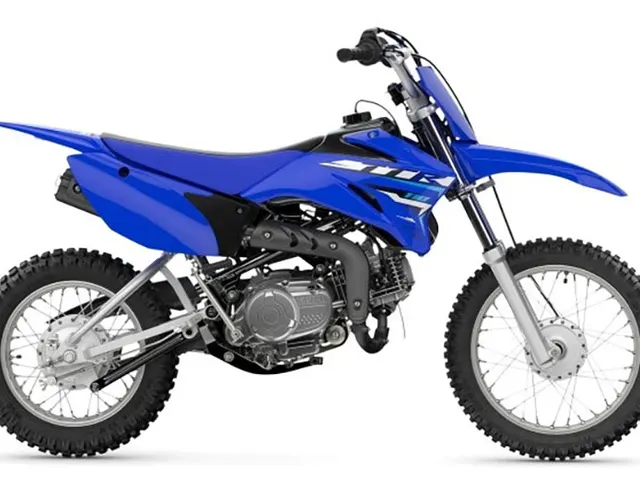
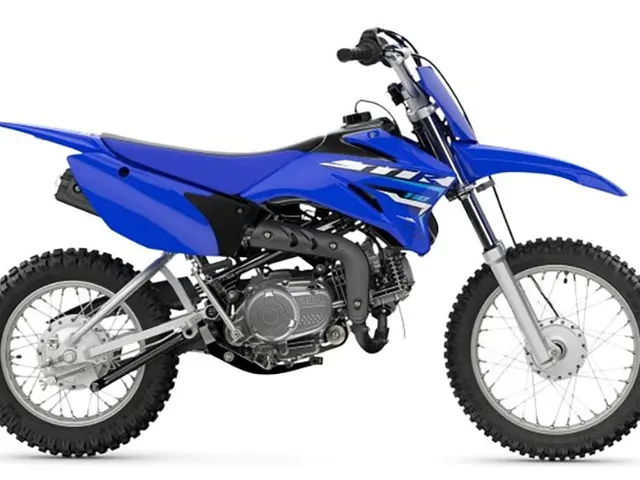
| Yamaha TT-R110E | 2026 | 110cc air-cooled four-stroke | Four-speed, automatic clutch, electric start | 26.4 in | 14 in / 12 in | 159 lb wet | $2,349 |
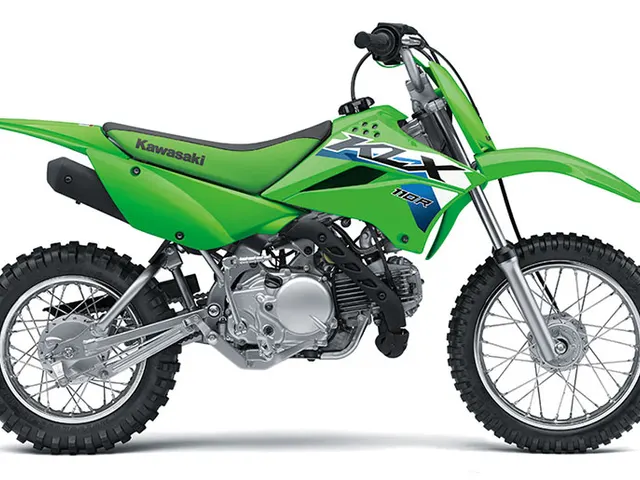
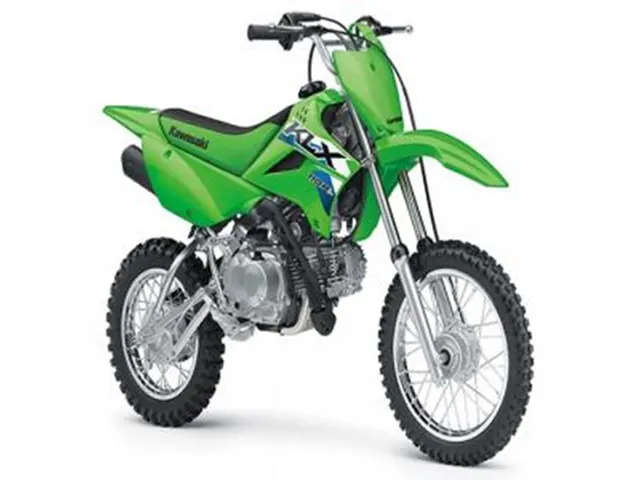
| Kawasaki KLX110R | 2026 | 112cc air-cooled four-stroke | Four-speed, automatic centrifugal clutch, electric start | 26.8 in | 14 in / 12 in | 167.5 lb curb | $2,899 |
| Kawasaki KLX110R L | 2026 | 112cc air-cooled four-stroke | Four-speed, manual clutch, electric start | 28.7 in | 14 in / 12 in | 167.5 lb curb | $3,099 |
| Honda CRF125F | 2027 | 125cc air-cooled four-stroke, PGM-FI | Four-speed, manual clutch, electric start | 29.1 in | 17 in / 14 in | 194 lb curb | $3,599 |
| Honda CRF125F Big Wheel | 2027 | 125cc air-cooled four-stroke, PGM-FI | Four-speed, manual clutch, electric start | 30.9 in | 19 in / 16 in | 199 lb curb | $3,999 |
| Yamaha TT-R125LE | 2026 | 124cc air-cooled four-stroke | Five-speed, manual clutch, electric start | 31.7 in | 19 in / 16 in | 198 lb wet | $3,399 |
| Kawasaki KX85 | 2026 | 84cc two-stroke, KIPS power valve | Six-speed, manual clutch | 32.7 in | 17 in / 14 in | 168.4 lb curb, full tank | $4,999 |
| Yamaha TT-R230 | 2027 | 223cc air-cooled four-stroke | Six-speed, manual clutch, electric start | 34.3 in | 21 in / 18 in | 251 lb wet | $4,699 |
| Kawasaki KLX230R S | 2025 | 233cc air-cooled four-stroke, DFI | Six-speed, manual clutch, electric start | 34.4 in | 21 in / 18 in | 262.4 lb curb | $3,999 |
Every figure in that table comes off the manufacturer’s own spec sheet as published on that unit’s listing at Power Lodge, read September 3, 2026, cross-checked against Yamaha’s TT-R110E page and Kawasaki’s KLX110R page. Two cautions on reading it. Yamaha publishes wet weight, Honda and Kawasaki publish curb weight, so treat the weight column as a ranking rather than a precise comparison. And there is a second KLX230R on the floor in standard, non-lowered form; it sits taller than the 34.4-inch R S and we have not published a figure for it here because we could not read one off Kawasaki’s page directly.
The ladder, one rung at a time
Yamaha PW50: the one with no gears
A 49cc two-stroke with a fully automatic transmission, shaft final drive, and an 18.7-inch seat on a 90-pound machine. There is no clutch, no shifting, and no chain to maintain — a child learns throttle, brakes, and balance and nothing else, which is the correct number of things to learn at once.
The feature that matters most to parents is the adjustable throttle stop screw. Yamaha’s own listing describes it as letting an adult “gradually increase speed as the young rider develops skills.” Set it nearly closed on day one. Open it a quarter turn a month. It is the single most useful control on the bike and the one most likely to be ignored.
The 110s: Yamaha TT-R110E and Kawasaki KLX110R
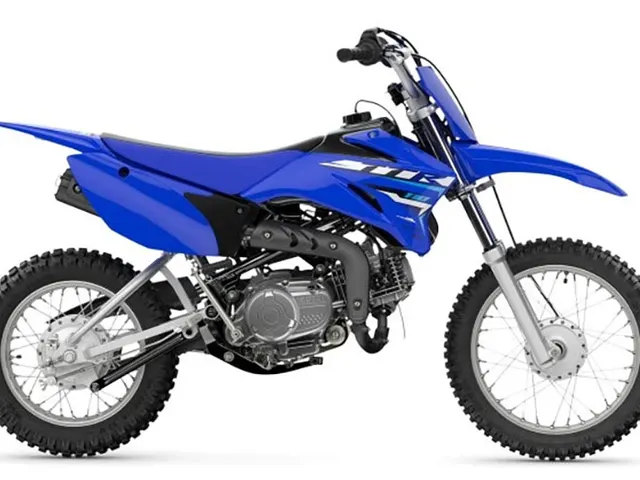
The two bikes that start most riding careers, and they are near twins. Both are air-cooled four-stroke singles — 110cc for the Yamaha, 112cc for the Kawasaki — with four speeds, an automatic clutch, electric start, and drum brakes at both ends. The Yamaha sits at 26.4 inches and 159 pounds wet; the Kawasaki at 26.8 inches and 167.5 pounds curb. The Yamaha adds a kick-start backup behind the button; the Kawasaki carries 1.4 inches more ground clearance, 8.5 against 7.1.
At this rung a child can shift gears with a foot without ever stalling the engine, because there is no lever to get wrong. That is the whole design brief. Our full Yamaha TT-R110E review goes deeper on the one most families buy.
The clutch step: KLX110R L, Honda CRF125F, Yamaha TT-R125LE
Three ways to learn a clutch lever, at three different sizes.
The Kawasaki KLX110R L is the sneaky good one: the same 112cc engine and the same 167.5-pound chassis as the KLX110R, but with a manual clutch and a 28.7-inch seat. A kid who has outgrown the automatic but not the small bike can learn the lever on a machine they already know.
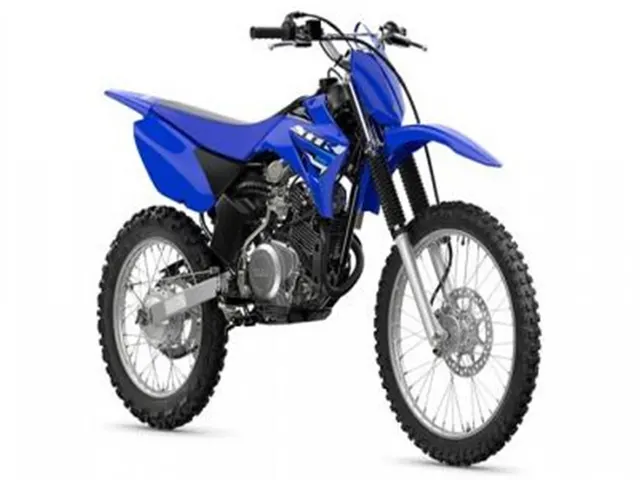
The Honda CRF125F at 29.1 inches and the CRF125F Big Wheel at 30.9 inches are the same fuel-injected 125cc bike on two wheel packages — 17/14 inches on the standard, 19/16 on the Big Wheel — with a four-speed manual clutch and electric start. The Honda CRF125F review covers which wheel size to pick.
The Yamaha TT-R125LE splits the difference in an interesting way: 19/16-inch wheels like the Big Wheel and a 31.7-inch seat, but five speeds instead of four and a 220mm front disc where the Hondas run the same disc up front and a drum out back. It is the tallest of the three and the one with the most gearbox.
Where it splits: TT-R230 and KLX230R S versus KX85
At the top of the youth range the machines stop being versions of each other.
The Yamaha TT-R230 (34.3-inch seat, 223cc, 251 pounds wet, 11.6 inches of ground clearance) and the Kawasaki KLX230R S (34.4-inch seat, 233cc with fuel injection, 262.4 pounds, six speeds) are full-size trail bikes with soft, forgiving power. A tall fourteen-year-old can ride one, and so can their parent, which is a real argument for them in a family with one bike and two riders.
The Kawasaki KX85 is a different animal on purpose: an 84cc two-stroke with a KIPS exhaust power valve, six speeds, 10.8 inches of fully adjustable suspension travel at both ends, petal disc brakes, and a 168.4-pound weight with a full tank. It sits at 32.7 inches — lower than either 230 — and it will out-accelerate both by a distance. This is a motocross race bike scaled down, not a trail bike scaled up, and it wants a rider who has already learned a clutch and a track. If the two-stroke question is what brought you here, we untangle it in two-stroke versus four-stroke dirt bikes.
Automatic clutch, manual clutch, or no gears at all?
The instinct is to skip the automatic and “save money” by buying the clutch bike first. Resist it.
A child on an automatic-clutch bike learns to look where they are going, to cover the brake, to stand on the pegs, and to shift with a foot. A child on a manual-clutch bike spends the first two months learning not to stall, which is a coordination problem rather than a riding one, and the stalls happen at exactly the moments — uphill, in a rut, in front of an audience — that make a kid decide they do not like this.
The rungs, in plain terms: no gears on the PW50, gears without a lever on the TT-R110E and KLX110R, a lever from the KLX110R L up. Most kids spend one to two seasons on each of the first two rungs, and the used market for 110s in Southwest Florida is deep enough that moving up is not an expensive event.
Why there is no age chart on this page
You will find age bands on plenty of other sites, mapping models to birthdays. We are not publishing them, because the manufacturers do not.
Every spec sheet we read for the ten machines above publishes a seat height. Not one of them publishes a recommended rider age. That is a deliberate difference from the ATV world, where the ATV Safety Institute states that every member-built quad “comes with a warning label, clearly stating the minimum age of the rider” — a standard we lean on hard in our youth ATV buyer’s guide, which is also the right place to start if your child is more interested in four wheels than two.
Two-wheelers do not carry that label, which leaves fit and skill as the honest test. An eight-year-old who has been riding for three years and an eleven-year-old who has never sat on a bike are not the same rider, and no chart built on birthdays can tell them apart. Your tape measure can.
What Florida requires of a rider under 16
On private property with the landowner’s permission, Florida asks nothing of a child on a dirt bike. On public land it asks quite a lot, and the requirements are specific.
The certificate is a real document that has to be on the child, and it is not something to sort out in a trailhead parking lot at seven in the morning. Get it in the same month you buy the bike.
The machine needs paperwork too. Florida titles off-highway vehicles — including dirt bikes, which chapter 317 classifies as off-highway motorcycles — under a title with no plate and no highway registration, which our OHV title and registration guide walks through at the counter level.
Then there is the question of where any of this happens. Neither Lee nor Collier county runs a public trail system, so youth riding here means private acreage, a trailer, or a membership somewhere. The honest map is in where to ride an ATV or UTV in Southwest Florida — the same venues, and the same drive times, apply to two wheels.
Mistakes people make
- Buying two sizes up so they grow into it. A child who cannot touch the ground cannot save a slow tip-over, and a slow tip-over is how confidence gets built or lost. Buy for now. These bikes hold their value.
- Skipping the automatic rung to save a purchase. You are not saving a purchase; you are spending a season on stall recovery instead of riding.
- Opening the throttle stop on day one. The PW50 screw exists so that the bike can be slow on purpose. Leave it slow.
- Reading the engine size as the difficulty rating. The 84cc KX85 is far more bike than the 223cc TT-R230. Displacement and intensity are unrelated across a two-stroke and a four-stroke.
- Measuring in sneakers. Riding boots add real height at the heel, and they are also required gear on public land under § 261.20. Measure in what they will ride in.
What it costs
The floor spans $1,899 for the 2026 Yamaha PW50, listed at its $1,899 MSRP, up to $4,999 for the 2026 Kawasaki KX85 at its $4,999 MSRP. The volume rung sits between: the 2026 TT-R110E is listed at $2,349 against a $2,449 MSRP, the KLX110R at $2,899 against $2,999, and the KLX110R L at $3,099 against $3,199.
The clutch bikes run $3,399 for the 2026 TT-R125LE (MSRP $3,599) and $3,599 and $3,999 for the 2027 CRF125F and CRF125F Big Wheel at their respective MSRPs. At the top, the 2027 TT-R230 is listed at $4,699 and the 2025 KLX230R S at $3,999 against a $4,999 MSRP — a model-year-clearance number rather than a permanent one.
Add gear at $200 to $400. Add Florida sales tax at 6 percent plus the county surtax on the first $5,000 — 0.5 percent in Lee, none in Collier. Add the title work. A realistic all-in figure for a first 110, geared and titled, lands a little under $3,000.
Where to go next
If the choice is still between two wheels and four, read the best youth ATV comparison alongside this page — the safety framing there applies to both, and the fit method is the same. If you have landed on a 110, the Yamaha TT-R110E review is the detailed version. If your kid is already on a 110 and asking for a clutch, start with the Honda CRF125F review.
And bring the child with you. A seat height is a number on a page until a nine-year-old sits on the bike and either grins or looks at the ground.
Bonita Springs — PW50 through KX85 on the floor, with today's price on each.
Quick answers
- What size dirt bike should a kid ride?
- Measure your child's inseam in riding boots and compare it to the bike's published seat height. If they can put the balls of both feet down and hold the bike up on their own, it fits. Seat heights on the current youth bikes run from 18.7 inches on the Yamaha PW50 to 34.4 inches on the Kawasaki KLX230R S.
- What is a good first dirt bike for a kid?
- For a child who has never ridden, the Yamaha PW50 is a fully automatic 49cc machine with an 18.7-inch seat and a throttle stop screw a parent can set. The next rung up is a 110cc automatic-clutch bike — the Yamaha TT-R110E at 26.4 inches or the Kawasaki KLX110R at 26.8 inches.
- What age is a 110cc dirt bike for?
- Neither Yamaha nor Kawasaki publishes a rider age for the TT-R110E or the KLX110R on the spec sheets we read; both publish a seat height instead. Size by inseam against the 26.4-inch and 26.8-inch seats, and by whether the child can hold the bike up unassisted.
- Should a kid start on an automatic or a manual clutch dirt bike?
- Start automatic. The Yamaha PW50 has no gears at all, and the TT-R110E and KLX110R use an automatic clutch, so the bike cannot be stalled at the wrong moment. The clutch lever arrives on the next rung — the KLX110R L, the Honda CRF125F, or the Yamaha TT-R125LE.
- Do kids need a license to ride a dirt bike in Florida?
- Not on private property. On public land, § 261.20 requires a rider under 16 to wear a DOT or Snell helmet, eye protection, and over-the-ankle boots, to be supervised by an adult, and to carry an OHV safety-course certificate. The bike itself is titled under chapter 317 rather than tagged.
- How much does a kids' dirt bike cost?
- The current floor spans $1,899 for the Yamaha PW50 up to $4,999 for the Kawasaki KX85, all as listed in September 2026. The volume rung — a 110cc automatic-clutch trail bike — lands between $2,349 and $3,099. Add $200 to $400 for a helmet, goggles, gloves, and boots that fit.