Review · The Stable
Yamaha TT-R110E Review: The Little Four-Stroke That Starts a Thousand Riders
Four of them in the building at once. That is not a coincidence — it is what happens when one machine answers the same question for twenty years.
By The Outpost CrewUpdated 8 min read
How this review was built: from Yamaha's published specs, professional road tests, owner reports, and what the Power Lodge crew sees on the showroom floor and in the service bay — not a first-hand test ride. Prices are MSRP unless the live listing below says otherwise.How we review →
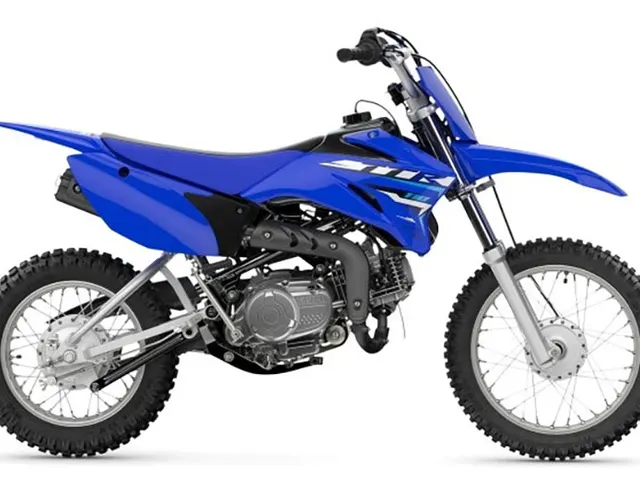
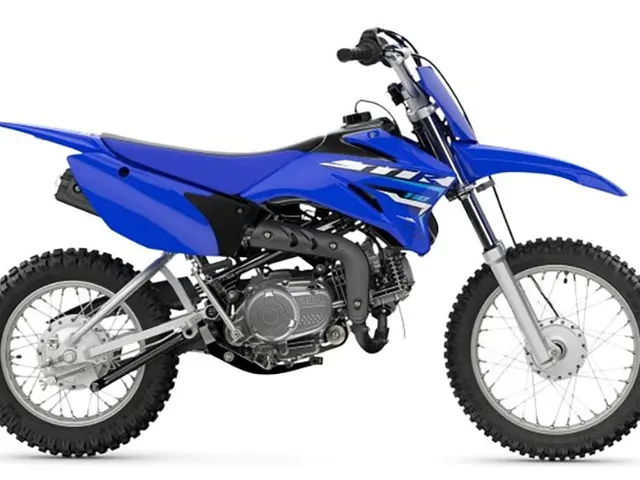
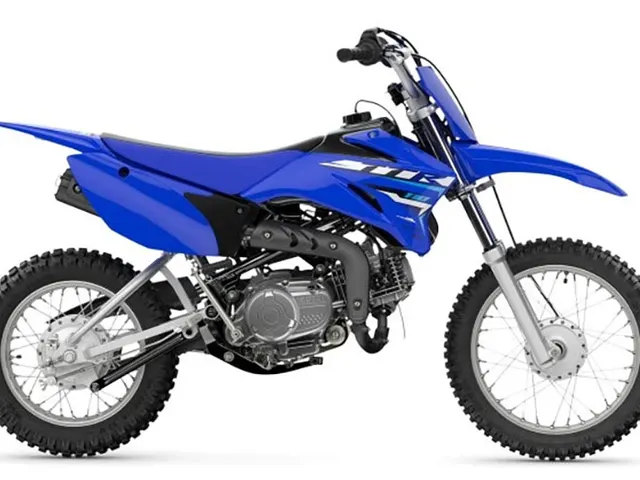
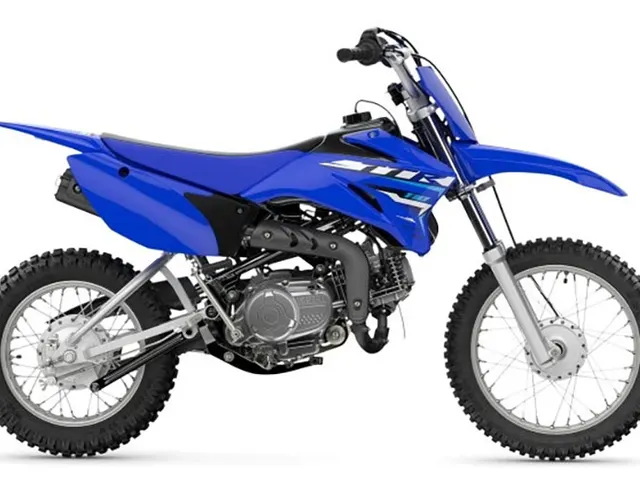
The 2026 Yamaha TT-R110E is the bike that gets a kid from a training-wheels machine to an actual motorcycle without asking them to learn a clutch lever first. It is a 110cc air-cooled four-stroke with a four-speed gearbox, an automatic clutch, electric start with a kick backup, a 26.4-inch seat, and a wet weight of 159 pounds.
Four of them are on the Power Lodge floor as of September 2026 — the deepest stock of any youth dirt bike in the building, and a fair measure of how often a parent walks in asking for exactly this.
Who it is for: a child who can already balance a bicycle confidently and is ready for gears, with an inseam that matches a 26.4-inch seat. Who it is not for: a first-ever rider with no balance yet — that is a PW50 — and a fast teenager, who will be bored by spring.
What the Yamaha TT-R110E is
It is the second rung on Yamaha’s trail ladder: above the fully automatic PW50, below the manual-clutch TT-R125LE. The whole model line has changed very little in two decades, and that is the point rather than a criticism. The parts are cheap, every dealer knows them, and a used one holds its value because the next family wants exactly what this family wanted.
Mechanically it is straightforward. A SOHC two-valve single, 51.0 by 54.0 millimeters, 9.3:1 compression, breathing through a Mikuni VM16 carburetor with CDI ignition. Drum brakes at both ends. A 14-inch front wheel and a 12-inch rear. A 31-millimeter telescopic fork with 4.5 inches of travel and a Monocross rear shock with 4.3.
The two features that sell it are the automatic clutch and the electric start, and they solve the two problems that make small children give up on motorcycles: stalling, and not being able to restart after a tip-over.
| Engine | 110cc air-cooled SOHC two-valve four-stroke single |
|---|---|
| Bore and stroke | 51.0 x 54.0 mm |
| Compression ratio | 9.3:1 |
| Fuel system | Mikuni VM16 carburetor |
| Starter | Electric, with kick-start backup |
| Transmission | Constant-mesh four-speed, automatic clutch, multiple wet plates |
| Final drive | Chain |
| Seat height | 26.4 in |
| Ground clearance | 7.1 in |
| Wheelbase | 42.5 in |
| Wet weight | 159 lb |
| Fuel capacity | 1.0 gal |
| Wheels, front and rear | 14 in (2.50-14) and 12 in (3.00-12) |
| Brakes | 95 mm front drum, 110 mm rear drum |
| Suspension travel, front and rear | 4.5 in and 4.3 in |
| Listed price, September 2026 | $2,349 (MSRP $2,449, MY26) |
Source: powerlodgefl.com. Specs and pricing are the manufacturer's published figures and can change by model year.
Gears without a lever: how the automatic clutch works
The TT-R110E has four gears and a foot shifter and no clutch lever anywhere on the handlebar. A centrifugal mechanism engages the wet clutch as engine speed rises and releases it as speed falls, so the rider pulls back the throttle, taps up a gear with their left toe, and rolls on again.
What that buys is not convenience. It is the removal of the single most common way a new rider fails. A stall on a hill, in front of siblings, is how an eight-year-old decides motorcycles are frustrating. On this bike the engine simply cannot be stalled that way, so the rider’s attention stays on where they are going.
What it costs is the skill itself. A rider on a TT-R110E is not learning clutch control, which means the transition to a manual bike later is a real transition. The Kawasaki KLX110R L exists precisely to smooth that step, and the Honda CRF125F is the more common next machine.
Electric start is the other half of the design. A 110cc engine is easy to kick, but a child who has just dropped the bike in soft sand is not in a kicking mood. The button turns a stoppage into a pause. Yamaha kept the kick lever anyway, which matters more than it sounds: a small battery on a bike that sits from May to October is a battery that will eventually be flat on the morning you want to ride.
On the trail
At 159 pounds with a 42.5-inch wheelbase, this is a bike a child can physically manage. That is the specification that decides everything else. A kid who can pick their own bike up, walk it out of a rut, and turn it around in a trail is a kid who rides independently, and independence is what makes a young rider actually improve.
The power delivery is gentle to the point of being uneventful, which is correct. There is no step in it, nothing that arrives suddenly, and the throttle stop screw lets a parent make it gentler still for the first few weekends.
The two honest limitations show up as the rider gets better. Suspension travel of 4.5 and 4.3 inches is short, and it is calibrated for a light rider — a bigger kid will find the bottom of it over roots and whoops. Drum brakes at both ends are fine for the speeds this bike reaches, but they are drums; the front lacks the feel of the disc on the TT-R125LE, and a rider learning to trail-brake will notice.
The 7.1 inches of ground clearance is the other number to keep in mind. On a Southwest Florida trail with soft sand and cypress roots, that is enough and not more than enough.
What owners say about the TT-R110E
The reputation on ThumperTalk and the dirt bike forums has been consistent for years, and it lands in three places.
They do not break. The recurring word is bulletproof, applied to an engine that mostly wants oil and a clean air filter. Owners routinely describe machines passed between two or three families still running on the original top end.
They hold their money. A direct consequence of the first point. Families upgrade off these bikes and get most of their purchase back, which changes the arithmetic of buying new — the real cost of ownership on a TT-R110E is closer to a rental fee than a purchase price.
Two complaints, both about growth. The suspension is soft for heavier riders, and there is no front disc brake. Both are the same observation from different angles: the bike is built for a specific size of rider and does not pretend otherwise.
Owners also report smaller adults riding these around a property regularly. That is true and it is fun, and it is worth knowing that the suspension will be at its limit the whole time. Yamaha does not publish a rider weight limit on the spec sheet.
The question parents ask first
“What age is this for?” is the first thing every parent asks, and the honest answer is that Yamaha does not say.
The spec sheet publishes a 26.4-inch seat height and no recommended age, and that is not an oversight. Youth ATVs carry a manufacturer age label by industry standard; youth dirt bikes do not. So the test is physical: put the child on the bike in the boots they will ride in, let the suspension settle, and look for the balls of both feet on the ground and hands that reach the front brake lever without stretching. If they can hold 159 pounds up unassisted, it fits. If they cannot, no birthday makes it fit.
Anyone quoting you an age band for this bike is quoting a forum, not Yamaha. The full method, with every seat height on the floor in one table, is in the kids’ dirt bike size guide.
Living with a TT-R110E in Southwest Florida
This bike has one maintenance issue that dominates the rest, and it comes from the Mikuni carburetor.
Florida families ride these seasonally. The bike goes out in November, gets used hard through the cool months, and sits from May through October while the afternoon storms roll in daily. Ethanol-blended pump gas left in a 1.0-gallon tank and a small float bowl for five months is the single most common reason a TT-R110E will not start in the fall. The fix is boring and it works: run the fuel down and shut the petcock before storage, or fill it and stabilize it, and either way put a tender on the small battery so the electric start is there when you want it.
Sand is the second thing. The air filter on a bike ridden on Southwest Florida’s soft, dry ground is doing more work than the service interval assumes, and it is a five-minute check. Drum brakes are actually an advantage here — sealed against grit and water in a way an exposed disc is not.
The third is trivial and easy to forget. At 159 pounds, hurricane prep is one person rolling the bike indoors and putting it on a stand — a genuinely small chore compared with everything else on the checklist.
Recalls and known issues
For the 2026 Yamaha TT-R110E, none found in the NHTSA database as of September 2026.
Off-road motorcycles can appear in two registries, so check both on any used bike: run the VIN from the steering head at nhtsa.gov/recalls, and search the model at cpsc.gov/Recalls, which is where youth off-road machines have also been recalled. Two minutes, and worth it on a bike that may have passed through three families.
Price and what is on the floor
As of September 2026 the Power Lodge floor holds four 2026 TT-R110E units listed at $2,349, against a $2,449 MSRP for that model year. Freight, prep, tax, and the OHV title work are added on top; ask for the out-the-door figure.
Four units at one price point is a stocking decision, not a coincidence, and it is the practical reason to buy here rather than chase a used one — a used TT-R110E in good shape in Southwest Florida is often within a few hundred dollars of a new one, because everybody else has already worked out that these hold value.
How the TT-R110E compares
Kawasaki KLX110R is the true rival and it is on this floor too, listed at $2,899 against a $2,999 MSRP. It is 112cc rather than 110, 167.5 pounds curb rather than 159 wet, a 26.8-inch seat rather than 26.4, and it carries 8.5 inches of ground clearance where the Yamaha has 7.1. Kawasaki also offers the KLX110R L at $3,099 — same chassis, manual clutch, 28.7-inch seat — which the Yamaha line does not answer at this size. The Yamaha’s counterarguments are the kick-start backup and $550 of list price.
Honda CRF110F is the third machine in this class and is not on our floor, so it stays a mention rather than a recommendation.
Yamaha PW50 at $1,899 is the rung below: 49cc, fully automatic, no gears at all, an 18.7-inch seat, and 90 pounds. If your child has not ridden a bicycle without training wheels, start there.
Yamaha TT-R125LE at $3,399 is the rung above: 124cc, five speeds, a manual clutch, a front disc brake, and a 31.7-inch seat. It is the bike this one leads to in two or three seasons.
Highs
- Automatic clutch removes stalling from the learning curve entirely
- Electric start with a kick backup — the button when it works, the lever when it does not
- 159 lb wet is light enough for a child to pick up and manage alone
- Owner-reported durability and resale are the best arguments in the class
- Listed $550 under the Kawasaki rival on our floor
Lows
- Carbureted, so stale fuel after a Florida summer is a real annoyance
- Drum brakes front and rear, where the next bike up has a front disc
- Short, soft suspension that a heavier rider will bottom
- No clutch lever means the skill still has to be learned later
- Off-road only — no lights and no road use in Florida
Everything on this page comes from Yamaha’s published specifications, owner reports, and what the crew sees on the floor and in the service bay. Our standard is on how we review. If the plan involves riding anywhere public, read what § 261.20, Fla. Stat. (2026) requires of a rider under 16 first, and if the two-stroke question comes up as your rider gets faster, we cover it in two-stroke versus four-stroke dirt bikes.
Bonita Springs — sit your kid on one before you decide on the size.
Quick answers
- What age is a Yamaha TT-R110E for?
- Yamaha publishes a 26.4-inch seat height and no rider age. Size by inseam instead: sit the child on the bike in riding boots and check that they can plant the balls of both feet and hold up 159 pounds without help. Age charts elsewhere are not manufacturer guidance.
- Does the Yamaha TT-R110E have a clutch?
- Not a lever. It uses a constant-mesh four-speed gearbox with an automatic clutch, so the rider shifts with their left foot and cannot stall the engine by mishandling a lever. That is the feature the bike is built around — gears without the coordination problem.
- Can an adult ride a TT-R110E?
- Physically, yes, and plenty do — owners regularly describe smaller adults riding them around a property. The suspension is set for a child's weight, with 4.5 inches of front travel and 4.3 at the rear, so an adult will use all of it quickly. Yamaha publishes no rider weight limit on the spec sheet.
- Is the Yamaha TT-R110E better than the Kawasaki KLX110R?
- They are near twins. The Yamaha is 110cc, 159 pounds wet, a 26.4-inch seat, and it adds a kick-start backup behind the electric button; the Kawasaki is 112cc, 167.5 pounds curb, a 26.8-inch seat, and 1.4 inches more ground clearance. The Yamaha is listed cheaper. Fit decides it.
- How fast does a TT-R110E go?
- Yamaha publishes neither a top speed nor a horsepower figure. It is a 110cc air-cooled single geared for trail speeds, with an adjustable throttle stop so a parent can cap it lower still. Treat any specific number you find online as a guess rather than a specification.