SWFL Local · The Trailhead
Riding Big Cypress: How the ORV Permit Works, Which Machines Qualify, and What to Expect
Ninety minutes east of Bonita Springs is the only real public riding in our own backyard. It runs on a permit system stricter than almost anyone expects.
By The Outpost CrewUpdated 7 min read
Honda at Power Lodge →Yamaha at Power Lodge →Kawasaki at Power Lodge →Can-Am at Power Lodge →CFMOTO at Power Lodge →
One hundred dollars, per vehicle, bought online, and it expires January 31 no matter when you buy it. That is the Big Cypress ORV permit in a sentence. The part that catches people out is not the fee — it is that the Preserve publishes hard limits on width, dry weight, and tire tread face, requires four-wheel drive, and expects you to verify your own machine against them before you ever reach a gate.
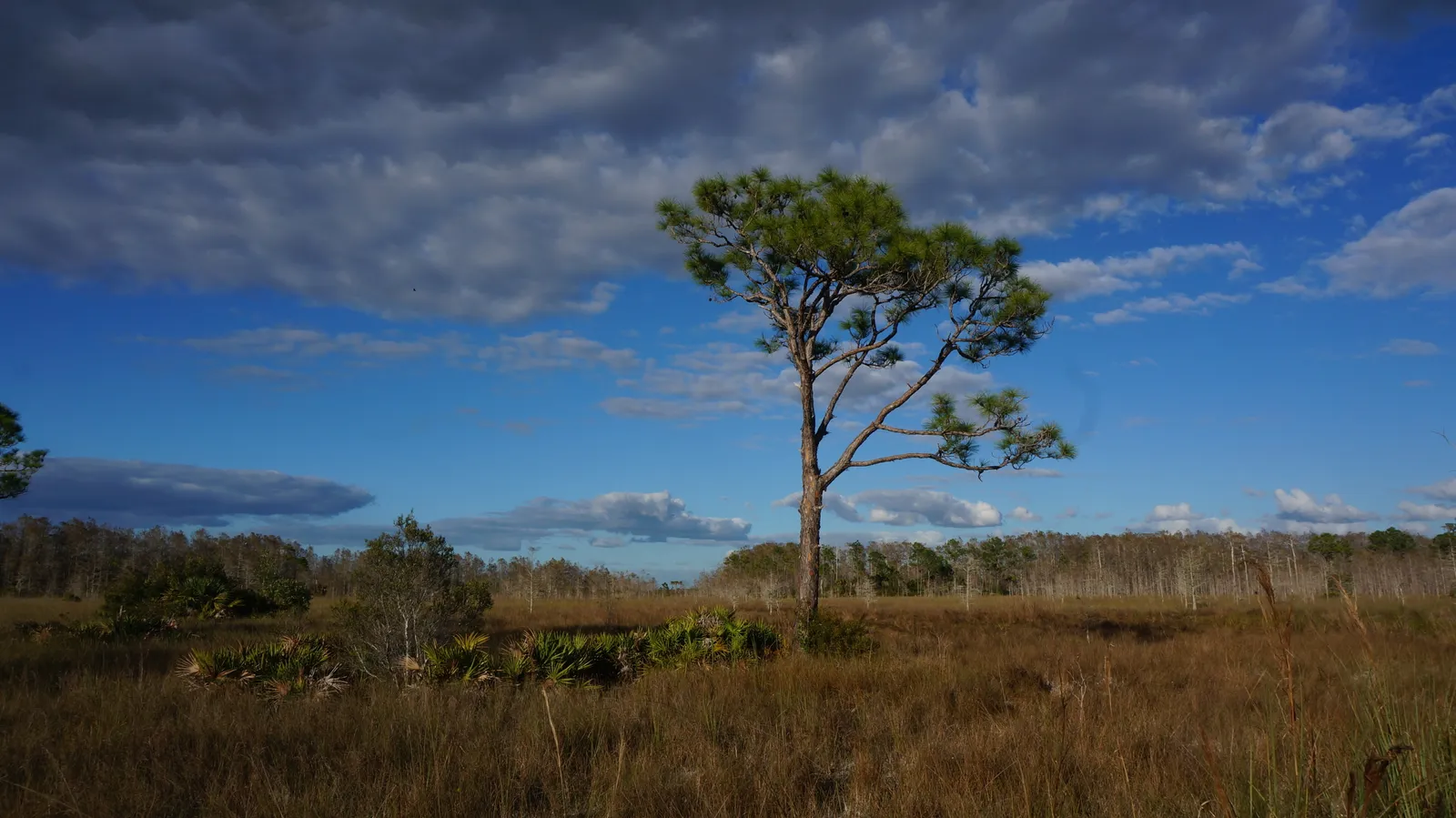
Big Cypress is about 90 minutes east of Bonita Springs, out the Tamiami Trail past the Collier line, and it is the only public riding of any size in Southwest Florida. This is how the permit actually works and which machines clear the bar.
The permit, exactly
Permits are sold through Recreation.gov (accessed September 2026), and the terms are unusually specific:
- The fee is “$100.00 at the time of sale.”
- It “is valid from the date of purchase until January 31st of the following year.” Buy in November and you get roughly three months. Buy in early February and you get almost twelve.
- “Each off-road vehicle must obtain its own individual permit. Permits are vehicle-specific and are not transferable between vehicles.” Two machines, two permits.
- “Once a permit is successfully purchased they can not be cancelled, returned, exchanged, or refunded.”
- Five categories are authorized: UTV, ATV, swamp buggy, street legal, and airboat, each with its own requirements.
- “Proof of permit must be available at all times while operating” — a printed copy or a screenshot on your phone.
And the two disqualifiers that end the conversation for a lot of machines: to qualify, a vehicle must “meet all inspection requirements applicable to its vehicle type” and “be equipped with four-wheel drive (4WD)”. Separately, “motorcycles and other two-wheeled motorized vehicles are not permitted in the backcountry of Big Cypress National Preserve.”
Which machines qualify?
The numbers come from the Preserve’s Superintendent’s Compendium, the July 22, 2026 edition. These are not guidelines; they are the standard your self-inspection attests to.
| Vehicle type | Maximum width | Maximum weight | Minimum tire tread face | Drive |
|---|---|---|---|---|
| ATV | 55 inches | 1,500 lb dry | 7 in front, 9 in rear | 4x4 capable |
| UTV | 66 inches | 2,500 lb dry | 9 in on all tires | 4x4 capable |
| Swamp buggy | 8 feet total width | under 6,000 lb GVW | 9 in on all tires | n/a |
| Street legal vehicle | not specified | not specified | not specified | 4x4 capable |
| Airboat | 8 feet beam | not specified | n/a | n/a |
Source: Big Cypress Superintendent's Compendium, July 22, 2026. Specs and pricing are the manufacturer's published figures and can change by model year.
Two more requirements apply to everything with wheels: “ORVs must have a muffler in good working condition,” and every machine must “display at least one forward facing white headlight and one red lighted taillight.” A quad that came from the factory without a taillight needs one before it needs a permit.
The permit also has to be displayed in a specific place depending on what you are riding — left back fender on an ATV, front left side on a UTV, driver’s side on a swamp buggy, and the driver’s-side windshield or front bumper on a street-legal 4x4.
What that rules in, and out
Run those three numbers — width, dry weight, 4WD — against a modern showroom and the picture gets interesting.
Comfortably inside the ATV class: essentially every utility and recreation quad on the Bonita Springs floor. A CFMOTO CFORCE 600 is 753 pounds dry, a Can-Am Outlander 500 DPS is 750, and none of them come close to 55 inches wide. What actually needs checking on a quad is the tire tread face — 7 inches front and 9 inches rear is a real measurement, and plenty of stock utility tires are narrower than owners assume. Measure before you buy the permit.
One quiet disqualifier: a two-wheel-drive machine cannot be permitted at all. The 2026 Can-Am Outlander 500 2WD unit on the floor is a perfectly good grove runner and is not eligible for a Big Cypress permit.
Inside the UTV class, but check your own sheet: the 50-inch CFMOTO ZFORCE 800 Trail at 1,390 pounds dry clears width and weight easily. The Can-Am Defender MAX HD7 (1,757 lb dry), MAX HD9 (1,789 lb), CFMOTO UFORCE 800 XL (1,629 lb), and UFORCE U10 Pro (1,742 lb) all sit well under the weight ceiling, though six-seat cab widths vary by trim and you should read the number off your own spec sheet rather than trusting a class assumption.
Outside it: the Can-Am Defender MAX Limited HD11 is listed at 2,645 pounds dry, which is over the Preserve’s 2,500-pound UTV limit — the air-conditioned cab that makes it ideal for an August grove day makes it too heavy for this trail system. And a Maverick X3 X MR built to the 72-inch stance is six inches past the 66-inch width limit before you argue about anything else.
And nothing on two wheels, which rules out every dirt bike and dual sport in the building for backcountry use.
The practical takeaway: the two numbers to know about your own machine are overall width and dry weight, and the Preserve’s ceilings sit right in the middle of the modern six-seat class. Setting a machine up for this kind of ground — tires, snorkel, recovery gear — is covered in UTV setup for Florida mud and sand.
Buying the permit, step by step
- Measure and weigh first. Width, dry weight, tread face, muffler, headlight, taillight. You are about to attest to all of it.
- Have your Florida OHV title paperwork in order. Public land means paperwork; see Florida OHV title and registration.
- Go to the Recreation.gov permit page and pick the right vehicle category. One permit per machine.
- Work through the educational materials. Operators must “review prescribed educational materials and formally attest that their vehicle meets all applicable requirements.” Buyers who do not purchase through Recreation.gov complete an Operator License form instead.
- Pay the $100 and print it. Then put a screenshot on your phone as a backup, because paper and swamp are not friends.
- Fix the display. Left back fender, front left side, driver’s side — whichever applies to your machine.
The rules once you are through the gate
The Preserve’s ORV use page (accessed September 2026) is short and absolute, and worth reading in full before a first trip.
- Trails are open 5:00 a.m. to 10:00 p.m. only. The Compendium states recreational ORV use is prohibited throughout the Preserve between 10:00 p.m. and 5:00 a.m.
- The speed limit is 15 mph, except on the Zone 4 airboat trails where it is 30.
- “Only access ORV trails by the designated gates. Please close and lock gates behind you.” This one is enforced and it matters — open gates move cattle and people who should not be moving.
- Stay on designated trails. The trail network is mapped; the rest of the Preserve is not yours to cut through.
- Inspect your own machine. “All ORVs must meet inspection requirements as outlined in the Superintendent’s Compendium,” and “you are responsible for conducting your own ORV inspection.” Nobody checks it for you at a booth, which means the consequence lands entirely on you if it is wrong.
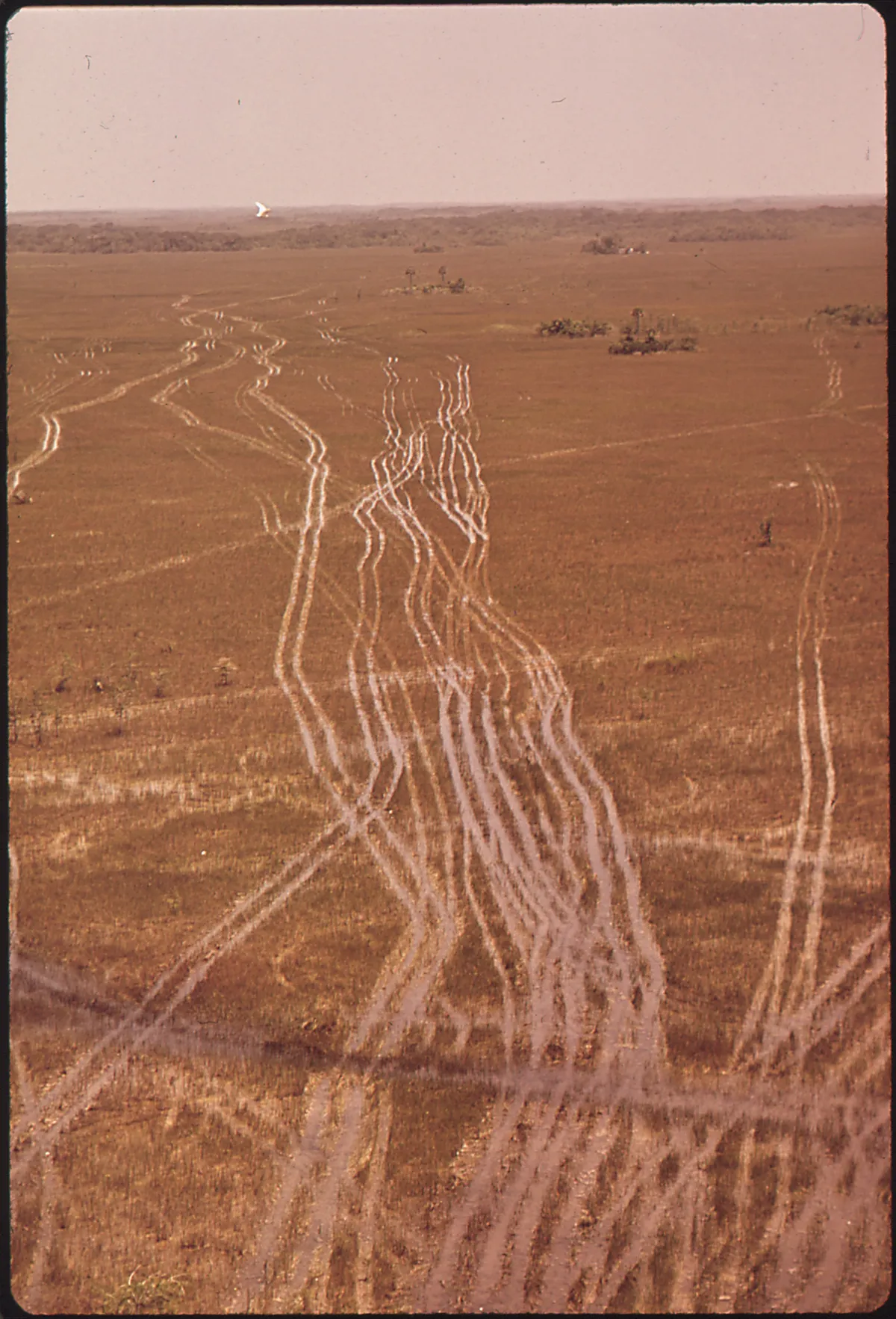
Where you can actually ride
The Compendium sets out which vehicle types are permitted in which unit, and they are not identical.
- Bear Island Unit — swamp buggy, ATV, UTV, and street-legal 4x4. The only unit on this list that admits street-legal vehicles.
- Turner River Unit — swamp buggy, ATV, UTV.
- Corn Dance Unit — swamp buggy, ATV, UTV.
If your plan involves driving a 4x4 truck onto a designated trail, Bear Island is the unit to be looking at.
Closures, and why last year’s trail may be shut
Big Cypress is a swamp with a water table, so the trail system is not static. The Compendium provides that the Superintendent announces “all seasonal, hydrologic, Threatened & Endangered (T&E) Species, impacted trail, and safety closures” by Superintendent’s order.
In practice that means checking the Preserve’s own page in the week before you tow, not the month before, and being ready to change the plan. Wet season water levels close trails that were dry in March. The Preserve’s headquarters number is 239-695-2000 if the website is ambiguous.
Before you go
- Buy the permit in February if you can. Same $100, nearly four times the riding.
- Measure the tread face. It is the requirement most likely to catch a stock quad.
- Fuel in Naples or Everglades City. The Tamiami Trail east of Naples is not full of gas stations.
- Water, then more water, plus a real recovery strap and a way to air tires back up.
- Leave daylight in the plan. Trails close at 10:00 p.m., and loading a muddy machine in the dark is how straps and tempers get lost.
- Tell someone your unit and your route. Cell coverage out there is a rumor.
Big Cypress is the closest thing Southwest Florida has to a home trail system, and it earns the paperwork. The other three places worth towing to are ranked in where to ride an ATV or UTV in Southwest Florida, and if your plan involves riding to the trailhead rather than trailering, read are UTVs street legal in Florida first — the answer is not the one most people want.
Laws current as of September 2026; verify with FWC/FLHSMV before you ride or launch. General information, not legal advice.
Tires, winches, and service in Bonita Springs — 90 minutes from the Bear Island gate.
Quick answers
- How much is the Big Cypress ORV permit?
- The fee is $100.00 at the time of sale, per vehicle, bought through Recreation.gov. It is valid from the purchase date until January 31 of the following year, it is vehicle-specific and non-transferable, and it cannot be cancelled, exchanged, or refunded once bought.
- Does a side-by-side qualify for a Big Cypress ORV permit?
- If it is 4x4 capable, 66 inches or less wide, 2,500 pounds or less dry, and running tires with at least 9 inches of tread face. Those are the Superintendent's Compendium limits for a UTV, and modern six-seaters can exceed the width or the weight.
- Can you ride a dirt bike at Big Cypress?
- No. Recreation.gov states plainly that "motorcycles and other two-wheeled motorized vehicles are not permitted in the backcountry of Big Cypress National Preserve." The permit categories are UTV, ATV, swamp buggy, street legal, and airboat.
- What are the trail hours at Big Cypress?
- Trails are open 5:00 a.m. to 10:00 p.m. The Superintendent's Compendium prohibits recreational ORV use throughout the Preserve between 10:00 p.m. and 5:00 a.m., and the trail speed limit is 15 mph except on the Zone 4 airboat trails, where it is 30 mph.
- Does anyone inspect your machine at Big Cypress?
- No — you inspect it. The Preserve states that all ORVs must meet the inspection requirements in the Superintendent's Compendium and that "you are responsible for conducting your own ORV inspection." Buying the permit includes attesting that your vehicle meets the requirements.