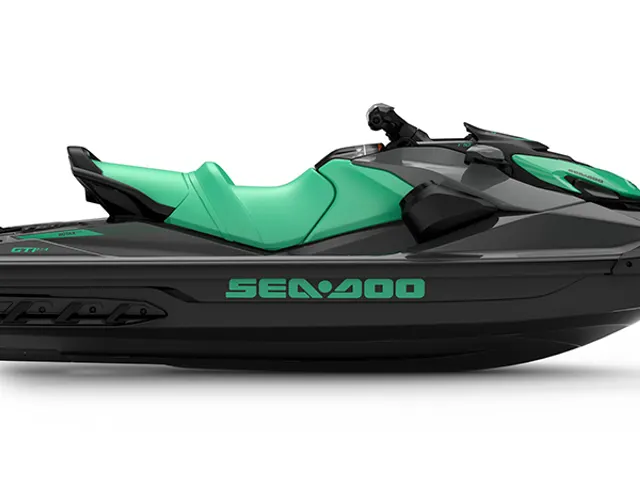
Head-to-Head · The Boathouse
Sea-Doo GTI SE 130 vs GTI SE 170: Which Recreation Sea-Doo Should You Buy?
One decision, one number, and a $600 gap. Almost everything else about these two machines is identical, which makes this the cleanest choice on the floor.
By The Outpost CrewUpdated 7 min read
How this review was built: from Sea-Doo's published specs, professional road tests, owner reports, and what the Power Lodge crew sees on the showroom floor and in the service bay — not a first-hand test ride. Prices are MSRP unless the live listing below says otherwise.How we review →
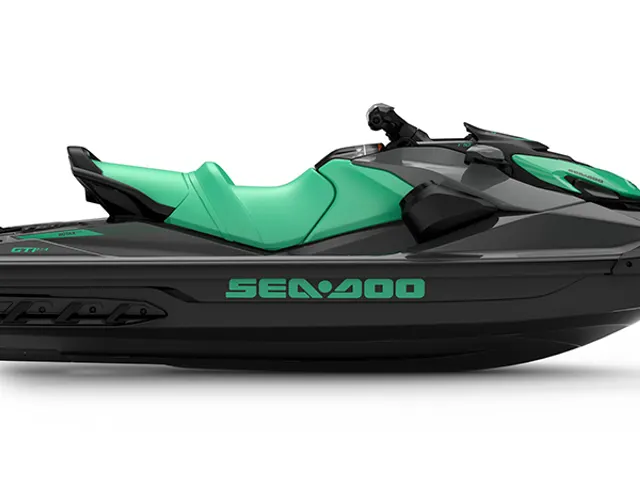
If you are choosing between a 2026 Sea-Doo® GTI SE 130 and a 2026 GTI SE 170, buy the 170. It costs $600 more as listed, and that is the least money in this building that buys the most usable difference — a real holeshot with a passenger aboard and about three miles per hour on top.
The reason the answer comes that easily is that nothing else changes. Same Polytec hull, same 40.3 gallons of storage, same 18.5-gallon tank, same iBR braking and iDF debris-clearing pump, same audio, same three seats. Sea-Doo sells both as the GTI SE and tunes the naturally aspirated Rotax 1630 ACE to two different outputs.
There is one buyer the 130 is genuinely right for, and we will get to them. For everyone else, this is a $600 decision with an obvious answer.
The short version
- Price: GTI SE 130 at $14,099 as listed, GTI SE 170 at $14,699 as listed, both 2026 model year as of September 2026.
- Power: 130 published horsepower against 170, from the same naturally aspirated Rotax 1630 ACE.
- Speed: about 52 mph against about 55, per jetdrift’s charts — the smaller half of the difference.
- Weight: 741 pounds dry against 761. Everything else on the spec sheet is identical.
- On the floor: six of the 130, seven of the 170, both carrying the Tech Package, audio, iDF, and iBR bundle.
| Spec | 2026 Sea-Doo GTI SE 130 | 2026 Sea-Doo GTI SE 170 |
|---|---|---|
| Engine | Rotax 1630 ACE, three-cylinder, naturally aspirated | Rotax 1630 ACE, three-cylinder, naturally aspirated |
| Horsepower | 130 hp, published by Sea-Doo | 170 hp, published by Sea-Doo |
| Top speed | About 52 mph (jetdrift chart) | About 55 mph (jetdrift chart) |
| Hull | GTI Polytec | GTI Polytec |
| Length × width | 130.7 in × 49.2 in | 130.7 in × 49.2 in |
| Dry weight | 741 lb | 761 lb |
| Seating | 3 riders | 3 riders |
| Fuel capacity | 18.5 gal | 18.5 gal |
| Storage | 40.3 gal | 40.3 gal |
| Braking and reverse | iBR — Intelligent Brake and Reverse | iBR — Intelligent Brake and Reverse |
| Pump protection | iDF — Intelligent Debris-Free system | iDF — Intelligent Debris-Free system |
| Display | 4.5-inch; Tech Package upgrades it | 4.5-inch; Tech Package upgrades it |
| Listed at Power Lodge, September 2026 | $14,099 (6 units) | $14,699 (7 units) |
| MSRP, 2027 model year, base (Sea-Doo site) | From $13,499 plus freight | From $14,899 plus freight |
Source: sea-doo.brp.com (2027 listing, same generation); top speeds from jetdrift; floor prices from the 2026-09-03 dealer feed. Specs and pricing are the manufacturer's published figures and can change by model year.
Engine: 40 horsepower from the same block
The Rotax 1630 ACE is a 1,630cc three-cylinder, and Sea-Doo runs it in four states across the range — 130 and 170 naturally aspirated, then supercharged at 230 and 325 further up. Both machines here are the naturally aspirated versions, so neither has a supercharger to service, and both deliver power in the linear way that makes a recreation machine appropriate for a rider who is still building confidence.
The gap between them is 40 horsepower, and it shows up in exactly one place: how quickly the machine gets from a stop to a plane with weight aboard. Solo on flat water, the two feel much closer than the numbers suggest. Add a passenger, then a second one, then a cooler, then a tube with an adult on it, and the difference stops being theoretical.
Top speed is the smaller part of the story — about 52 mph against about 55, per jetdrift. Nobody is buying either of these for top speed, and anyone who is should be looking at a supercharged machine instead.
Fuel is close to a wash. Both are naturally aspirated with the same 18.5-gallon tank, and neither carries the running-cost penalty of a supercharged engine. We have no measured consumption figures for either machine to quote, so we are not going to invent a difference between them; if you ride the 170 harder because it will let you, that is a rider variable rather than a machine one.
Ride and handling: identical hull, 20 pounds apart
The GTI hull is Sea-Doo’s Polytec recreation platform, and it is the same under both machines: 130.7 inches long, 49.2 wide, and light for its size. jetdrift’s coverage of this platform describes it as playful, roomy, and family-friendly, and calls the recreation GTI the most popular model in Sea-Doo’s line — which is consistent with 13 of them sitting in our building across the two outputs.
Twenty pounds of dry weight is the only physical difference between the two machines, and it is not enough to change how either one behaves. Both are lighter and more playful than the fiberglass ST3 touring hulls above them, and both share the recreation class’s honest limit: two feet of genuine Gulf chop is miserable on either one. That is the segment, not the trim.
Where both machines are genuinely good is the water most people here actually ride — Estero Bay on a normal morning, the Cape Coral canals, the Imperial River crawl, the shallow water on the back side of the bay. Two features do more work in that environment than any horsepower figure. iBR puts braking and reverse on the left lever, which takes the drama out of docking. iDF runs the impeller backward to shed seagrass and floating weed before anyone has to get in the water — the most Southwest Florida feature on either machine.
One question that comes up on both machines equally, so it cannot break the tie but is worth answering: the GTI hull is Polytec rather than fiberglass. Sea-Doo forums have argued the material for years, split between owners who value the weight saving and owners who trust fiberglass for the long haul. Both camps have been arguing for years without a resolution, which itself tells you the difference is not disqualifying either way. What is not in dispute is the practical effect: the GTI is lighter than an ST3 machine, easier to launch alone, and more playful for it.
Comfort, storage, and tech: no difference at all
This section is short because there is nothing to separate. Both machines carry 40.3 gallons of storage — the most in the recreation class and about 10 gallons more than a Yamaha VX — plus the same three-rider seat, the same 4.5-inch display, and the same dealer-listed bundle of Tech Package, audio, iDF, and iBR.
The one caveat applies equally to both: Sea-Doo does not itemize the Tech Package contents on the model page, so confirm what is actually on the specific hull rather than assuming a feature list. That is a question to ask about the unit, not about the engine.
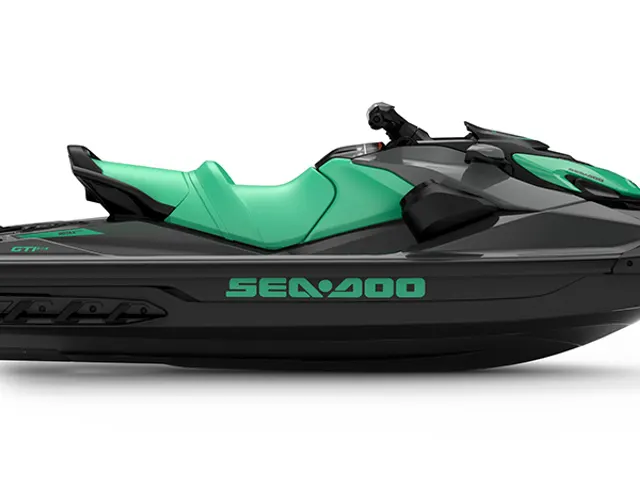
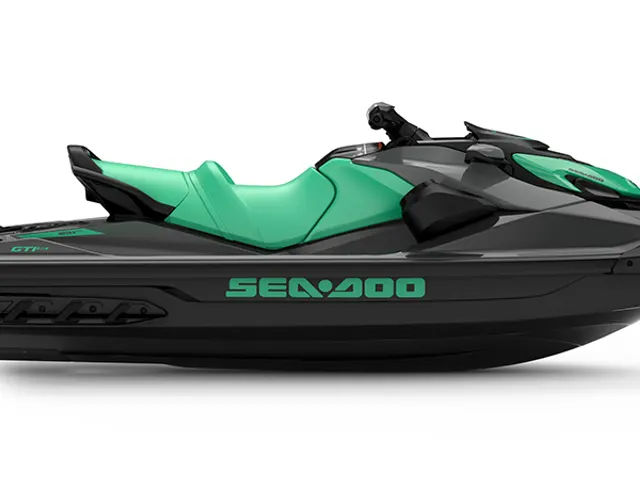
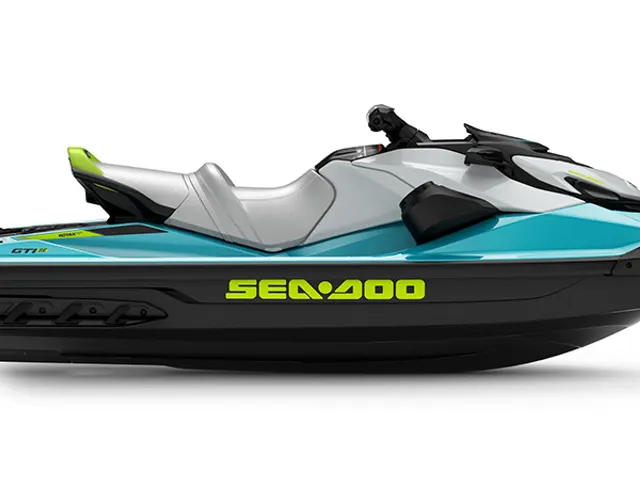
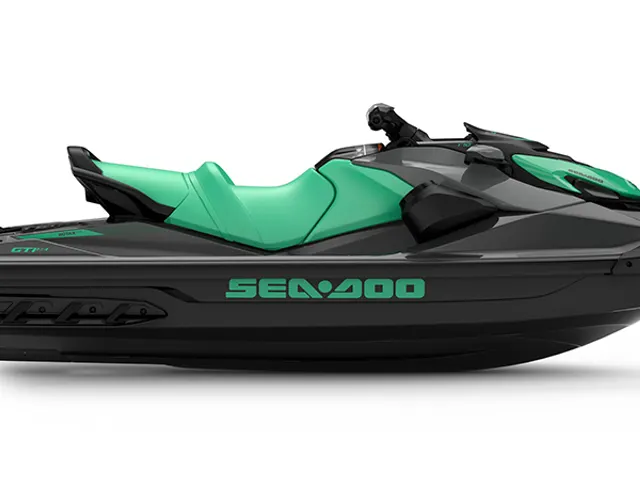
Colors are the one place the two diverge on the floor, and only by accident of stock: the 130 is here in Eclipse Black/Laguna Green and Teal Blue/Manta Green, while all seven of the 170s are Eclipse Black/Laguna Green. If a specific color is part of the decision, that is worth checking against live inventory before you settle on an engine.
Three riders is a rating on a 130-inch hull, not a plan — two adults and a child is the honest all-day load, on these two and on every other recreation machine in the class.
Price and ownership
The 2026 GTI SE 130 is listed at $14,099 and the 2026 GTI SE 170 at $14,699 as of September 2026, both matching the feed MSRP for that model year and bundle. Freight, prep, and Florida tax, title, and registration are additional on both.
There is a model-year wrinkle worth understanding before you compare our floor to Sea-Doo’s website. The 2027 GTI SE 130 lists from $13,499 plus freight and the 2027 GTI SE 170 from $14,899 — and that first number sitting below our 2026 price is not a price cut. The base 2027 machine does not carry the Tech Package, audio, iDF, and iBR bundle that every 2026 unit here has. We worked through that comparison in detail in Yamaha VX Deluxe vs Sea-Doo GTI SE 130, and the short version is that you have to compare equipment, not stickers.
Ownership is identical between the two. Same naturally aspirated engine family, same flush-after-every-salt-ride routine from our salt-water maintenance guide, same weight class at the ramp, same trailer. Owner discussion of the 1630 ACE machines on Seadooforum runs to ordinary long-term maintenance questions rather than alarm, which is what you want to see on a platform this common.
No recall campaigns were found for either machine in the U.S. Coast Guard database as of September 2026, based on a spot-check of uscgboating.org’s recall listing; the manufacturer filter there is unreliable, so have the dealer run the specific hull’s HIN before delivery.
On resale, we are not going to pretend to numbers nobody publishes by trim. What we will say is that hours, service records, and condition move a used PWC price far more than 40 horsepower does, and that buying the cheaper machine to protect resale is a poor reason to give up capability you would use.
Which one for which rider
Take the GTI SE 170 if anyone besides you rides on the machine. Two-up, three-up, tube towing, a cooler on the back, or a run home into an afternoon headwind — those are the conditions the extra 40 horsepower was built for, and $600 as listed is a small price for the machine feeling unbothered rather than busy. This is the default recommendation, and reviewers covering the line have reached the same conclusion.
Take the GTI SE 130 if you ride solo or with one light passenger, mostly on protected water, and the $600 has somewhere better to be — a trailer, a second life jacket set, a cover, or the fuel for a season. It is not a lesser machine in any way except output, and a rider who never loads it will not spend a day wishing for the 170.
Take neither if three adults ride together most weekends or you are outside the passes regularly. That is touring-hull territory, and the Sea-Doo GTX 170 is where that conversation starts. If this is your first machine of any kind, our beginner picks covers what actually makes a PWC easy to learn on, and the PWC buyer’s guide maps the whole field.
Live inventory and today's price on all 13 GTI SE units.
Quick answers
- What is the difference between a Sea-Doo GTI SE 130 and a GTI SE 170?
- Engine tune, and 20 pounds. Both use the naturally aspirated Rotax 1630 ACE on the same Polytec hull with the same 40.3 gallons of storage; the 130 makes 130 horsepower and the 170 makes 170. On the Power Lodge floor the gap is $600 as listed.
- Is the Sea-Doo GTI SE 170 worth the extra money?
- For most buyers, yes. $600 as listed is the smallest step in the lineup for the largest usable gain — better holeshot with a passenger and a tube, and about 3 mph more. Reviewers have consistently called the 170 the sweet spot of the recreation line.
- How fast is a Sea-Doo GTI SE 170?
- About 55 mph, per jetdrift's Sea-Doo top-speed chart, against roughly 52 for the GTI SE 130. Neither is a fast machine by flagship standards, where the limit is about 67 mph.
- Can a Sea-Doo GTI SE pull a tube?
- Both can. The 170 does it noticeably better with an adult on the tube and a passenger watching, because holeshot rather than top speed is what tube towing actually asks for. The purpose-built option is the Sea-Doo Wake, which adds Ski Mode and a retractable pylon.
- How much does a Sea-Doo GTI SE cost at Power Lodge?
- As of September 2026, the 2026 GTI SE 130 lists at $14,099 with six in stock, and the 2026 GTI SE 170 at $14,699 with seven. Both carry the Tech Package, audio, iDF, and iBR bundle. Freight, prep, and Florida tax, title, and registration are additional.