Ownership · The Boathouse
Salt Water and Your PWC: The Flush, Rinse, Protect Routine That Saves Engines in Southwest Florida
Three steps, ten minutes, every single salt ride. This is the habit that separates a five-year-old machine worth buying from one that looks fine and is quietly dissolving.
By The Outpost CrewUpdated 7 min read
Yamaha at Power Lodge →Sea-Doo at Power Lodge →Kawasaki at Power Lodge →
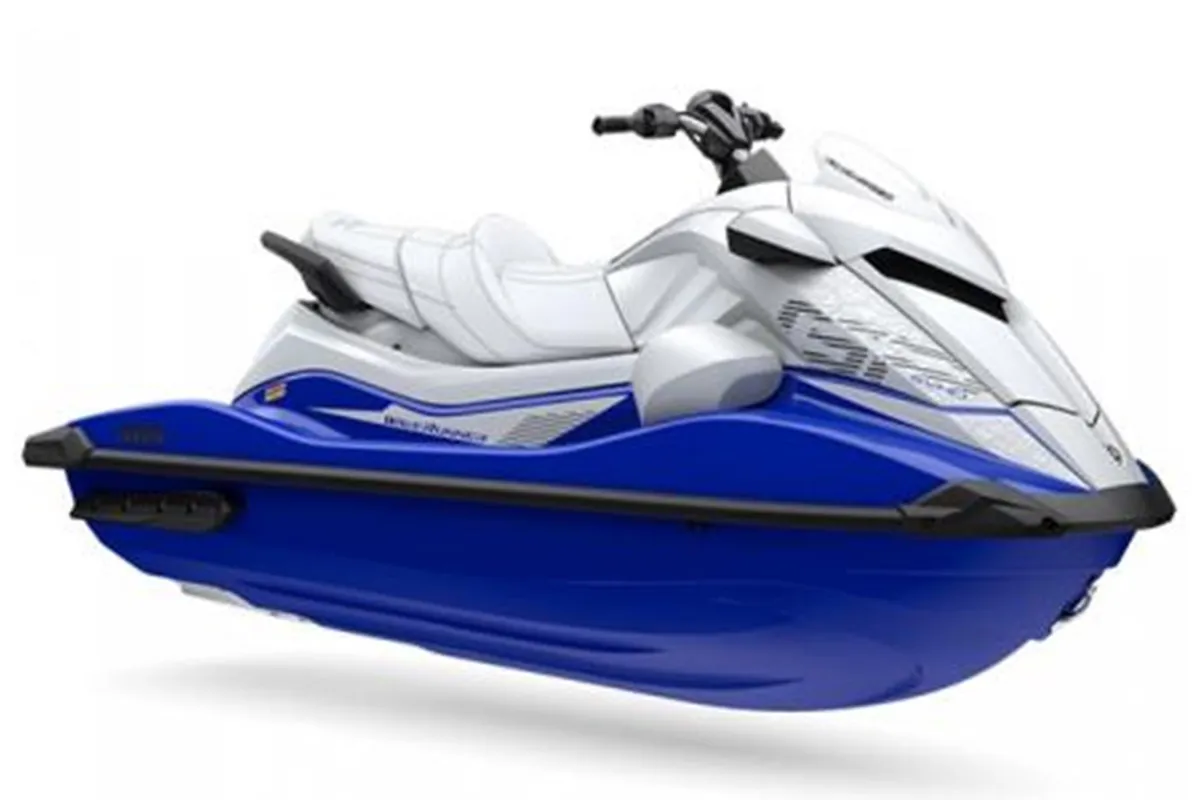
Salt water does not damage a personal watercraft (PWC) while you are riding it. It does the damage afterward, sitting in the cooling passages and drying on the metal while the machine is on the trailer. The whole job is to not let it sit: flush the engine, rinse everything, then protect what the hose could not reach. Ten minutes, every salt or brackish ride, no exceptions and no grace period.
Everything else on this page is detail. But the detail matters, because the flush is one of the few maintenance jobs where doing it in the wrong order is worse than not doing it at all.
One honest note up front. Every brand publishes its own procedure, and we are not going to invent a universal one. Yamaha publishes its full sequence and its warnings openly, so that is what this page quotes. Sea-Doo and Kawasaki put theirs in the operator’s guide for the specific model — BRP’s own maintenance page sends owners there for the maintenance schedule, and the guides download free at operatorsguides.brp.com. Get yours, read the flushing section once, and then this page becomes the reminder rather than the instruction.
Step one: flush the engine
The point of the flush, in Yamaha’s own words, is to “flush the cooling water passages to prevent them from clogging with salt, sand or dirt.” That is a plumbing problem, not a cosmetic one, and it is why the flush is non-negotiable while the wash is merely important.
Yamaha’s published sequence runs like this:
- Put the machine in a horizontal position.
- Connect the garden hose adapter to the hose and to the flushing connector.
- Start the engine. Then, “immediately after the engine starts, fully turn the water supply on so that water flows out continually.”
- Run the engine at idle for about three minutes.
- Turn the water supply off.
- “Discharge the remaining water out of the cooling water passages by alternately squeezing and releasing the throttle lever quickly for 10 to 15 seconds.”
- Remove the adapter and reinstall the connector cap.
Two warnings come attached to that, and both are on Yamaha’s page in plain language: “Do not run the engine over 4000 RPM on land,” and “do not run the engine more than 15 seconds without supplying water, otherwise the engine could overheat.”
Read step three and step five together, because that is the whole discipline. Engine first, then water. At the end, water off first, engine still running, throttle blipped to push the water back out. Nobody who has done it twice gets it wrong; plenty of people get it wrong the first time.
Step two: rinse what the salt touched
Yamaha’s guidance here is refreshingly blunt: “Don’t spare the hose when returning from a trip, particularly in saltwater.” The full after-ride pass, per the same page:
- Wash the hull with fresh water and a marine-specific cleaner — mild soap and a soft cloth, then a chamois.
- Rinse the engine compartment. If salt has built up on the engine itself, rinse it gently with a low-pressure hose and stay away from the air intake.
- Wash the jet pump inside and out.
- Remove the seat and stand it vertically against a wall so it drains.
- Mop the excess water out of the bilge and let it dry completely.
- Check the exhaust and cooling-system hose clamps for looseness and corrosion, and the engine mounts for the same.
That last pair takes 30 seconds and is the closest thing to an early-warning system a PWC has. Clamps and mounts are where salt shows itself first, and they are visible without tools.
Step three: protect what the hose cannot reach
Rinsing removes salt. It also leaves everything wet, which is its own problem in a place with this much humidity. Yamaha’s instruction is to “liberally spray the entire dry engine with a protectant” — its own Yamashield for saltwater environments, silicone spray for fresh — and to “spray all external engine surfaces and the electrical connections.” Every brand sells an equivalent corrosion inhibitor. The practice is what matters, not the label.
Electrical connections deserve their own minute. Yamaha’s guidance is specific: all battery cable connections should be “clean, tight and use hex nuts and lock washers,” and when you clean one, “always remove the terminal connection and clean both sides of the connecting materials down to bare, shiny metal.” Corroded connectors get emery cloth or fine-grit sandpaper first, then protectant. In a machine that lives in salt air, connections fail long before engines do.
Vinyl gets treated too — Yamaha calls for a vinyl dressing after each use for UV protection, which in Southwest Florida is not a cosmetic recommendation. Uncovered seats here fail from sun before they fail from anything else.
Anodes, the intake grate, and the pump
Sacrificial anodes are the part of corrosion protection that owners ask about most and that we can say the least about generically. Whether your machine has one, where it lives, and when it should be replaced are model-specific answers that belong to your manual and your dealer. Ask at the first service rather than guessing, and do not assume a PWC is set up the way an outboard is.
The intake grate and pump are simpler and more urgent. Yamaha’s pre-launch list includes checking “for debris ingested into the jet pump area,” and its post-ride list includes washing the pump inside and out. On this coast, the debris is seagrass, and it arrives constantly — the grass flats behind Estero Island and through Pine Island Sound are exactly where people ride.
If your machine has Sea-Doo’s iDF system, clearing the pump is a control input from the seat. If it does not, clearing it means shutting the engine off completely and reaching in — engine off, lanyard in your hand, and mind the grate and impeller, which are sharp. Where all this water actually is, and which parts of it are grassiest, is covered in where to ride in Southwest Florida.
Fuel and the battery between rides
The fuel problem here is time, not cold. Yamaha’s page notes that “today’s gasoline can begin to break down in a matter of weeks” and that ethanol-blended fuel “creates by-products known as sulfate salts” that concentrate in engine hot spots — which is a second, less obvious argument for flushing regularly. Yamaha’s answer is fuel treatment in every tank, storing with the tank about seven-eighths full to limit condensation, and never plugging or capping the tank vent.
Batteries are where Florida inverts the advice you will read everywhere else. Yamaha’s storage section tells owners to bring the battery indoors so it does not freeze over the winter. That is not our failure mode. Ours is heat and time: a machine parked in a driveway through a hot, humid month with a small parasitic draw, in a climate that ages a battery fast. The useful half of Yamaha’s guidance still applies — charge it fully before any layup, have it load tested if it is behaving oddly, and “check the charge monthly and keep it topped off if you can.”
What the manual owns: oil, hours, and intervals
Yamaha is unambiguous on this: “using the correct oil and filter at the recommended intervals is the single most important thing you can do for your WaveRunner,” and it publishes an interval of every 50 hours or once a year. That is Yamaha’s number for Yamaha machines. Sea-Doo and Kawasaki publish their own, in the operator’s guide, and this page will not average them into a figure that fits nobody.
The mechanism that makes any interval work is an hour meter. Yamaha’s advice is to use yours to track service and to install one if the machine is not equipped. Hours, not calendar months, are what a service department can actually work from — and hours are also what a buyer will ask you for in four years.
Supercharged machines add their own service item on their own schedule. That schedule lives in the manual too. The PWC buyer’s guide covers which machines carry a supercharger and what that adds to ownership.
Storage, covers, and the trailer
Store it indoors or under a shelter when you can, and use a proper fitted cover when you cannot. Two details from Yamaha’s storage guidance are worth stealing even between weekends: raise the bow of a trailered machine so water runs out rather than collecting, and get pooled water out of the footwells promptly. A hull that holds three inches of rainwater through a wet August week is doing something to itself that no flush will fix.
The trailer needs the same hose the machine does — Yamaha’s line is direct: “rinse your wheels and brakes thoroughly with fresh, clean water after every dunking.” Its bearings, winch strap, and bunks carry a checklist of their own, which lives next door in our trailering and launching guide.
When storm season is the reason you are putting it away rather than the calendar, the plan changes — that version is in our hurricane-season prep guide.
When to call the service department
Call rather than watch when the flush stream is weak or intermittent, when the machine runs hotter or alarms on temperature, when a battery will not hold a charge through a week off, when a connector keeps corroding after you have cleaned it properly, or when anything metallic is showing white powder that comes back. All of those are salt doing exactly what salt does, and all of them are cheaper on a Tuesday than in November.
And if you are still shopping rather than maintaining, everything in this routine applies to every machine on the floor equally — the whole class-by-class decision is in The Boathouse, and the buying version of the salt conversation is in buying your first jet ski in Southwest Florida.
Power Lodge Florida, 28470 S Tamiami Trail, Bonita Springs — (239) 799-2229.
Quick answers
- How do you flush a jet ski after salt water?
- Connect the hose to the flushing fitting, start the engine first, then turn the water fully on. Yamaha specifies about three minutes at idle, then water off and the throttle blipped for 10 to 15 seconds to clear the passages. Sea-Doo and Kawasaki publish their own sequences in the operator's guide.
- Do you turn the water on before or after starting a PWC?
- After. Yamaha's published procedure is to start the engine and then, immediately after it starts, fully turn the water supply on. The same page warns not to run the engine more than 15 seconds without water supplied, or it could overheat.
- Do you have to flush a PWC after every ride in salt water?
- Yes. Yamaha lists flushing as an after-every-use task, essential in salt water, and the purpose is to keep the cooling passages from clogging with salt, sand, or dirt. In Southwest Florida almost every ride is salt or brackish, so it is the default rather than the exception.
- How long should you flush a PWC engine?
- Yamaha says to run it at idle for about three minutes, and its post-operation checklist repeats at least three minutes to remove salt traces. It also warns never to exceed 4,000 rpm on land. Confirm the number for your own machine in the manual — brands differ.
- Do you need to winterize a jet ski in Florida?
- Not for cold. Nothing here freezes, so the northern winterizing ritual does not apply. What replaces it is year-round salt discipline plus proper prep for any long layup: fuel treated, tank near full, battery maintained, machine dry and covered.
- How often should you change the oil in a PWC?
- Yamaha publishes every 50 hours or once a year for its WaveRunners and calls correct oil at the recommended interval the single most important thing an owner can do. Sea-Doo and Kawasaki publish their own intervals in the operator's guide — use those, not ours.