Review · The Boathouse
Sea-Doo GTX 170 Review: The Touring Sea-Doo Most Southwest Florida Buyers Actually Choose
Thirteen on the floor, more than any other Sea-Doo here. The GTX 170 is the touring hull without the supercharger — and for most bay riders that is the whole point.
By The Outpost CrewUpdated 7 min read
How this review was built: from Sea-Doo's published specs, professional road tests, owner reports, and what the Power Lodge crew sees on the showroom floor and in the service bay — not a first-hand test ride. Prices are MSRP unless the live listing below says otherwise.How we review →
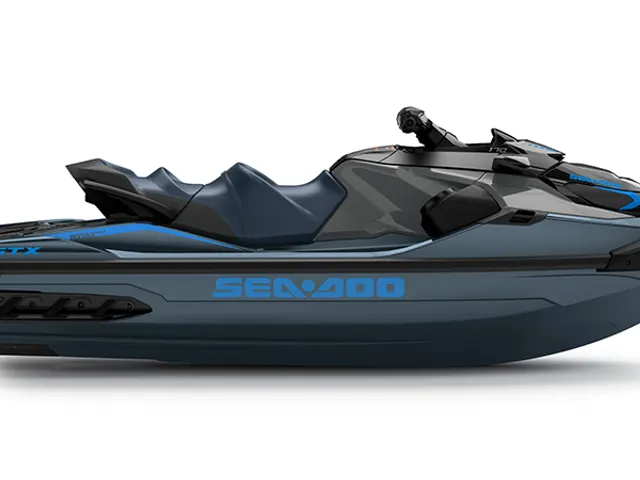
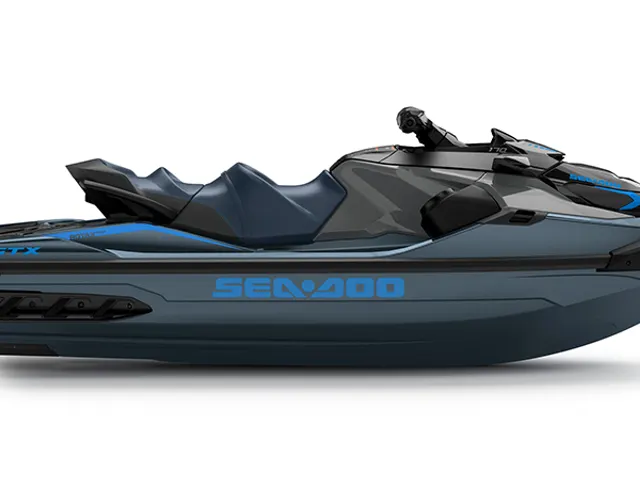
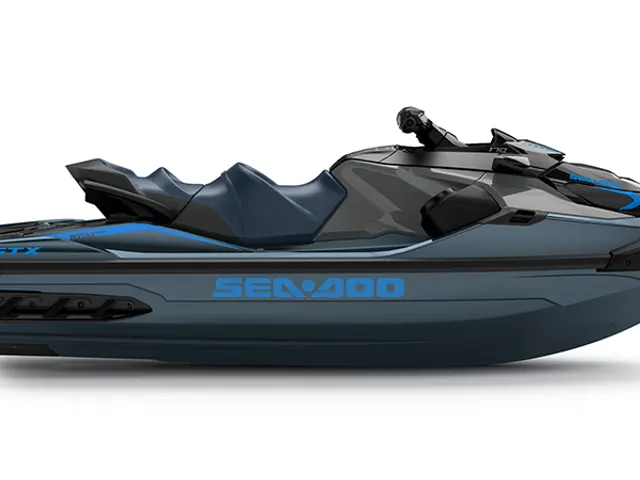
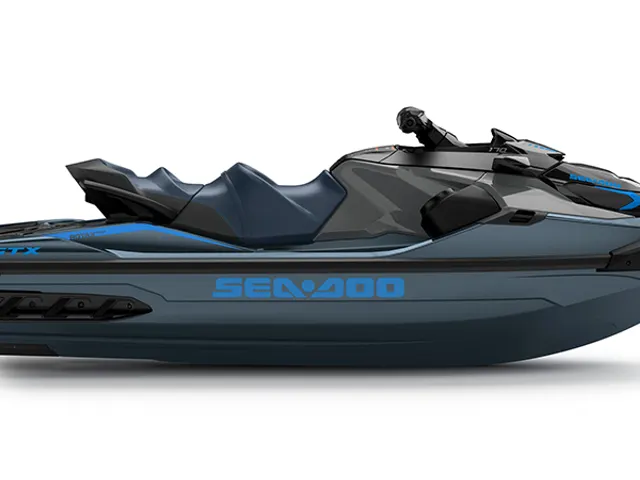
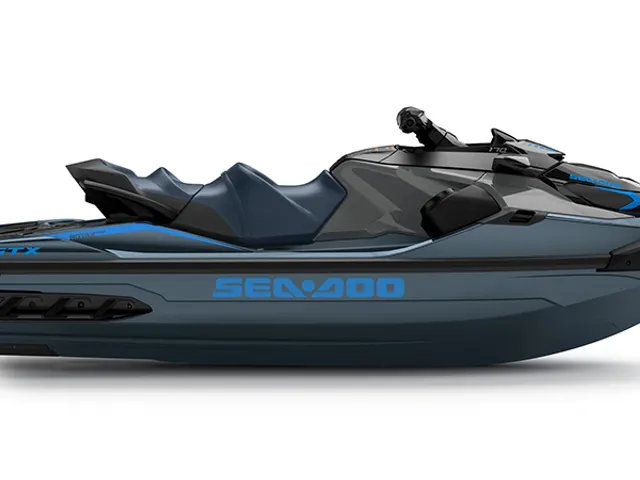
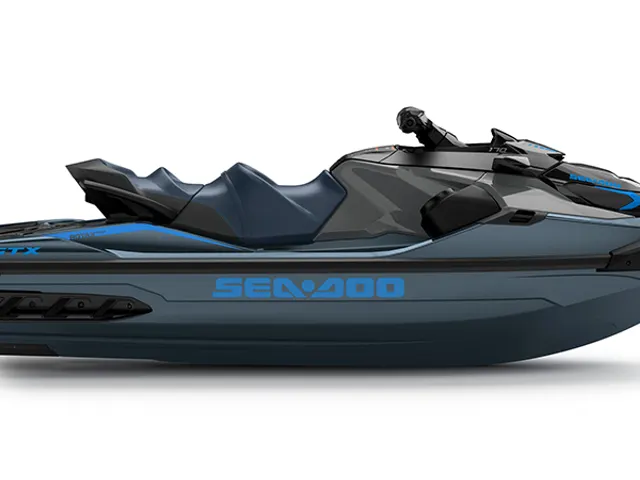
The 2026 Sea-Doo GTX 170 is the touring personal watercraft (PWC) for people who do not need to go 67 mph. It is the full-size fiberglass ST3 hull — the stable, dry, three-up platform Sea-Doo builds its whole touring line on — with the naturally aspirated 170-horsepower Rotax 1630 ACE instead of a supercharged engine. It lists at $17,149 as of September 2026.
The short version: you are buying the hull, not the engine. Everything that makes a GTX good in Estero Bay chop at 2 p.m. — length, weight, the flat swim platform, the big screen — is identical between the 170 and the supercharged models. What you give up is roughly 10 mph and a holeshot you may never miss.
Thirteen sit on the Power Lodge floor, the deepest Sea-Doo® stack in the building, which tells you how this decision usually goes.
What the Sea-Doo GTX 170 is
Sea-Doo splits its lineup by hull. The GTI line uses a lighter Polytec hull and aims at recreation buyers. The GTX line uses the fiberglass ST3 hull and aims at touring: two or three people, longer distances, worse water, and a day that ends at a sandbar rather than at the ramp after an hour.
The GTX 170 is the entry to that line, and the only GTX without a supercharger. Above it sit the GTX 230 at $18,149 as listed and the GTX Limited 325 at $22,549 to $22,949 as listed. For the 2027 model year, Sea-Doo’s site also lists a GTX 300 from $20,849, slotting between them.
Every GTX 170 on our floor is a 2026 unit carrying the same dealer-listed bundle: Tech Package, audio, iDF, and iBR, in Blue Abyss and Gulfstream Blue. The precise contents of the Tech Package vary by year and are not itemized on the model page, so confirm what is on the specific hull before you assume a feature is there.
| Engine | Rotax 1630 ACE, three-cylinder, naturally aspirated |
|---|---|
| Horsepower | 170 hp (published by Sea-Doo) |
| Hull | ST3, fiberglass |
| Length × width × height | 135.8 in × 49.2 in × 44.9 in |
| Dry weight | About 796 lb |
| Seating | 3 riders |
| Fuel capacity | 18.5 gal |
| Storage | 26.1 gal |
| Braking and reverse | iBR — Intelligent Brake and Reverse |
| Pump protection | iDF — Intelligent Debris-Free system |
| Display | 10.25-inch touchscreen |
| Swim platform | Large platform with LinQ attachment points |
| Top speed | About 56–58 mph (jetdrift 2024 chart) |
| Listed at Power Lodge, September 2026 | $17,149 (13 units, 2026 model year) |
| MSRP, 2027 model year (Sea-Doo site, September 2026) | From $18,149 |
Source: sea-doo.brp.com. Specs and pricing are the manufacturer's published figures and can change by model year.
Engine and performance: is 170 hp enough?
The Rotax 1630 ACE is a 1,630cc three-cylinder that Sea-Doo builds in three states of tune across the GTX line: 170 naturally aspirated, 230 supercharged, and 325 supercharged. Unlike Yamaha, Sea-Doo publishes horsepower, which makes cross-shopping honest.
At 170 hp the Sea-Doo GTX 170 runs about 56 to 58 mph by jetdrift’s chart. Put that next to the recreation machines most buyers are trading up from — a Sea-Doo GTI SE 130 at roughly 52 mph, a Yamaha VX Deluxe at about 53 — and the GTX 170 is meaningfully quicker while sitting well under the 67-mph industry limit the boosted machines hit.
More useful than top speed is what naturally aspirated means for the next five years. A supercharger is a wear item with its own service expectations, and it is thirstier. Nothing about the 170 asks you to think about that. It is the same argument the Yamaha VX Cruiser HO makes in the other brand’s showroom, and it is the reason both machines sell.
Where the 170 runs out of answers is load. Three adults, a full tank, a cooler, and a headwind out of the pass is the condition that separates 170 from 230 — the naturally aspirated engine gets there, it just takes its time about it. If that is your normal Saturday rather than your occasional one, read the GTX 230 review before you decide.
On the water: the hull is the product
At 135.8 inches, the ST3 is nearly four inches longer than the Yamaha VX platform and about five inches longer than the GTI hull. Those inches are what a touring hull spends on composure — the ST3 stays flat and dry after the afternoon wind gets into Estero Bay, which is the single biggest reason to move up from a recreation machine.
The 796-pound dry weight works the same way. Weight is a liability at the ramp and an asset in chop, and the GTX plants where a lighter hull skips. The trade is real: this is not the machine you casually push around a driveway by yourself, and your trailer and tow vehicle should be chosen accordingly.
Two features earn their keep in local water specifically.
iBR — Intelligent Brake and Reverse — is Sea-Doo’s braking system. The left-hand lever applies the reverse gate as a brake at speed and handles reverse at the dock. It genuinely shortens stopping distance, and more importantly it makes low-speed maneuvering in a crowded launch a fingertip job. Sea-Doo has had a version of this longer than anyone else, and it shows.
iDF — Intelligent Debris-Free — reverses the impeller to spit out whatever the pump swallowed. Anyone who has ridden the grass flats around Estero Bay or come through a mat of floating weed after a blow knows exactly what problem this solves. The alternative is getting in the water with the engine off and clearing the intake by hand. On the list of features that sound like marketing and turn out to matter here, iDF is near the top.
The 10.25-inch touchscreen is the biggest display in this class. Storage is 26.1 gallons — less than the GTI line’s 40.3, an inversion that surprises people who assume the bigger machine holds more. The LinQ points on the swim platform are how you add a cooler or a fuel caddy without straps across the deck.
What reviewers and owners say
Dedicated professional tests of the current GTX 170 are a genuine gap. Several of the outlets that cover this segment most closely could not be reached during this research pass, and what remains is platform-level rather than model-specific. We would rather say that than pad the section.
The most useful sourced assessment we have is Boating’s test of the GTX Limited on this same platform — a feature verdict rather than a performance one, quoted in full in our GTX Limited 325 review. The equipment and ownership experience it praises are platform traits the 170 shares in cheaper trim.
Owner discussion on Seadooforum runs practical rather than passionate: GTX threads are full of people adding depth finders, and of iBR fault codes on older units. Read that second one correctly — it is not a reliability alarm on a new machine, but it does say that iBR is an electromechanical system with sensors, and that it is the thing that eventually needs attention on a high-hour Sea-Doo. Keep the pump area clean and rinsed.
Living with a Sea-Doo GTX 170 in Southwest Florida
Flush it after every salt or brackish ride. That is the entire deal, and it applies to every brand — the routine is in our salt-water maintenance guide. Pay particular attention to rinsing around the iBR gate and the pump, because that is where sand and grass collect on a machine used the way most people here use one.
Trailering a 796-pound hull plus trailer is a different exercise than trailering a Rec-Lite machine. Our trailering and launching guide covers ramp technique; the short version is that the GTX rewards a trailer with a good bunk setup and punishes a hasty solo launch.
Storage in the wet season is worth thinking about before you buy rather than after. A cover, a battery tender, and somewhere out of the 3:40 storm is the whole list.
Recalls and known issues
None found for the Sea-Doo GTX 170 in the U.S. Coast Guard recall database as of September 2026, based on a spot-check of uscgboating.org’s recall listing. The recent BRP entries in that database are for the Sea-Doo Switch pontoon line, which Power Lodge does not stock.
The database’s manufacturer filter is not reliable, so treat that as a point-in-time check. A PWC carries a HIN rather than a VIN — have the dealer run the specific hull’s HIN for open campaigns before delivery.
Price and what is on the floor
Thirteen 2026 GTX 170 units are listed at $17,149 as of September 2026, matching the feed MSRP for that model year and bundle. Sea-Doo’s own site lists the 2027 GTX 170 from $18,149 before freight, which is the number the same machine carries next season.
Freight, prep, and Florida tax, title, and registration are additional on every one of those figures.
How does the GTX 170 compare?
Inside the Sea-Doo line, the two real alternatives pull in opposite directions. The GTX 230 is $1,000 more as listed for the supercharged engine, 67 mph, and a much stronger holeshot two-up. The GTI SE 170 has the same 170-hp engine for $14,699 as listed — $2,450 less — on the lighter Polytec hull with more storage. If your water is calm and your budget is the constraint, that machine is the smarter buy, and the GTI SE 130 vs 170 comparison sorts out which one.
Across the aisle, the direct cross-shop is Yamaha’s VX Cruiser HO: about 65 mph from the 1,898cc naturally aspirated engine, 866 pounds dry, 30.1 gallons of storage, at $14,899 as listed. The Yamaha is faster and cheaper. The Sea-Doo answers with the longer ST3 hull, the 10.25-inch screen, iDF, and iBR. That is a genuine fork in the road, not a formality — the full write-up is in the VX Cruiser HO review, and the class-by-class framing is in the PWC buyer’s guide.
Highs
- ST3 hull is longer, drier, and calmer in chop than any recreation machine
- iDF clears seagrass from the pump without getting in the water
- iBR braking is the best low-speed control system in the class
- 10.25-inch screen is the largest in the class
- No supercharger to service or feed
Lows
- 26.1 gallons of storage — less than the cheaper GTI line
- About 56–58 mph, so the 230 will walk away from it
- Nearly 800 lb dry makes solo launching a real task
- Tech Package contents are not itemized on the model page
- Loaded-bundle pricing sits close to some supercharged machines
Live inventory and today's price on all 13.
Quick answers
- Is the Sea-Doo GTX 170 supercharged?
- No. The GTX 170 runs the naturally aspirated Rotax 1630 ACE at 170 horsepower. The supercharged GTX models are the 230 and the Limited 325 — same ST3 hull, boosted engine, and a supercharger to maintain.
- How fast is a Sea-Doo GTX 170?
- About 56 to 58 mph, per jetdrift's Sea-Doo top-speed chart. The supercharged GTX 230 on the same hull reaches the industry-standard 67 mph limit, so the step up buys roughly 10 mph.
- What does iDF do on a Sea-Doo?
- iDF is the Intelligent Debris-Free system: it reverses the impeller to clear seagrass, rope, or sand out of the pump from the driver's seat. In Southwest Florida, where grass flats and floating weed are normal, it saves you from swimming under your own machine.
- Sea-Doo GTX 170 vs GTX 230 — which should I buy?
- Buy the 170 if you cruise, tow tubes, and ride bays. Buy the 230 if you run two- and three-up into Gulf headwinds or want holeshot for waterskiing. The 230 lists $1,000 higher and adds a supercharger to the maintenance list.
- How much is a 2026 Sea-Doo GTX 170?
- Power Lodge lists 13 of them at $17,149 as of September 2026, which matches the feed MSRP for that model year and bundle. Sea-Doo's site lists the 2027 GTX 170 from $18,149 before freight.