Buyer's Guide · The Boathouse
Best Personal Watercraft for Beginners in 2026, Picked From a Dealership Floor
Every one of these is on our floor right now, which is the only kind of recommendation worth making. Start with stability and braking; speed is the least important number here.
By The Outpost CrewUpdated 8 min read
Yamaha at Power Lodge →Sea-Doo at Power Lodge →Kawasaki at Power Lodge →
The best personal watercraft (PWC) for a beginner in 2026 is a three-seat, naturally aspirated recreation machine with a working reverse-and-braking lever, and there are two obvious ones: the Sea-Doo GTI SE 130 at $14,099 as listed and the Yamaha VX Deluxe from $12,899 as listed. Buy either and you will be fine.
That is the whole answer. What follows is why, four other machines worth considering, and the specific ways first buyers get this wrong.
Everything recommended here is on the Power Lodge floor in Bonita Springs as of September 2026, which is the only kind of recommendation worth anything — a pick you cannot go sit on is a magazine exercise, not advice.
What makes a personal watercraft beginner-friendly?
Four things, in order of how much they matter. Top speed is not on the list.
Stability at rest. The moment that unnerves new riders is not going fast, it is stopping — sitting still while the hull rocks, or trying to climb back on from the water. Longer and heavier hulls do both better. This is why the instinct to buy the smallest machine backfires: a 741-pound three-seat hull is easier for a beginner than a 545-pound play machine.
Braking and reverse. Yamaha calls it RiDE, Sea-Doo calls it iBR, and both work the same way: squeeze a lever under your left hand to slow down, keep squeezing at low speed to back up, hands on the bars throughout. On a machine without one, docking is a matter of judgment and momentum. On a machine with one, it is a lever. For a first-time owner, this is the single most valuable feature on the boat.
Predictable power. Naturally aspirated engines build speed in a straight line. Supercharged ones deliver it in a shove that makes a new rider flinch and back out of the throttle — which is exactly the wrong reflex, since on a PWC the throttle is also your steering. Every pick below is naturally aspirated for that reason.
Weight you can manage on land. The ramp, not the water, is where new owners have their bad day. A 769-pound machine on a trailer behaves very differently from a 950-pound one when the ramp is steep, the tide is out, and there are three boats waiting behind you.
A note on rider aids, because the marketing gets loose here: features vary by model and trim. Yamaha’s Connext display includes a security mode, and the VX Cruiser HO’s spec page lists Cruise Assist and No-Wake Mode. Confirm what is on the specific machine rather than assuming the whole brand has it.
The five picks
Prices are as listed at Power Lodge as of September 2026, before freight, prep, and Florida tax, title, and registration.
1. Sea-Doo GTI SE 130 — the best all-round first machine
$14,099 as listed. Six on the floor.
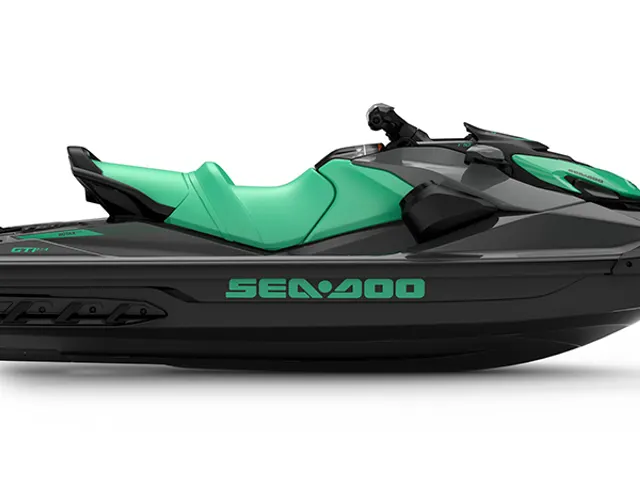
The GTI SE 130 is the one we would put a nervous first-timer on. It is a 741-pound three-seat hull, 130.7 inches long, with a naturally aspirated Rotax 1630 ACE making a published 130 horsepower and a top speed around 52 mph per jetdrift’s chart. That is a completely adequate number that no beginner will exhaust in a season.
What earns it the top spot is the equipment. iBR braking is widely regarded as the most polished system of its kind. The 40.3 gallons of storage is the most in the recreation class, which matters more than horsepower on a family Saturday. And iDF — the Intelligent Debris-Free system — reverses the impeller to clear seagrass out of the pump from the seat, which in grass-flat country is the difference between a minor annoyance and swimming under your own machine. Every unit here is listed with the Tech Package, audio, iDF, and iBR.
If $14,099 is more than you planned, the honest counter is the next pick, which costs less and gives up storage and audio.
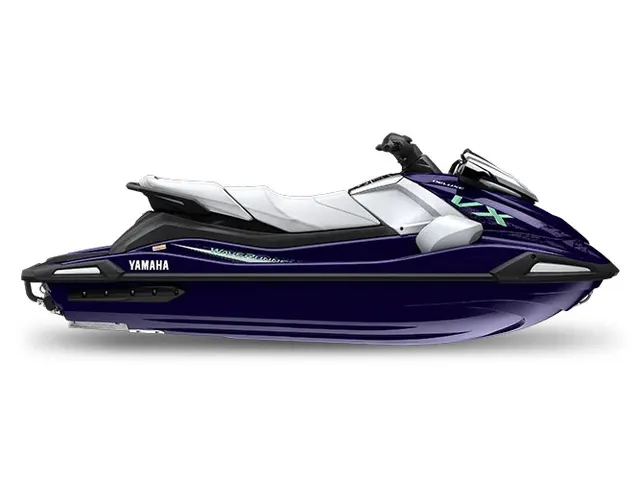
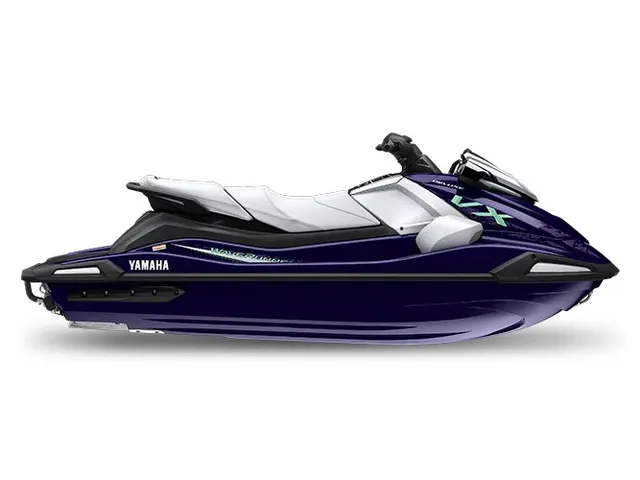
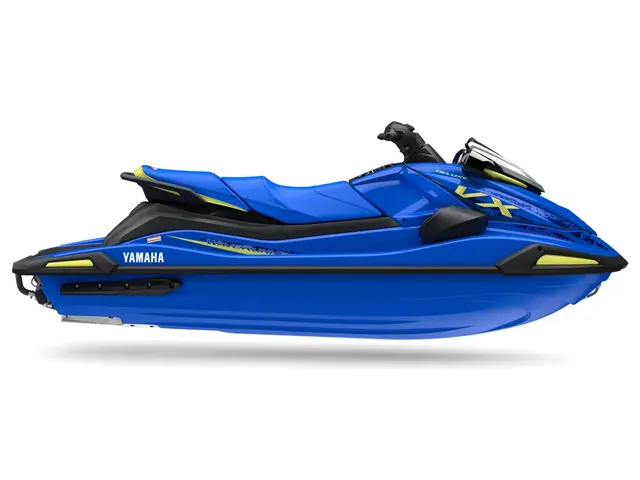
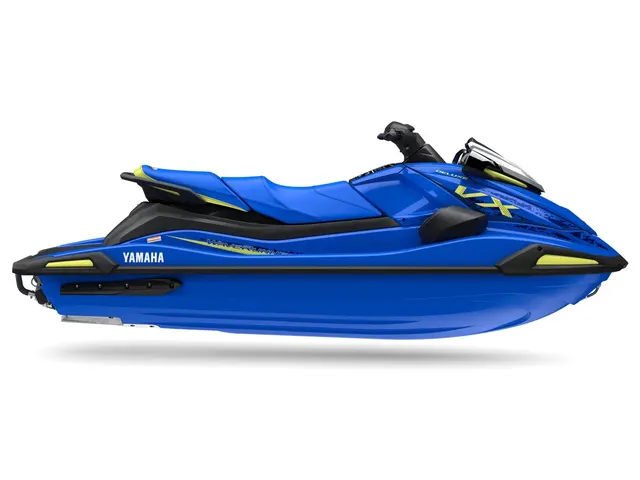
2. Yamaha VX Deluxe — the value answer, and the volume seller
From $12,899 as listed. Nineteen on the floor.
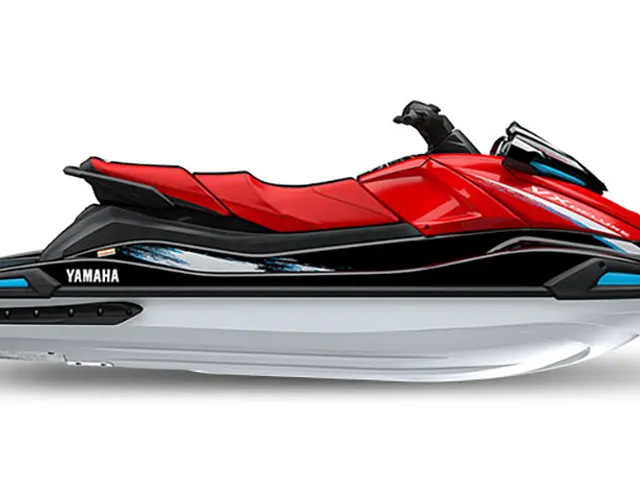
Nineteen of them in one building is a market verdict. The Yamaha VX Deluxe is 769 pounds dry, three seats, 30.1 gallons of storage, and a 1,049cc TR-1 HO triple that runs about 53 mph — a hair quicker than the Sea-Doo above, for about a thousand dollars less.
Its real argument is running cost. The small naturally aspirated engine is the most fuel-efficient full-size setup we stock, and the VX family’s reputation is built on being tediously reliable. RiDE handles reverse and deceleration, the Connext 4.3-inch touchscreen handles the rest, and the watertight glovebox with USB and 12V power is where your phone survives the day.
What it gives up: 10 gallons of storage, factory audio at this trim, and any equivalent to iDF. The full side-by-side is in VX Deluxe vs GTI SE 130.
3. Yamaha JetBlaster PRO 3-Up — the cheapest new machine here, with a caveat
$11,799–12,399 as listed. Four on the floor, plus a JetBlaster LTD at $11,799.
The lowest price of entry to a new PWC with a warranty. It is a 545-pound Rec-Lite hull, 9 feet 8 inches long, with a 1,049cc TR-1 engine estimated at 110 horsepower and a top speed near 54 mph, plus electric trim and foot chocks for riders who want to play rather than cruise.
The caveat is on the spec sheet and it is large: 1.5 gallons of storage and a 13.2-gallon tank. This is a machine for canals, rivers, protected bays, and messing about — not for packing a family day or for the Gulf. It is a legitimate first machine for a light, playful rider or a household adding a second one, and a poor choice for anybody planning to ride outside the passes. See the JetBlaster PRO review.
4. Yamaha VX Cruiser — the comfort upgrade that keeps the easy engine
$13,999, or $14,599 as listed with audio. Five on the floor between the two.
Mechanically a VX Deluxe: same hull, same TR-1 HO engine, same 53 mph, same 30.1 gallons of storage. What the Cruiser adds is the tiered two-piece seat, and the with-Audio version adds factory speakers.
That is a comfort decision, not a performance one, and it is worth being clear about that before you spend the money. The tiered seat genuinely helps a passenger on a longer ride, and speakers matter to some households more than any spec on this page. It is the right pick for a beginner who already knows they will be riding two-up most of the time.
5. Sea-Doo GTX 170 — the machine you grow into instead of out of
$17,149 as listed. Thirteen on the floor.
The grow-into pick, and the one worth stretching for if your riding is not going to stay in the canals. The GTX 170 is the fiberglass ST3 touring hull — 135.8 inches, about 796 pounds — with the naturally aspirated 170-horsepower Rotax 1630 ACE, iBR, iDF, and a 10.25-inch touchscreen.
The longer hull is what changes the experience. Estero Bay at 2 p.m. and the Gulf on a two-foot day — the conditions that send recreation machines home early — are exactly what the ST3 hull is built to shrug off. It is still naturally aspirated, so nothing about the power delivery is intimidating, and a beginner adapts to it as easily as to a GTI.
Two honest cautions: it holds less gear than the cheaper GTI at 26.1 gallons against 40.3, and at nearly 800 pounds it is a two-person job on a bad ramp.
What we would not start a beginner on
Not because these machines are dangerous, but because they solve problems a first-time owner does not have yet.
The supercharged machines — Sea-Doo’s 230s and 325s, Yamaha’s SVHO models, Kawasaki’s 310-horsepower Ultra — are fine machines and poor first ones. They cost more to run, they add a service item, and their power arrives in a way that teaches a new rider to be tentative with the throttle, which is the opposite of the habit you want. The sport-oriented hulls in the performance class compound it with a riding position built for cornering rather than sitting.
If you genuinely outgrow a recreation machine in two seasons, you will have learned enough by then to choose the replacement properly, and there will be a used market waiting for the first one.
Mistakes first buyers make
Buying the smallest machine because it seems safer. Smaller hulls are less stable at rest, harder to re-board, and worse in chop. The stability that makes a beginner comfortable comes from size.
Buying horsepower for a future self. Nobody grows into 325 horsepower faster than they grow into 130.
Underestimating the whole cost. The machine is the biggest line, not the only one. A single-PWC aluminum trailer lists at $1,599 to $1,999 here, and then there are life jackets, a cover, a flush kit, dock lines, and Florida tax, title, and registration. Budget the package, not the sticker.
Skipping the paperwork homework. A PWC is a vessel in Florida — titled and registered through the county tax collector, per our registration and titling guide — and the operator age and boating-safety-education rules attach to the rider, not the machine. They are laid out in the Florida jet ski license guide, which is homework better done before the showroom than after the sale.
Not sitting on them. All five are within a few feet of each other on the floor, and the order above is the order to sit on them — the differences that will decide it for you are the ones a spec sheet cannot show.
What it costs
| Pick | Listed, September 2026 | Storage | Top speed |
|---|---|---|---|
| Yamaha JetBlaster PRO 3-Up | $11,799–12,399 | 1.5 gal | ~54 mph |
| Yamaha VX Deluxe | $12,899–13,499 | 30.1 gal | ~53 mph |
| Yamaha VX Cruiser | $13,999–14,599 | 30.1 gal | ~53 mph |
| Sea-Doo GTI SE 130 | $14,099 | 40.3 gal | ~52 mph |
| Sea-Doo GTX 170 | $17,149 | 26.1 gal | ~56–58 mph |
Top speeds are jetdrift’s 2024 chart figures — fine for comparison, not guarantees. Freight, prep, and Florida tax, title, and registration are additional on every line. No recall campaigns were found for any of these models in the U.S. Coast Guard recall database as of September 2026; a PWC carries a HIN rather than a VIN, so have the dealer check the specific hull before delivery.
Where to go next
For the buying process itself — budget, new versus used, the showroom visit, the first week — read buying your first jet ski in Southwest Florida. For the full segment breakdown and every model we stock, the PWC buyer’s guide is the hub. If you are choosing between badges rather than models, Sea-Doo vs Yamaha vs Kawasaki is the honest version. And everything on the water lives in The Boathouse.
Live inventory and today's price on all five.
Quick answers
- What is the best jet ski for a beginner?
- For most first-time riders, a three-seat naturally aspirated recreation machine — the Sea-Doo GTI SE 130 or the Yamaha VX Deluxe. Both are stable at rest, predictable on the throttle, and have a left-hand lever for reverse and deceleration. Neither costs supercharged money to run.
- How much horsepower does a beginner need on a personal watercraft?
- Between about 110 and 170. That range covers 52 to 58 mph, which is plenty of speed to learn on and enough to tow a tube. Supercharged machines making 230 to 325 horsepower are not dangerous in themselves, but they reward experience you do not have yet.
- Is a Sea-Doo or a Yamaha easier for a beginner?
- Both are easy. Sea-Doo's iBR braking is generally considered the more refined system and its GTI holds 40.3 gallons of gear. Yamaha's VX Deluxe costs less and has the lowest running costs in the class. Sit on both — the difference is preference, not difficulty.
- Should a beginner buy a used personal watercraft?
- It can work, but a used machine with no warranty and unknown flush history is a poor first purchase in salt water. If budget is the constraint, a new Rec-Lite machine at $11,799 as listed carries a factory warranty and a service history that starts with you.
- Can a beginner handle a three-seat personal watercraft?
- Yes, and it is usually the better choice. A longer, heavier hull is more stable at rest and easier to re-board than a small one, and the extra seat means somebody experienced can ride along on the first few outings.