Review · The Boathouse
Sea-Doo GTX 230 Review: The Supercharged Sweet Spot of the GTX Line
A thousand dollars over the GTX 170 buys 60 horsepower, about 10 mph, and a maintenance item you did not previously own. Here is when that trade makes sense.
By The Outpost CrewUpdated 7 min read
How this review was built: from Sea-Doo's published specs, professional road tests, owner reports, and what the Power Lodge crew sees on the showroom floor and in the service bay — not a first-hand test ride. Prices are MSRP unless the live listing below says otherwise.How we review →
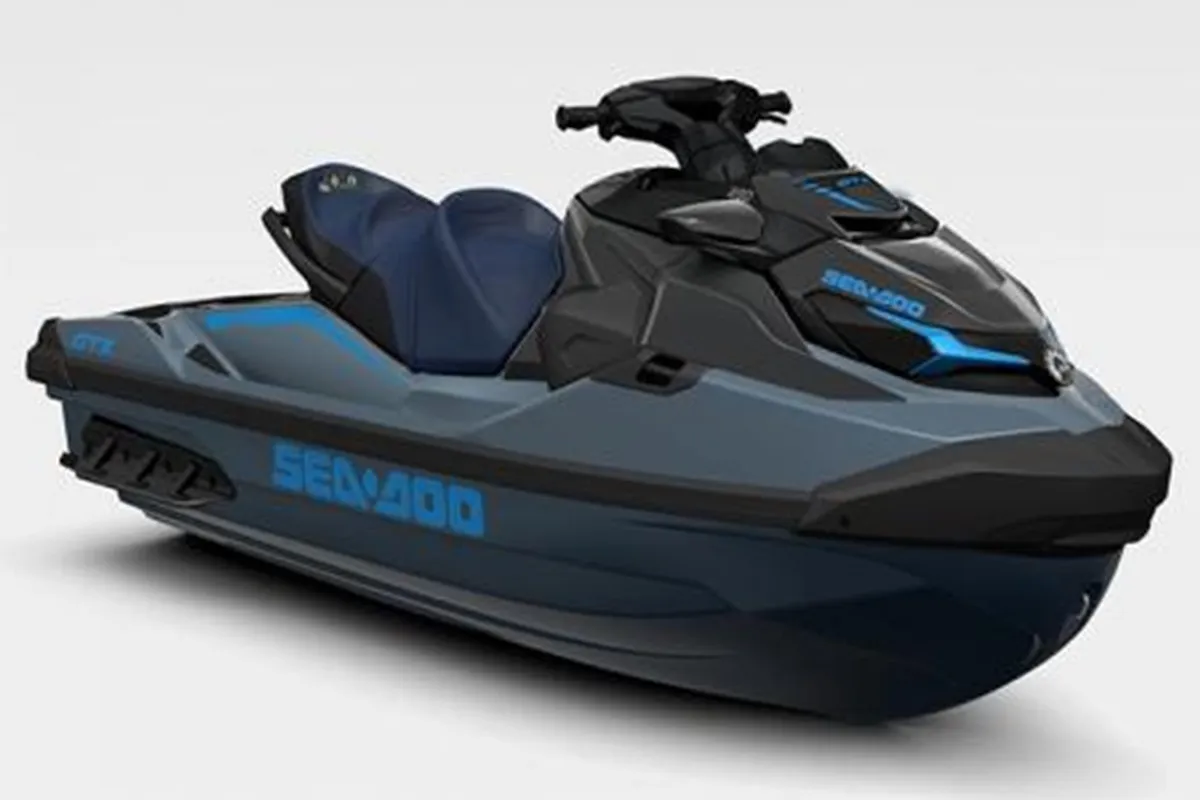
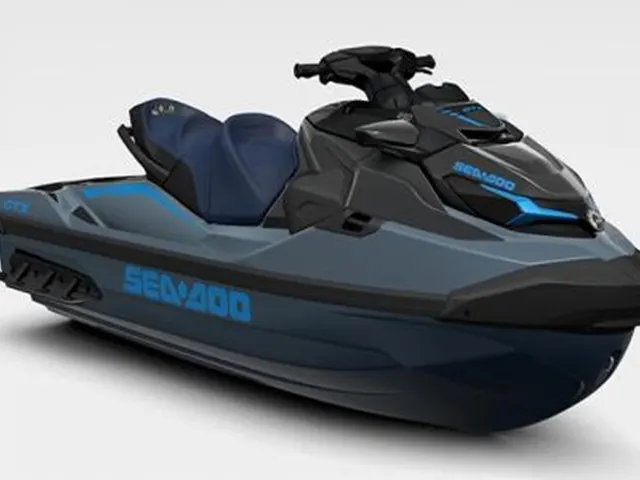
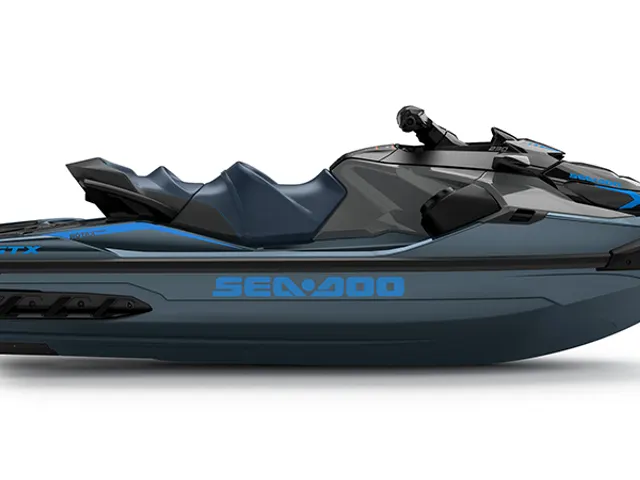
The 2026 Sea-Doo GTX 230 is what you buy when the GTX 170 is the right machine but not quite enough engine. Same ST3 touring hull, same 26.1 gallons of storage, same 10.25-inch screen, same iBR and iDF — with the supercharged Rotax 1630 ACE making 230 horsepower instead of 170. It lists at $18,149 as of September 2026, a thousand dollars over the naturally aspirated version.
The plain answer to the question everyone asks: the GTX 230 reaches 67 mph against roughly 56 to 58 for the 170, per jetdrift’s chart. But top speed is the least interesting thing the supercharger does. What it actually changes is how the machine behaves loaded — three people, full fuel, cooler on the platform, wind on the nose.
Twelve of them sit on the Power Lodge floor. That number, next to 13 GTX 170s, is a fair picture of how evenly this decision splits.
What the Sea-Doo GTX 230 is
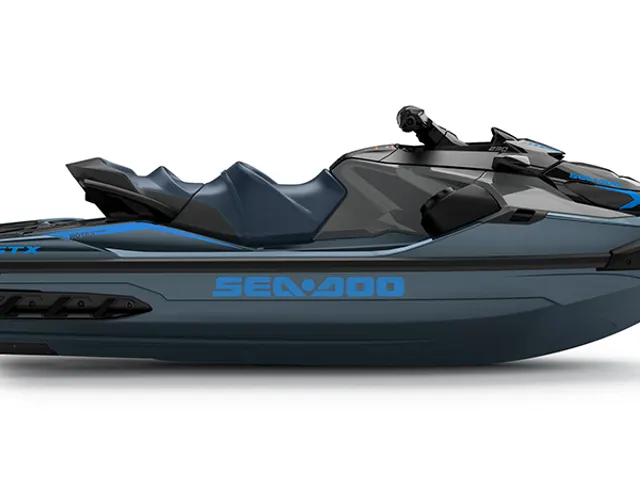
The GTX is Sea-Doo’s touring line, built on the fiberglass ST3 hull: 135.8 inches long, three-rider seating, a flat swim platform with LinQ attachment points, and the biggest display in the class. It is the platform for people whose riding day is measured in hours and passengers rather than laps.
Within the line, the 230 is the middle engine. Below it, the GTX 170 at $17,149 as listed is naturally aspirated. Above it, the GTX Limited 325 at $22,549 to $22,949 as listed adds output and luxury equipment. Sea-Doo’s 2027 lineup also lists a GTX 300 from $20,849 between them.
All 12 units here are 2026 models in Blue Abyss and Gulfstream Blue, listed with the Tech Package, audio, iDF, and iBR. The exact contents of the Tech Package are not itemized on the model page, so confirm the specific hull rather than assuming.
| Engine | Rotax 1630 ACE, three-cylinder, supercharged |
|---|---|
| Horsepower | 230 hp (published by Sea-Doo) |
| Hull | ST3, fiberglass |
| Length × width × height | 135.8 in × 49.2 in × 44.9 in |
| Dry weight | About 830 lb |
| Seating | 3 riders |
| Fuel capacity | 18.5 gal |
| Storage | 26.1 gal |
| Braking and reverse | iBR — Intelligent Brake and Reverse |
| Pump protection | iDF — Intelligent Debris-Free system |
| Display | 10.25-inch touchscreen |
| Swim platform | Large platform with LinQ attachment points |
| Top speed | 67 mph, limited (jetdrift 2024 chart) |
| Listed at Power Lodge, September 2026 | $18,149 (12 units, 2026 model year) |
| MSRP, 2027 model year (Sea-Doo site, September 2026) | From $19,149 |
Source: sea-doo.brp.com. Specs and pricing are the manufacturer's published figures and can change by model year.
Engine and performance: what the supercharger is really for
Sea-Doo builds the 1,630cc Rotax ACE in three states of tune across the GTX line. The 170 is naturally aspirated. The 230 and the 325 are supercharged. All the boosted ones arrive at the same 67-mph limited top speed, which is the first thing worth internalizing: past a certain output, the extra horsepower does not raise the ceiling, it changes how fast you reach it and how hard the water has to work to slow you down.
That distinction is the entire case for the Sea-Doo GTX 230. Solo on flat water, the 170 feels close to it. Add a second and third rider, a full 18.5-gallon tank, and a cooler on the LinQ points, and the two machines separate immediately — the naturally aspirated engine works to get on plane, and the supercharged one simply goes. The same is true running into an afternoon sea breeze outside the pass, which in Southwest Florida is most afternoons from May onward.
Tow duty is the other place the difference shows. Pulling a tube with two kids on it, or a skier out of the water, is a load question rather than a speed question, and 230 horsepower makes it a non-event. If towing is the primary job, note that Sea-Doo builds the Wake and Wake Pro models specifically for it, with a ski mode and a removable pylon.
The honest cost side: a supercharger is a component you did not own before. It adds a service item, and it drinks more fuel than the naturally aspirated engine on the same hull. Supercharged engines generally call for a higher-octane grade — check the fuel-grade requirement in the owner’s manual for the specific unit rather than taking our word or a forum’s for it, because getting that wrong on a boosted engine is expensive.
On the water: the ST3 hull with the engine it flatters
Everything good about the GTX platform is hull, and the 230 gets all of it. At 135.8 inches this is a long personal watercraft (PWC), and those inches are what hold the hull flat and dry once the sea breeze puts an edge on Estero Bay. About 830 pounds dry — 33 more than the 170, all of it engine — settles the machine further into the water rather than skipping across it.
The two control systems — iBR braking and reverse, and the iDF debris system — are the same ones the whole Sea-Doo® line runs, and the GTX 170 review covers both in detail. What changes at this weight is how much they matter: braking and one-lever reverse earn their keep fastest when 830 pounds is drifting toward a dock, and iDF still backs seagrass, weed, or rope out of the pump while you stay in the seat.
Where the extra weight bites is the ramp and the driveway. This is not a machine to muscle around solo on a bad launch; our trailering and launching guide is worth reading before your first Saturday.
Storage is 26.1 gallons, and the cheaper GTI line still holds more. Buyers who assume the bigger machine has the bigger locker are consistently surprised.
What reviewers and owners say
Model-specific professional tests of the current GTX 230 are a coverage gap — several outlets that would normally run one were unreachable during this research pass. What we have is platform-level, and we would rather flag that than dress it up.
Boating’s assessment of the GTX Limited on this same platform is a feature verdict, and it travels — the equipment and ownership experience it praises are platform traits the 230 shares. The quote itself lives in our GTX Limited 325 review.
On Seadooforum, the supercharged-1630 conversation is the useful one. Threads on older units run to supercharger upkeep and to iBR fault codes, which is roughly what you would expect from a system with sensors and a moving gate living in salt water. The prevailing view among long-time owners is that the modern supercharged 1630 is a far more durable engine than the early 1503-based machines that taught a generation of owners to flinch at the word supercharged. Take that as owner sentiment rather than a measured claim — the threads we could reach are about older machines, and we are not going to extrapolate them into a warranty.
Living with a supercharged Sea-Doo in Southwest Florida
Flush after every salt or brackish ride, rinse the hull, the pump area, and the trailer. That habit is most of ownership here, and our salt-water maintenance guide has the full routine.
Budget realistically for fuel. An 18.5-gallon tank on a supercharged engine used the way a supercharged engine invites you to use it does not last the afternoon, and marina prices in season are what they are. Riders who mostly idle through no-wake zones and then cruise will see numbers nothing like riders who hold it wide open across the bay.
Service intervals come from the owner’s manual, not from us or from the internet — the supercharger is the reason to actually read that section. And when the wet season turns serious, the storage plan matters: cover it, keep it out of standing water, and put it somewhere the 3:40 storm cannot fill the footwells.
Recalls and known issues
None found for the Sea-Doo GTX 230 in the U.S. Coast Guard recall database as of September 2026, based on a spot-check of uscgboating.org’s recall listing. The recent BRP entries there are for the Sea-Doo Switch pontoon line, which Power Lodge does not stock.
That database’s manufacturer filter is unreliable, so it is a point-in-time check rather than a clean bill. Personal watercraft carry a HIN rather than a VIN — have the dealer run the specific hull’s HIN for open campaigns before delivery.
Price and what is on the floor
Twelve 2026 GTX 230 units are listed at $18,149 as of September 2026, matching the feed MSRP for that model year and bundle. Sea-Doo’s site lists the 2027 GTX 230 from $19,149 before freight.
Freight, prep, and Florida tax, title, and registration sit on top of all of those numbers.
How does the GTX 230 compare?
Inside the Sea-Doo line the choice is a ladder. The GTX 170 saves $1,000 as listed and deletes the supercharger. The GTX Limited 325 adds roughly $4,400 as listed for more output and the luxury equipment — worth knowing that for 2027 Sea-Doo moved the Limited to 350 horsepower, which makes the in-stock 325s the outgoing top specification and a real conversation about price.
Across the aisle, the machine that matters is Yamaha’s FX line. The FX Cruiser SVHO, at $21,599 as listed, brings the supercharged 1,812cc engine, 44.5 gallons of storage — far more than the GTX — and 948 pounds of dry weight, also at a 67-mph limited top speed. The naturally aspirated FX HO with Audio sits at $17,799 as listed against the GTX 230’s $18,149. That three-way is the actual showroom decision for most touring buyers, and we sorted it out in Sea-Doo GTX 230 vs Yamaha FX Cruiser SVHO.
If you have not settled on a class yet, the PWC buyer’s guide works through the segments, and the brand comparison covers how the three lines differ in philosophy rather than in spec.
Highs
- Supercharged 230 hp transforms the machine loaded and two-up
- 67 mph, the same limited top speed as the 325-hp flagships
- ST3 hull stays flat and dry in real bay chop
- iDF clears seagrass without leaving the seat
- Only $1,000 as listed over the naturally aspirated 170
Lows
- A supercharger is a service item you did not previously own
- Noticeably thirstier than the GTX 170 on the same tank
- 26.1 gallons of storage trails the cheaper GTI and the Yamaha FX
- About 830 lb dry — a two-person launch on a poor ramp
- Solo on flat water, the 170 feels nearly as quick
Live inventory and today's price on all 12.
Quick answers
- How fast is a Sea-Doo GTX 230?
- 67 mph, per jetdrift's Sea-Doo top-speed chart. That is the industry-standard limited top speed, the same number the 325-horsepower flagships reach — above about 230 hp, extra power buys acceleration and load capacity rather than speed.
- Is the Sea-Doo GTX 230 supercharged?
- Yes. The GTX 230 runs the supercharged Rotax 1630 ACE at 230 horsepower. The GTX 170 on the same ST3 hull is the naturally aspirated version, and the Limited 325 is the higher-output supercharged one.
- Sea-Doo GTX 170 or 230?
- The 230 adds 60 horsepower, about 10 mph, and a much stronger holeshot for $1,000 more as listed. Take it if you ride two- and three-up, tow skiers, or fight Gulf headwinds. Take the 170 if you cruise bays and would rather not own a supercharger.
- How much is a 2026 Sea-Doo GTX 230?
- Power Lodge lists 12 of them at $18,149 as of September 2026, matching the feed MSRP for that model year and bundle. Sea-Doo's site lists the 2027 GTX 230 from $19,149 before freight.
- Can a Sea-Doo GTX 230 pull a skier or a tube?
- Yes — 230 horsepower and a three-rider capacity make it a capable tow machine. If towing is your main use, the Sea-Doo Wake and Wake Pro models add a ski mode and a removable pylon built for it.