SWFL Local · The Boathouse
The Southwest Florida Ride-and-Tide Year: When to Boat, Ride, and Wrench, Month by Month
Twelve months of Gulf water, wet-season mud, and afternoon storms, with the dates that are actually published and the ones that are not.
By The Outpost CrewUpdated 8 min read
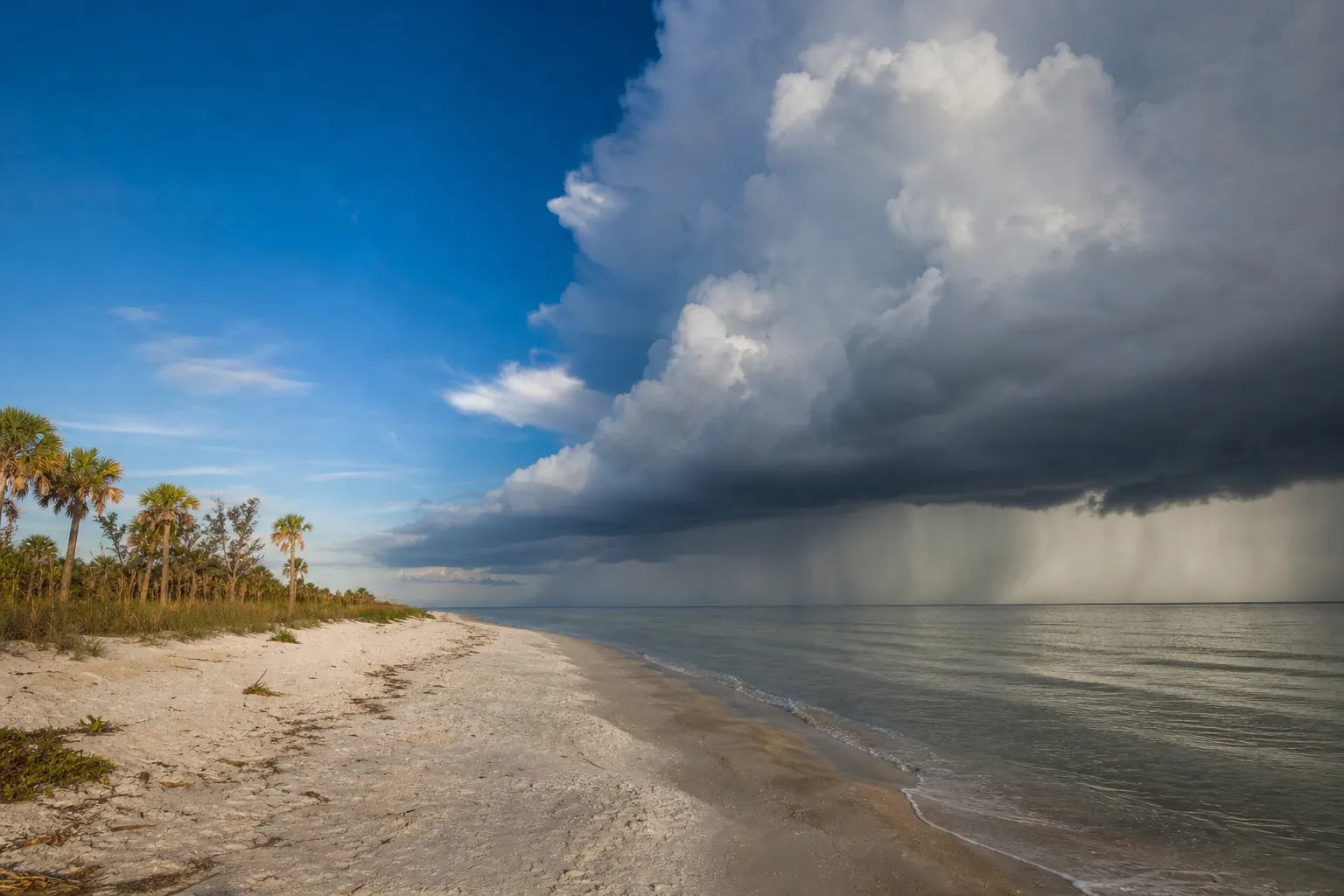
November through April is the good half of the year, and June through September is the half that rewards early starts. That is the whole calendar in one sentence, but the useful version has dates in it: when the manatee zones shift, when the lovebugs arrive, when the hurricane risk actually peaks, and when the permits you already bought quietly expire.
Everything below is either published on an official page or verified on an organizer’s own site. Where a date has not been published yet, we say so rather than guessing.
| Month | On the water | On the trail | On the road | Watch for |
|---|---|---|---|---|
| January | Clear, cool, calm mornings | Peak dry season, firm ground | The best riding month of the year | Big Cypress ORV permits expire January 31 |
| February | Cold fronts make the Gulf lumpy | Still firm and fast | Excellent, cool, low humidity | Peak snowbird traffic on 41 and I-75 |
| March | Warming; ramps get busy | Redneck Spring Break Takeover, March 18–21, 2027 | Daytona Bike Week, early March (dates not yet published) | Spring break crowding at every ramp |
| April | Calm, clear, warm — the sweet spot | Dry and dusty | Still comfortable all day | First lovebug flight begins |
| May | Water warms fast; sea breeze starts | Last of the hard ground | Hot by midday | FWC’s highest month for reportable boating accidents |
| June | Glassy mornings, storms by afternoon | Mud returns | Ride before noon | Hurricane season opens June 1 |
| July | Hot, calm mornings; daily storms | Deep mud, high water | Early or evening only | Second-highest accident month statewide |
| August | Warmest water of the year | Wet, soft, slow | Brutal midday heat | Second lovebug flight; storm activity ramps |
| September | Still 86°F offshore | Parrot Palooza, September 4–7, 2026 | Storm-dodging | Statistical hurricane peak, September 10 |
| October | Humidity breaks late in the month | Drying out, firming up | Biketoberfest, October 15–18, 2026 | Hurricane season still open |
| November | The best all-round month | King of the Deep, November 5–8 | Excellent | Season ends November 30; manatee zones shift |
| December | Cool, dry, clear | Southern Mud Outlaws December 11–13; NYE Bash December 31–January 3 | Excellent | Snowbird traffic returns in force |
The two seasons that actually run this place
Forget four seasons. Southwest Florida has a dry season and a wet season, and every decision on this page follows from which one you are in.
The dry season is roughly November through April: lower humidity, fewer storms, firm ground at the mud parks and the Big Cypress trails, and Gulf mornings calm enough that the run out of Estero Bay is pleasant rather than a chiropractic event. It is the season the best motorcycle rides in Southwest Florida were mapped for, and it is also when everyone else is here, which is the trade.
The wet season is roughly June through September. The sea breeze builds off both coasts, collides somewhere over the interior, and produces a thunderstorm most afternoons — reliably enough that locals plan around a mid-afternoon window rather than a forecast. Ride and launch early, be off the water before the anvil goes up, and treat lightning as the actual hazard rather than the rain.
Hurricane season, in calendar terms
NOAA’s National Hurricane Center (accessed September 2026) fixes the Atlantic season at June 1 through November 30, with “the peak of the Atlantic hurricane season is September 10, with most activity occurring between mid-August and mid-October.” The 1991–2020 average season carries 14 named storms, seven hurricanes, and three major hurricanes.
The climatology is worth internalizing because it does not match how people behave. The Center notes the first named storm typically forms in mid to late June, the first hurricane in early to mid August, and the first major hurricane in late August or early September — so the quiet early season lulls owners into leaving the prep for later, and later is exactly when it gets busy. Do the documentation and the storage plan in June; the physical work is on our hurricane prep checklist.
Water temperature, and what it means
NOAA’s offshore Gulf buoy west of St. Petersburg (Station 42099) read 86.4°F with two-foot seas on September 3, 2026. That is the year’s warm end, and it means two things at once: nobody needs a wetsuit, and the same heat is fuel for whatever spins up over the Caribbean.
The cold end is the part visitors underestimate. Winter fronts drop Gulf temperatures enough that a long personal watercraft run in January is genuinely cold at speed, and the same fronts stack up a short, steep chop that makes a 10-mile crossing feel a lot longer than it did in April. Check the buoy, not the air temperature, before a winter run — where the good winter water is, is covered in our PWC riding areas guide.
Manatee zones move with the season
FWC’s manatee zone maps hub (accessed September 2026) publishes two distinct sets of seasonal changes: areas where speed zones become more protective during colder months, and areas where they become more protective during warmer months. The exact effective dates vary by zone and are printed on the county maps rather than on the hub page, so pull the Lee County or Collier map for the water you actually run and read the dates off it.
FWC’s boating regulations page is blunt about the stakes: “Boaters must observe all manatee protection zone requirements,” and anything that disrupts a manatee’s normal behavior is, in the same page’s words, “punishable under federal law up to a $100,000 fine, one-year imprisonment, or both.” The zone-by-zone breakdown for our water is in manatee zones and no-wake rules.
Lovebugs, twice a year
UF/IFAS entomologist Norman C. Leppla’s Living with Lovebugs (ENY-840) puts the flights precisely: lovebugs appear “for only a few weeks every April-May and August-September.” They matter to anyone on two wheels or with a chrome radiator because “the pairs fly across the wind during their dispersal flights and are blown against obstacles, especially vehicles traveling at high speeds.”
The good news in the same publication: “No permanent damage is caused, however, if the surface is cleaned before the coating is baked by the sun for a day or two,” and “the front of a vehicle can be protected by coating it with ‘car wax’ and removing the lovebugs within 24 hours.” Wax the fairing in late March and late July, carry a wet rag, and the problem stays cosmetic.
When people actually crash boats
FWC’s 2025 Boating Accident Statistical Report counted 694 reportable accidents statewide in 2025, and the seasonality is stark: 97 in May and 94 in July, the two months with the most boats out. Lee County recorded 44 accidents and seven deaths; Collier recorded 25 and three.
Two numbers from that report are worth carrying around. 188 of the 694 accidents happened inside speed-restricted zones — the places specifically marked as requiring care. And 55 percent of the operators involved had no boater education. Neither statistic is about bad luck.
Events worth planning around
Only dates confirmed on the organizer’s own page appear here.
Redneck Mud Park, Punta Gorda, about an hour north — five events published for 2026–27: Parrot Palooza September 4–7, 2026, King of the Deep November 5–8, Southern Mud Outlaws December 11–13, the NYE Bash December 31–January 3, and the Spring Break Takeover March 18–21, 2027. The logistics, the cash gate, and the camping are in our Redneck Mud Park guide.
Biketoberfest, Daytona Beach — October 15–18, 2026, per the event’s official page. About four hours each way from Bonita Springs, which makes it a weekend rather than a day.
Daytona Bike Week lands in early March 2027, but exact dates were not published on the organizer’s site when we checked in September 2026. Plan the month, book nothing on a rumor.
The paperwork the calendar decides
Three renewal dates sneak up on people here.
- Big Cypress ORV permits expire January 31, regardless of when you bought them. A permit purchased in November buys you three months. Buy in February and you get almost a full year — the mechanics are in our Big Cypress ORV permit guide.
- Vessel registration renews in the owner’s birth month, not on a common date, and the Lee County Tax Collector mails the notice about three weeks ahead. If you are away in your birth month, deal with it before you fly.
- Trail passes are per-season purchases worth timing. The Florida Forest Service prices Croom at $15 for a day pass and $80.01 for an annual; the Forest Service sells Ocala National Forest OHV passes at $10 for three days, $25 for seven, and $75 annually, per person. At Croom, more than five day passes a year and the annual pays; Ocala’s annual only makes sense for genuine regulars. Where each of them is and what they suit is in where to ride an ATV or UTV in Southwest Florida.
Late winter is also when the floor composition tells you something. Prior-model-year units are the ones sitting under sticker — the dealership’s 2025 CFMOTO CFORCE 600s are listed from $6,399 against their $7,399 model-year MSRP as of September 2026 — while the incoming model year arrives at full price.
Before you go, whatever month it is
- Check the buoy, not the beach. Two feet offshore and glass in the bay are different days.
- Launch early from June through September. The storm is not a possibility, it is a schedule.
- Pull the county manatee map for the water you are running, and read the seasonal dates printed on it.
- Carry the permit, not the memory of buying it. Big Cypress requires proof on you.
- Wax in late March and late July. Ten minutes now, no scrubbing in May.
- Watch the sunset clock in winter. The personal watercraft cutoff arrives absurdly early in December.
- Book event weekends early. Punta Gorda and Daytona both fill.
Laws current as of September 2026; verify with FWC/FLHSMV before you ride or launch. General information, not legal advice.
Bonita Springs — boats, personal watercraft, side-by-sides, and bikes, with live pricing.
Quick answers
- What is the best month to boat in Southwest Florida?
- November through April. Cooler air, calmer mornings, fewer afternoon storms, and clearer water in the passes. November and March are the sweet spots — winter fronts make February lumpy, and spring break loads the ramps in March.
- When is the rainy season in Southwest Florida?
- Roughly June through September, when the sea breeze builds an afternoon storm most days. Plan water and trail time for mornings in those months; the storm usually arrives mid-afternoon and the lightning arrives with it.
- When is lovebug season in Florida?
- Twice a year. UF/IFAS reports lovebugs appear "for only a few weeks every April-May and August-September." Wax the front of anything you ride and wash the remains off within a day — the publication notes no permanent damage if the surface is cleaned before the residue bakes in the sun.
- How warm is the Gulf of Mexico in September?
- Bath temperature. NOAA's offshore buoy west of St. Petersburg read 86.4°F on September 3, 2026, with two-foot seas. That is wetsuit-free swimming and also why late-summer storms have so much energy to work with.
- What month do most boating accidents happen in Florida?
- May, then July. FWC's 2025 Boating Accident Statistical Report counted 694 reportable accidents statewide, peaking at 97 in May and 94 in July — the months with the most boats out and the most inexperienced operators on them.