Review · The Stable
Kawasaki Eliminator Review: The 451cc Cruiser That Makes Sense in Southwest Florida
A cruiser a five-foot-four rider can flat-foot that will also sit on Alligator Alley at 70 all afternoon. That combination barely existed five years ago.
By The Outpost CrewUpdated 8 min read
How this review was built: from Kawasaki's published specs, professional road tests, owner reports, and what the Power Lodge crew sees on the showroom floor and in the service bay — not a first-hand test ride. Prices are MSRP unless the live listing below says otherwise.How we review →
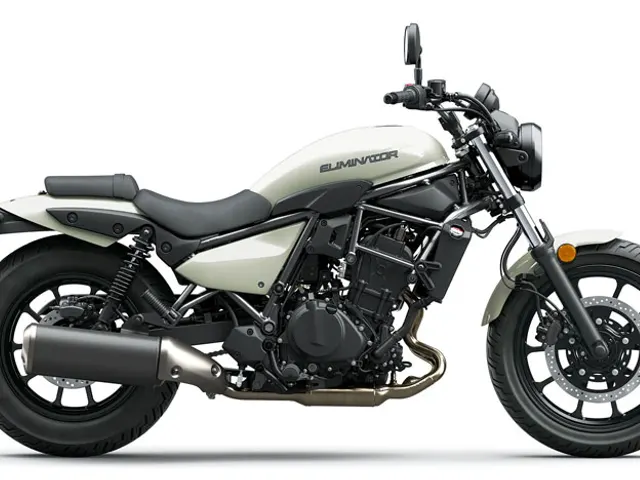
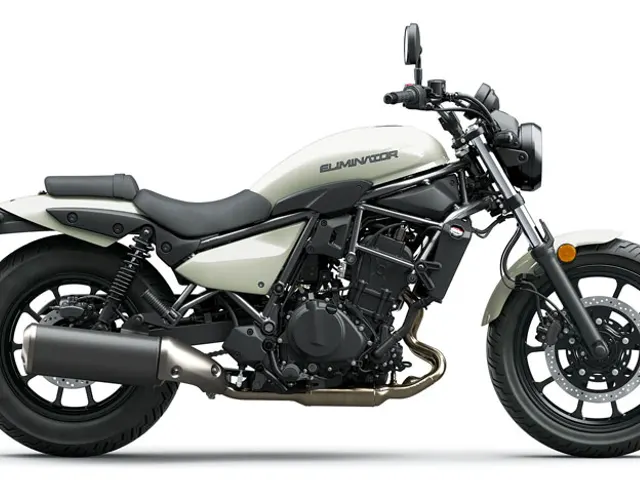
The 2026 Kawasaki Eliminator ABS is what happens when you take the friendliest small twin currently sold and stop making the rider lean forward. It is the Ninja 500’s 451cc parallel twin — a published 51 horsepower and 31.7 lb-ft — in a cruiser chassis with a 28.9-inch seat and a 388.1-pound curb weight.
Who it is for: a new rider who already knows they want feet-forward and a low seat, a shorter rider who has been told their only option is a 300, and a commuter who wants to flat-foot at every light on US-41. Who it is not for: anyone who wants a big cruiser’s presence, and anyone planning 300-mile days on a 3.4-gallon tank.
The one thing to know is the pairing. A 28.9-inch seat used to mean a small engine, and a highway-capable cruiser used to mean a seat height and a curb weight that ruled out half the people asking. The Eliminator is the bike that stopped making you choose.
What the Kawasaki Eliminator is
A low-slung standard-cruiser built on Kawasaki’s 451cc parallel twin, aimed squarely at the shopper typing “Rebel 500” into a search bar. Kawasaki revived the Eliminator name for the current bike, and the sales pitch is straightforward: cruiser ergonomics without the weight penalty that traditionally came with them. RideApart’s coverage of the US launch made the same point by comparison, noting the Eliminator’s roughly 110-pound advantage over Kawasaki’s own Vulcan S.
The engine underneath is the interesting part, and it is not exclusive to this bike. The 451cc twin also powers the Ninja 500 and the new KLE500 adventure bike, which means three very different motorcycles on the Power Lodge floor share one drivetrain. The full story on that engine — why Kawasaki published 51 horsepower instead of clearing Europe’s 47-horsepower beginner cap, and what that buys you — lives on the Ninja 500 review. It applies here unchanged.
The floor holds three 2026 Eliminator ABS units as of September 2026. Kawasaki’s 2026 Eliminator family starts at $6,499; the ABS bikes are the ones in the building. Kawasaki also lists an Eliminator SE ABS trim at $7,099 — none are on the floor as of this writing, so if the SE is what you want, ask about ordering rather than assuming.
| Engine | 451cc liquid-cooled parallel twin, four-stroke |
|---|---|
| Horsepower (Kawasaki published) | 51 hp @ 10,000 rpm |
| Torque (Kawasaki published) | 31.7 lb-ft @ 7,500 rpm |
| Transmission | Six-speed with assist and slipper clutch |
| Seat height | 28.9 in |
| Curb weight | 388.1 lb (ABS) |
| Fuel capacity | 3.4 gal |
| Brakes | Front and rear disc; ABS on the ABS model |
| MSRP, 2026 family | From $6,499 |
| MSRP, 2026 Eliminator ABS | $6,799 |
| MSRP, 2026 Eliminator SE ABS (not stocked) | $7,099 |
| Listed on our floor, September 2026 | $6,799 (three units) |
Source: kawasaki.com. Specs and pricing are the manufacturer's published figures and can change by model year.
Engine and performance: why 51 hp matters more in a cruiser
In a sportbike, 51 horsepower is a starting point. In a cruiser at this seat height, it is close to unheard of.
The class the Eliminator competes in has historically been powered by small singles and lazy V-twins making somewhere in the twenties, which is fine until you merge onto Alligator Alley behind a truck. The Eliminator’s 31.7 lb-ft at 7,500 rpm changes the arithmetic. Sixth gear at 70 mph is not the top of the bike’s ability, it is the middle of it.
The delivery suits the chassis better than the numbers suggest. This is a twin that makes its power high and its torque broadly, so the low-speed manners are soft — you can idle it through a parking lot in first without feathering anything — and the reserve only shows up when you ask. New riders find the first fifteen minutes uneventful, which is the correct outcome.
The assist and slipper clutch is standard, and on a bike aimed at people who learned to ride six weeks ago, it earns its place at both ends: a lighter lever for stop-and-go, and a rear wheel that stays settled under a clumsy downshift.
On the road
The Kawasaki Eliminator rides shorter than it looks. The 28.9-inch seat means most adults are flat-footed with knees bent, and the bar is a flat-ish pullback rather than an ape, so the shoulders stay relaxed without the arms-out cruiser stretch. The pegs are forward but not extreme.
At 388.1 pounds it is genuinely light for the category, and that number does more work than any other spec on the page. Light plus low is what makes a first cruiser feel manageable at walking pace, in a gas-station U-turn, and in the seconds after you put your feet down on gravel. It is also what makes the bike easy to pick up on the rare occasion it goes over.
The compromise arrives on a long straight. There is no fairing and no screen, so at 70 mph the airstream sits on your chest for the duration. On the Tamiami Trail heading east that is pleasant in January and tiring in August, and it is the honest reason we describe this bike as a great two-hour highway machine rather than a great four-hour one. Most of the rides that suit it are in the best motorcycle rides in Southwest Florida, and the flat, open, straight ones are exactly its territory.
Suspension is set for comfort rather than pace. Over the expansion joints and patched asphalt that make up most of Lee and Collier county surface streets, that is the right call.
What reviewers and owners say
The class answer. Press coverage since launch has been consistent: this is now the most beginner-appropriate cruiser sold new, on the strength of the seat height and the weight rather than the styling. Reviewers who came to it expecting a novelty left describing a real motorcycle.
Flat-foot confidence is the thing people report first. In owner discussion the recurring note is not the power, it is that riders who could not manage a 30-inch seat can manage this one, and that the difference showed up immediately in how much they rode.
The tank. The most common owner complaint is 3.4 gallons. It is a small tank by cruiser standards and it sets the length of your day more than any other factor on the bike.
The seat at hour two. The second complaint, and a fair one. The stock seat is firm and flat, and owners who ride longer distances tend to change it. That is a solvable problem and an inexpensive one.
Living with an Eliminator in Southwest Florida
Plan the fuel, not the route. The 3.4-gallon tank is the number that shapes ownership here. The ride east on US-41 past Naples has long gaps between stations, and Immokalee Road has longer ones. Fill at the coast, and treat the Eliminator as a bike you top off more often rather than one you push.
There is nothing between you and the sun. No fairing, no screen, no bodywork. In practice that means a mesh jacket and a full-face or a good three-quarter with real eye protection, and it means an unshaded rider at every red light between Bonita and Naples. The heat and rain playbook covers what actually works in July.
Watch the exposed hardware, not just the chain. A cruiser wears its parts on the outside — fork lowers, brackets, fasteners, exhaust, and the finish on the wheels are all in the weather all the time. Within a few miles of the Gulf, salt air finds every one of them. A rinse and a dry after a beach day does more for this bike’s five-year condition than any other maintenance habit, and it is worth doing on the schedule your parking spot dictates rather than the one in the manual.
Crosswinds are a real consideration. A 388-pound bike on the high span of the Sanibel Causeway moves when the wind does. This is not a warning so much as a thing to know before the first time it happens.
Storage is zero. No bags, no underseat compartment, no glove box. Budget for a tail bag or a set of soft saddlebags in the first month, because you will want them in the first week.
Recalls and known issues
For the 2026 Kawasaki Eliminator, none found in the NHTSA database as of September 2026.
Direct queries of the NHTSA database for 2024 Eliminator models also returned no campaigns as of September 2026. If you are shopping a used one, check anyway rather than assume — a clean model query and a clean VIN are not the same thing.
Either way, run the VIN yourself at nhtsa.gov/recalls before you sign anything, new or used. Thirty seconds, and it is the only way to know about one specific motorcycle rather than a model.
Price and what is on the floor
As of September 2026 the Power Lodge floor holds three 2026 Kawasaki Eliminator ABS units listed at $6,799, which matches the $6,799 MSRP for that model year. Kawasaki lists the 2026 Eliminator family from $6,499.
Freight, prep, tax, and tag are separate and real. Ask for an out-the-door number, which is the only figure worth comparing against anything you found online.
How it compares
Kawasaki Ninja 500 ABS, listed at $5,799 to $5,999 on our floor for the 2026 model year, is the same engine in sport clothing with a 30.9-inch seat. If you are genuinely undecided about riding position, this is the comparison to make, and it costs about $1,000 less as listed. The Ninja 500 review has the detail.
Honda Rebel 300, one 2025 unit listed at $3,999 against a $4,849 MSRP for its year, is the shorter, cheaper, gentler alternative: a 286cc single with a 27.2-inch seat and 364 pounds. It is the better bike for the smallest riders and the tightest budgets. It is also about 24 horsepower down, which you feel every time you merge.
Yamaha V Star 250, one 2025 unit listed at $4,499 against a $4,799 MSRP, is the traditional-looking option — an air-cooled V-twin, a 27.0-inch seat, and 326 pounds. Buy it because you want a small classic cruiser, not because you want to go anywhere quickly.
Shoppers cross-shopping a Rebel 500 will find the Eliminator the lighter bike with the lower seat and the published power figure. That comparison is not on our floor, so make it with a spec sheet rather than a salesperson.
Where the Eliminator sits among everything else a new rider might buy here is laid out in the beginner motorcycle guide.
Highs
- 28.9-inch seat and 388.1 lb curb weight — flat-footed for most adults
- 51 published hp and 31.7 lb-ft means real highway capability, not just legality
- ABS standard on the bikes we stock
- Assist and slipper clutch takes the sting out of clumsy downshifts
- Shares its engine with two other bikes on the floor, so service is familiar
Lows
- 3.4-gallon tank is the smallest of the 451 family and sets your range
- No fairing or screen — full airstream at highway speed
- Stock seat gets firm around the two-hour mark
- No storage of any kind from the factory
- Not the presence or the sound a big-cruiser shopper is after
Everything on this page comes from Kawasaki’s published specifications, professional coverage of the model, owner reports, and what the crew sees on the floor and in the service bay. Our standard is on how we review. If the endorsement is still ahead of you, the Florida motorcycle endorsement guide is the first step, and the rest of the street coverage lives in The Stable.
Three 2026 units. Live inventory and today's price.
Quick answers
- Is the Kawasaki Eliminator good for beginners?
- Yes, and it is the cruiser we point most new riders at. Kawasaki publishes 51 horsepower and 31.7 lb-ft from the 451cc twin, in a 388.1-pound motorcycle with a 28.9-inch seat and ABS as standard. The low seat and the gentle power delivery are doing the same job.
- How fast is the Kawasaki Eliminator?
- Kawasaki does not publish a top speed. It publishes 51 horsepower at 10,000 rpm and 31.7 lb-ft at 7,500 rpm, which is the same engine as the Ninja 500. That is enough to hold the posted 70 on I-75 or Alligator Alley with throttle left over for passing.
- What is the difference between the Kawasaki Eliminator and the Ninja 500?
- Same 451cc engine, same published output, different motorcycle around it. The Eliminator has a 28.9-inch seat, feet-forward pegs, a flat bar, and a 3.4-gallon tank. The Ninja 500 has a 30.9-inch seat, clip-ons, bodywork, and 3.7 gallons.
- How much does a Kawasaki Eliminator cost?
- Three 2026 Kawasaki Eliminator ABS units are listed at $6,799 on the Power Lodge floor as of September 2026, which matches the $6,799 MSRP for that model year. Kawasaki lists the 2026 Eliminator family from $6,499. Freight, prep, tax, and tag are extra.
- Is the Kawasaki Eliminator comfortable on the highway?
- For an hour at a time, yes. The engine is unstressed at 70 mph and the riding position is relaxed. The limits are the 3.4-gallon tank and an unfaired riding position that puts the whole airstream on your chest, not the engine.