Review · The Stable
Yamaha YZF-R3 Review: Still the Sharpest Way Into Sportbikes
Eleven years on, Yamaha's baby supersport is still the one that flatters a new rider's hands — and it still asks you to rev it like you mean it.
By The Outpost CrewUpdated 7 min read
How this review was built: from Yamaha's published specs, professional road tests, owner reports, and what the Power Lodge crew sees on the showroom floor and in the service bay — not a first-hand test ride. Prices are MSRP unless the live listing below says otherwise.How we review →
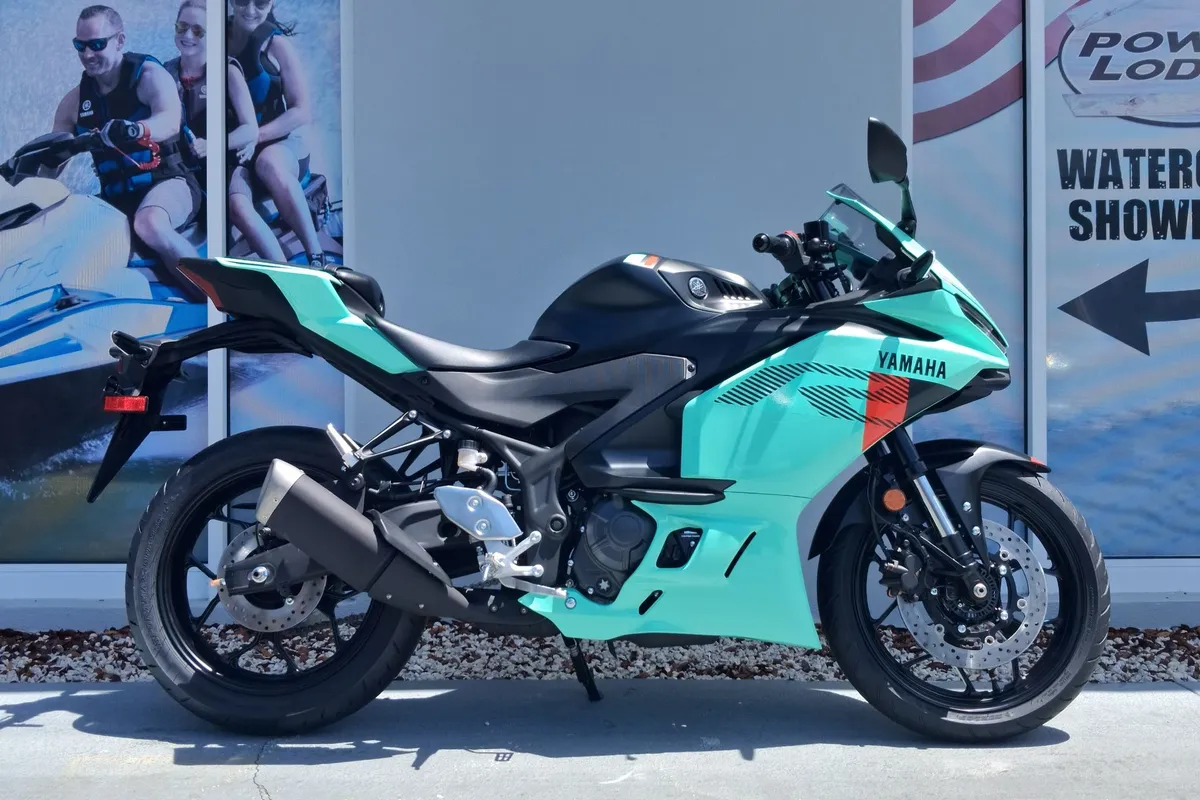
The 2026 Yamaha YZF-R3 is the small sportbike that feels like a real one. A 321cc parallel twin, 373 pounds wet, a 30.7-inch seat, and a chassis that has been flattering novice riders since 2015 — this is the entry point to Yamaha’s R-series, and the family resemblance is not just bodywork.
Who it is for: a new rider who wants a sportbike, values light steering and finish quality over torque, and is honest about riding mostly at legal speeds. Who it is not for: a rider whose commute is 40 miles of I-75 every day, or anyone who wants to pass a truck without downshifting.
The one thing to know: the R3 is the revvier, lighter-feeling half of the beginner-sportbike decision, and the Kawasaki Ninja 500 is the torquier half. Almost everyone shopping this bike is really shopping that pair, and the answer depends on your height and your route, not on which brand you like.
What the Yamaha YZF-R3 is
Yamaha’s entry supersport, in production since 2015 and unchanged in its essentials since the 2019 revision that sharpened the chassis and steepened the riding position. It sits at the bottom of the R-series ladder, below the YZF-R7 at 689cc and a long way below the R1. The rest of the street lineup lives in The Stable.
For 2026 the notable additions are electronic rather than mechanical: Yamaha fits Y-Connect smartphone connectivity with an LCD instrument cluster that displays phone information, a USB-A socket for charging or heated gear, and full LED lighting — a projector headlight flanked by four-element position lights. ABS is standard. Traction control is not fitted, and a quick shifter remains an accessory rather than a factory item.
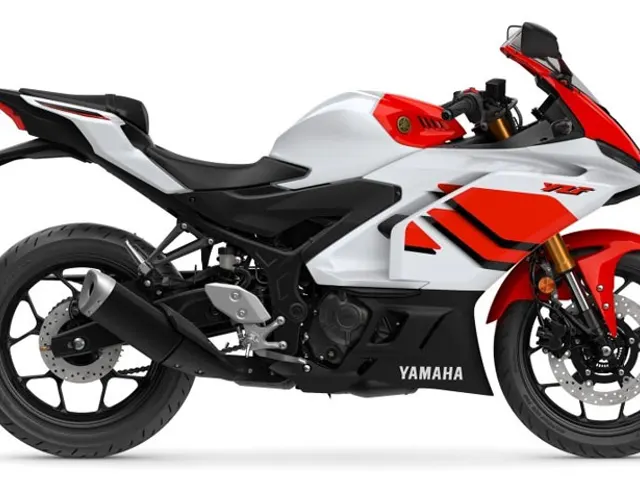
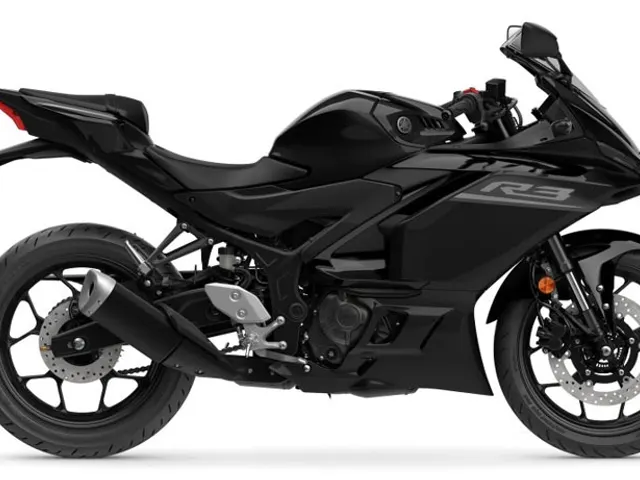
There is one trim, in four colorways — blue, black, and green options plus the 70th Anniversary White/Red, Yamaha’s throwback speed-block livery. That last one is a paint option, not a package. It costs the same and does the same things, and it is the one people take pictures of in the showroom.
| Engine | 321cc liquid-cooled DOHC parallel twin, four-stroke |
|---|---|
| Horsepower | Yamaha US does not publish a figure; press tests report roughly 42 hp |
| Transmission | Six-speed with assist and slipper clutch |
| Seat height | 30.7 in |
| Wet weight | 373 lb |
| Wheelbase | 54.3 in |
| Brakes | Front and rear disc; ABS standard |
| Traction control | Not fitted |
| Display | LCD cluster with Y-Connect smartphone information display |
| Charging | USB-A socket |
| Colors | Four colorways, including 70th Anniversary White/Red |
| MSRP (2026) | $5,499 plus $650 destination |
Source: yamahamotorsports.com. Specs and pricing are the manufacturer's published figures and can change by model year.
Engine and performance: a small twin that wants revs
Yamaha US publishes no horsepower figure for the YZF-R3 — the company does not publish power numbers for its street bikes here — so the roughly 42 horsepower you will see quoted comes from press tests rather than the manufacturer. Treat it as an approximation, and treat the way the engine behaves as the real specification.
The 321cc twin makes its useful power in the top half of the tachometer. Short-shift it and it feels sleepy; wind it out and it comes alive with a genuine top-end rush that the torquier 450–500cc twins do not really have. Whether that is a feature or a flaw depends entirely on how you like to ride. Riders who enjoy working a gearbox love this engine. Riders who want to leave it in fifth and roll on will find it lacking, and should be looking at a 451 instead.
The practical consequence for a beginner is real and worth stating: an engine that needs revs to make power is an engine that is very hard to get in trouble with at 3,000 rpm. Rolling onto the throttle mid-corner on an R3 produces gentle forward motion, not a surprise. That is a safety feature disguised as a performance limitation.
The assist and slipper clutch — Yamaha calls it an Advanced Assist and Slipper Clutch — does the two things that matter for new hands. It cuts lever effort, turning a long red light into a non-event, and it limits rear-wheel hop when you downshift too hard, which every rider does in their first month.
On the road
The R3 steers with less effort than almost anything else in the class. At 373 pounds wet and with a 54.3-inch wheelbase, it changes direction on thought rather than input, which is the quality that makes new riders feel competent early — and it is exactly what RideApart’s tests of the platform have praised since the 2019 revision, alongside the bike’s finish quality, which is a genuine step above the class.
The riding position is more committed than the Ninja 500’s. Not painful, but you are further forward, with more weight on your wrists. For a 30-minute ride to Naples and back it is fine. For two hours on the Tamiami Trail it is the thing you notice.
Two honest limitations come up in every owner discussion. The first is highway buzz: at a sustained interstate cruise the twin is spinning near the top of its useful range, and the vibration reaches the bars and pegs. The second is wind protection, which is what you expect from a small fairing on a small bike and no better than that. Neither ruins the motorcycle. Both are reasons the R3 is a better surface-street bike than an interstate bike.
Owners also consistently name the fork as the first thing to improve. It is soft, which is a defensible choice for a beginner bike carrying 150 to 200 pounds of rider, and it is the modification experienced riders make first.
What reviewers and owners say
The professional consensus, going back to RideApart’s 2019 first ride and holding since, is that this is the best-finished small sportbike sold and the friendliest to a new rider’s inputs. The recurring caveat in the same reviews is torque: the R3 gives up real mid-range to the 450–500cc twins that arrived after it.
Owner discussion on the rider forums lands in three places. The R3 is the confidence-builder — riders describe learning faster on it than on heavier bikes. Resale holds up well, because there is a permanent queue of new riders shopping this exact segment. And the complaints are consistent enough to plan around: soft fork, thin wind protection, freeway buzz near redline.
None of that is a defect. It is what a 321cc motorcycle is, described accurately by people who own one.
Living with a YZF-R3 in Southwest Florida
The heat is the rider’s problem, not the bike’s. A small liquid-cooled twin handles August stop-and-go on US-41 without drama. You will not. Mesh gear, water, and a route that avoids the 5 p.m. crawl are the real answers, and our Florida heat and rain guide has the rest.
Salt eats chains. Parking within a few miles of the Gulf shortens the life of the drive chain and every exposed fastener. Rinse and lube the chain ahead of the book interval — Yamaha’s schedule assumes the bike lives somewhere the air is not salted.
Storm season is a calendar problem. Afternoon rain from June through September arrives on a schedule you can plan around. ABS is standard here, which is one fewer thing to worry about when a squall catches you on Bonita Beach Road.
Hurricane season runs June 1 to November 30. Inside, on a stand, tank full, battery on a tender. A light bike is easy to move, which is one of the quiet advantages of 373 pounds.
Follow Yamaha’s published service intervals rather than stretching them. A small engine that spends its life in the upper half of the tachometer earns its oil changes.
Recalls and known issues
For the 2025 and 2026 Yamaha YZF-R3, none found in the NHTSA database as of September 2026. Older R3 model years do carry recall history, including a 2019-era campaign, so a used bike is worth checking specifically.
Run the VIN of any individual machine at nhtsa.gov/recalls before you buy. Model-year clearance is not unit clearance.
Price and what is on the floor
Yamaha lists the 2026 YZF-R3 at $5,499 MSRP plus a $650 destination charge. As of September 2026, three 2026 units are on the Power Lodge floor listed between $5,099 and $5,499, including the 70th Anniversary livery. Freight, prep, tax, and tag are separate — ask for an out-the-door number.
That listing puts the R3 several hundred dollars under the Ninja 500 ABS, which is a meaningful gap at this end of the market and roughly the price of a first helmet-and-jacket set.
How it compares
Kawasaki Ninja 500 is the head-to-head, and both are here. The Kawasaki brings a published 51 horsepower and 31.7 lb-ft against the R3’s roughly 42, and about four pounds more curb weight and two-tenths of an inch more seat height. The R3 counters with a lower price, lighter steering, and a livelier top end. We split it by rider profile in the Ninja 500 versus YZF-R3 comparison.
Yamaha YZF-R7 is the step up in the same family: 689cc, a claimed 72 horsepower in press figures, 414 pounds. It is the bike to buy when you already know a 321 is not enough, and not before.
Kawasaki Eliminator ABS is the cross-category alternative for a rider who is not certain the sport position suits them — same 451cc twin as the Ninja 500 in a cruiser with a 28.9-inch seat.
Shoppers who cross-shop this class also look at the CFMOTO 450NK, which is cheaper and torquier but younger as a brand and less predictable at resale. All three sit on the same floor, which makes it a comparison you can settle with your own legs.
Highs
- 373 lb wet and light-steering — flatters a new rider immediately
- Best-finished bike in the small-sportbike class
- Rev-happy top end is entertaining at legal speeds
- ABS standard; assist and slipper clutch lightens the lever
- Lists below the 451cc competition on our floor
Lows
- Gives up real mid-range torque to the 450–500cc twins
- Buzzy at sustained highway revs
- Soft fork is the first thing owners upgrade
- Thin wind protection
- Yamaha publishes no horsepower figure, so power claims come from the press
Everything here comes from Yamaha’s published specifications, professional road tests, owner reports, and what the crew sees on the floor and in the service bay — the full standard is on how we review. If the endorsement is still ahead of you, start with the Florida motorcycle endorsement guide, and if you are still deciding on a category, the beginner buyer’s guide covers all six starter bikes in the building.
Live inventory and today's price, including the 70th Anniversary livery.
Quick answers
- Is the Yamaha R3 a good first bike?
- Yes. The 2026 YZF-R3 weighs 373 pounds wet with a 30.7-inch seat, ABS is standard, and the assist and slipper clutch lightens the lever and softens clumsy downshifts. The 321cc twin makes its power high in the rev range, which means small mistakes with the throttle stay small.
- How much does a 2026 Yamaha YZF-R3 cost?
- Yamaha lists a $5,499 MSRP for the 2026 YZF-R3 plus a $650 destination charge. On the Power Lodge floor in September 2026, three 2026 units are listed between $5,099 and $5,499 before freight, prep, tax, and tag.
- What is the Yamaha R3 70th Anniversary edition?
- A colorway, not a different motorcycle. Yamaha offers the 2026 YZF-R3 in a 70th Anniversary White and Red finish with the throwback speed-block livery. Mechanically it is identical to the other colors.
- Is the Yamaha R3 comfortable on the highway?
- It will hold interstate speeds, but the 321cc twin is spinning hard to do it and owners consistently report buzz through the bars and pegs at sustained highway revs. For a daily I-75 commute, a 450 to 500cc twin is the easier machine.
- Does the Yamaha YZF-R3 have ABS?
- Yes, ABS is standard on the 2026 YZF-R3 sold in the US. Traction control is not fitted, and the quick shifter is a Yamaha accessory rather than standard equipment.