Review · The Trailhead
Honda Pioneer 700 Review: The Side-by-Side Built to Work for a Decade
Everyone else in this class runs a rubber belt. Honda runs a torque converter and a driveshaft — and in a state that spends five months underwater, that is the whole argument.
By The Outpost CrewUpdated 7 min read
How this review was built: from Honda's published specs, professional road tests, owner reports, and what the Power Lodge crew sees on the showroom floor and in the service bay — not a first-hand test ride. Prices are MSRP unless the live listing below says otherwise.How we review →
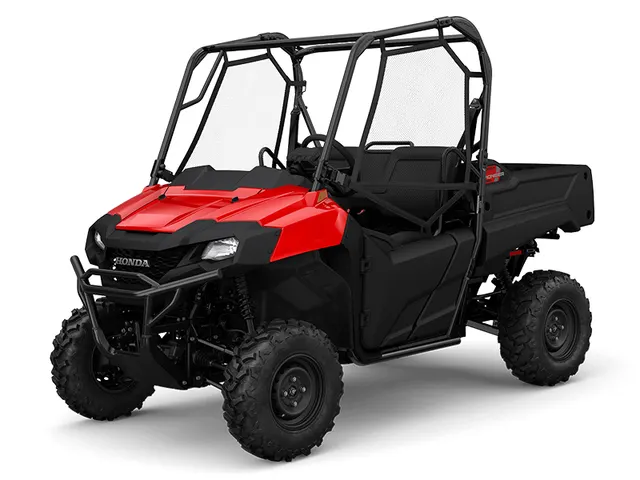
The Pioneer 700 is the side-by-side you buy when you want to stop thinking about the side-by-side. A 675cc single, an automotive-style automatic with a hydraulic torque converter, driveshafts front and rear, a 1,000-pound tilt bed, and 1,500 pounds of towing — sold to people with acreage, a fence line, and no appetite for drivetrain drama.
The headline is what it does not have. Nearly every machine it competes with runs a rubber CVT belt. Honda runs a torque converter and gears. In Southwest Florida, where the wet season turns lease roads into water crossings from June through November, that single design decision is most of the reason this thing sells here.
It is not the fastest, the widest, or the best-equipped side-by-side on our floor, and at $12,899 MSRP for the 2026 base model it is not the cheapest either. What it is, by consistent reviewer and owner account, is the one still working in year ten.
What the Honda Pioneer 700 is
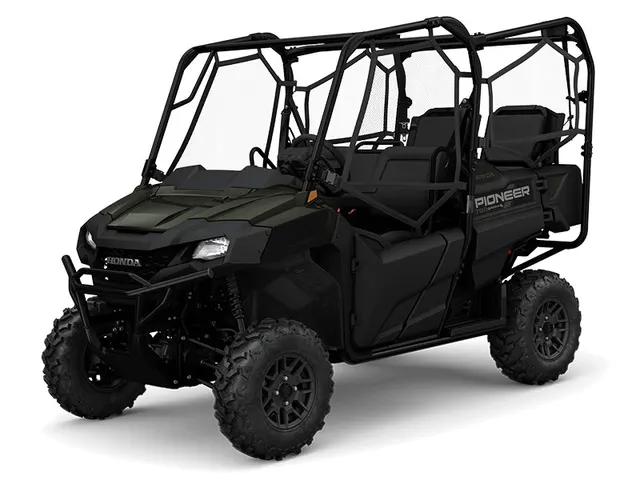
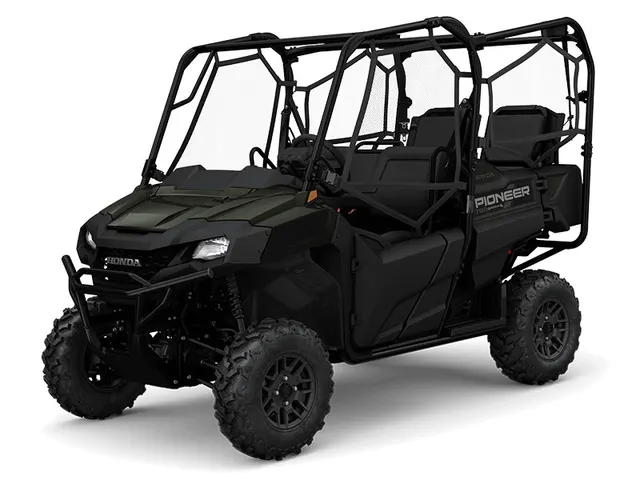
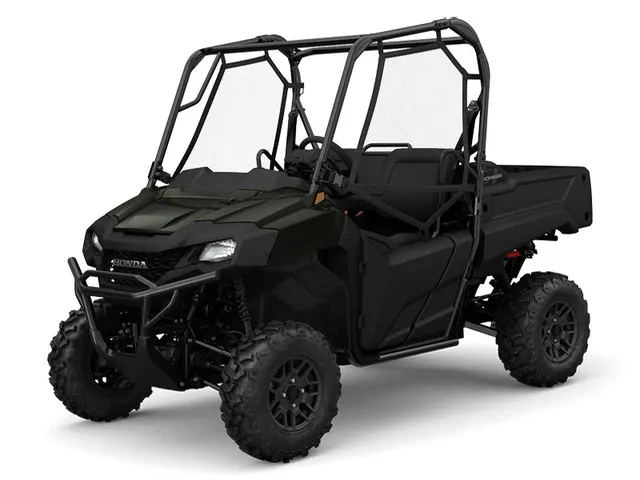
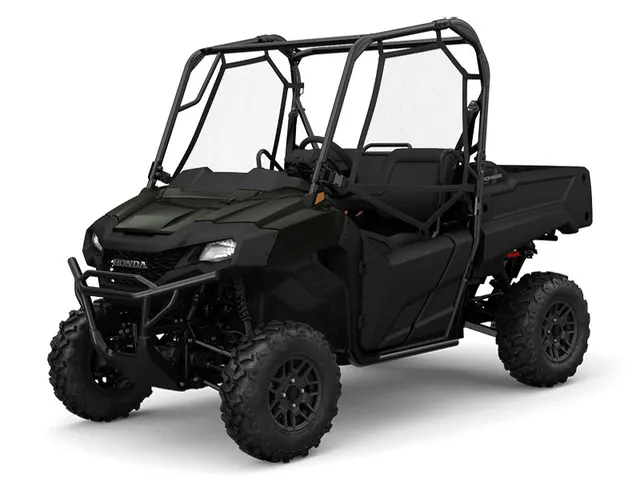
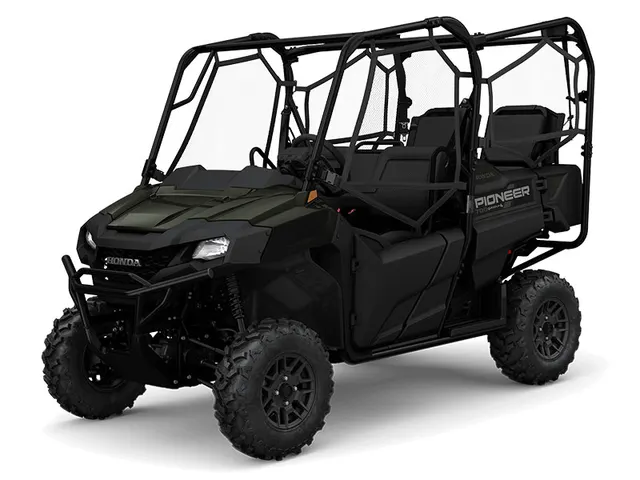
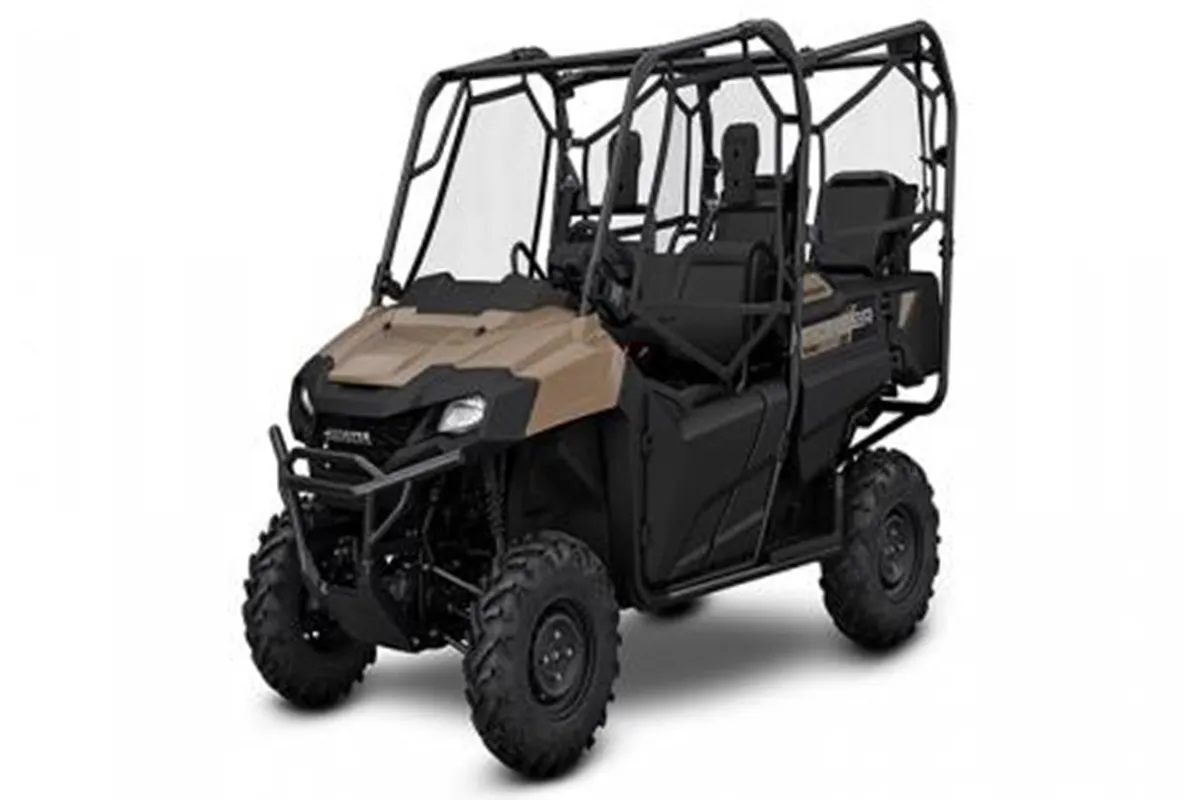
Two-seat, mid-size utility side-by-side — the work tier. In Honda’s ladder it sits above the 518cc Pioneer 520, which is the narrow one that fits tight trails and truck beds, and below the 999cc DCT Pioneer 1000. Two configurations come through the door: the two-seat Pioneer 700, and the Pioneer 700-4, which uses Honda’s QuickFlip jump seats to run as a two-, three-, or four-seater without giving up the dump bed.
Each of those comes in base or Deluxe trim. Deluxe is the one to know about: per UTV Guide’s model coverage it adds electric power steering, aluminum wheels, paint, and a shift-override, on identical mechanicals.
At 59.9 inches wide it is a recreational off-highway vehicle under Florida’s definitions, not an ATV — which matters more than it sounds like it should, because it puts the machine outside the state’s one road exception. That is covered on are UTVs street legal in Florida.
| Engine | 675cc single-cylinder, four-stroke OHV, four valves, liquid-cooled |
|---|---|
| Compression | 9.2:1 |
| Transmission | Automotive-style automatic with hydraulic torque converter |
| Drive | Direct front and rear driveshafts — no drive belt |
| Suspension | Independent double-wishbone front and rear |
| Suspension travel | 7.9 in front / 9.1 in rear |
| Ground clearance | 10.8 in |
| Curb weight | 1,292 lb |
| Towing | 1,500 lb |
| Bed capacity | 1,000 lb, tilt bed |
| Seating | 2 (700-4 seats up to 4) |
| Tires | Kenda Mastodon AT, 25 x 8-12 front / 25 x 10-12 rear |
| Dimensions | 114.8 in long × 59.9 in wide × 77.6 in high; 76.8-in wheelbase |
| Turning radius | 14.8 ft |
| Fuel capacity | 8.1 gal |
| Storage | 10 L under-dash nets, two sealed 15 L underbed compartments, 9.6 L glovebox |
| Instruments | Tilting LCD display, USB-C in the glovebox, 12-volt socket |
| MSRP | $12,899 base / $14,499 Deluxe (2026 model) |
Source: powerlodgefl.com. Specs and pricing are the manufacturer's published figures and can change by model year.
Engine and performance
Six hundred seventy-five cubic centimeters, one cylinder, liquid-cooled, and Honda does not publish a horsepower figure for it — so anyone quoting you one is guessing. What the spec sheet does tell you is the shape of the thing: a long-stroke single at 9.2:1 compression, tuned for pulling rather than for revving.
The transmission is the story. A hydraulic torque converter feeding an automotive-style automatic behaves like the drivetrain in a pickup: it multiplies torque at a stall, holds a load on a grade without slipping, and does not care that the bellhousing just went through eighteen inches of tea-colored water. Belt-driven machines in this class are perfectly good until the day water and heat find the CVT housing together. This one removes that failure mode from the list. We wrote the long version at CVT belt versus gear drive, explained.
The trade is character. A torque converter is smooth and slightly muted where a well-set-up CVT is instant. If you want a machine that snaps off the line, this is not it. If you want one that crawls a loaded trailer up a wet grade at idle without drama, it is exactly it.
On the trail and on the property
Ten and eight-tenths inches of clearance, 7.9 and 9.1 inches of travel, and a 14.8-foot turning radius describe a machine engineered around chores rather than around whoops. It rides well enough on a graded lease road at 25 mph and it will beat you up if you insist on treating a section of Ocala singletrack like a sport machine.
Where it shines is the boring stuff. The 1,000-pound tilt bed handles feed, posts, sand, and a chainsaw’s worth of debris. The 2026 refresh brought Kenda Mastodon AT tires, a USB-C port in the glovebox, and two sealed 15-liter underbed compartments — that last one is the upgrade you appreciate every single ride, because Florida rain arrives at 3:40 and a dry place for a phone and a wallet is not a small thing.
Honda does not fit power steering to the base trim. On a 1,292-pound machine with a loaded bed and 25-inch tires, that is felt. If you are going to spend four-hour days in it, the Deluxe’s EPS is the option worth the money — a rare case where the up-trim is the value buy rather than the upsell.
The seating question is worth settling in person rather than on a spec sheet. The two-seat 700 gives you a bench, a full bed, and 114.8 inches of vehicle to park and trailer. The 700-4 adds Honda’s QuickFlip jump seats, which fold up out of the bed floor to carry two more people and fold away again to restore the cargo space — UTV Guide’s coverage makes the point that it works as a two-, three-, or four-seater without permanently surrendering the dump bed. That flexibility costs about $1,500 as listed between the two 2026 Deluxes on our floor, which is cheap for the option to bring your kids to the stand on Saturday and haul fence posts on Sunday.
The historic gripe worth naming: cab heat. Threads on the Honda side-by-side forums have circulated complaints about heat coming off this platform into the cabin, and Florida is the state least equipped to be forgiving about it. It is a real theme in owner discussion rather than a documented defect, and it is one more reason to take the machine on a long test sit in August rather than a five-minute loop in January.
What reviewers and owners say
UTV Guide’s coverage of the Pioneer 700 characterizes it as a versatile, reliable workhorse and credits the combination of a proven single, a genuine 1,000-pound bed, and a 1,500-pound tow rating. Notably, we could not locate an independent instrumented test of the 2026 model — the enthusiast press treats this platform as a known quantity and mostly stopped re-testing it, which is its own kind of review.
Owner traffic on the Honda side-by-side forums skews heavily toward work reporting: plowing, hauling, property maintenance, machines with real hours on them. The complaints that surface are specific rather than systemic — a recurring thread on gear selectors that will not drop into Drive, and the cab-heat discussion above. Nobody argues about whether the drivetrain will last, which is not something you can say about most of this class.
Living with it in Southwest Florida
Salt air, sugar sand, and afternoon storms are the local tax. Rinse it after brackish or beach-adjacent work, keep the radiator clear of mud and grass, grease what the manual lists, and store it out of the UV if you can. The no-belt drivetrain removes the single most common wet-season service item in the category, but it does not remove bearings, brakes, or CV boots from the list.
Two Florida notes. First: hurricane season runs June 1 to November 30, and a 1,500-pound-tow, 1,000-pound-bed machine with sealed storage is one of the most useful things in the yard the week after a storm — our hurricane prep guide covers the rest of the kit. Second: Florida titles this as an off-highway vehicle — title, no plate — as covered on our OHV title and registration page.
Recalls and known issues
The relevant CPSC campaign is recall #25-207, issued in 2025, covering accessory heaters fitted to 2022–2025 Pioneer and Talon side-by-sides for a fire and burn hazard. It is an accessory recall, not a vehicle recall — but if you are buying a used unit with a heater in it, that is the first thing to check. An earlier electric-power-steering recall applied to 2017–2021 model years only and does not reach current units.
Beyond those, none found for the 2026 Pioneer 700 in the CPSC recall database as of September 2026. Off-highway vehicles are recalled through the Consumer Product Safety Commission rather than NHTSA, so search cpsc.gov and saferproducts.gov, and register the VIN with Honda so notices actually reach you.
Price and what is on the floor
MSRP is $12,899 for the 2026 Pioneer 700 and $14,499 for the 700 Deluxe. In Bonita Springs as of September 2026 the floor holds one 2026 Pioneer 700 listed at $11,899 and two 2026 Deluxes listed at $13,499, plus the four-seat side of the family: three 2026 Pioneer 700-4 Deluxes listed at $14,999 against a $15,999 MSRP, and a 2025 700-4 listed at $12,499. Freight, prep, and tax are separate.
How it compares
Inside Honda’s own range: the Pioneer 520 is narrower, lighter and cheaper, and fits trails and truck beds this machine will not. The Pioneer 700-4 is the same machine with jump seats, and the 999cc DCT Pioneer 1000 is the step up in power and tow rating for people whose trailers keep getting heavier.
Across the floor, the decision most people actually make is against the Can-Am Defender HD7, which counters with 52 horsepower, six seats in MAX form, a 2,500-pound tow rating, and a pDrive CVT. That head-to-head has its own page: Pioneer 700 versus Defender HD7. The short version — Can-Am gives you more machine on paper and Honda gives you a driveline with nothing to burn. Kawasaki’s MULE line is the third name in the conversation for property and fleet buyers, and shoppers cross-shopping a Polaris Ranger are asking the same question about belts that this page opens with.
Highs
- Torque-converter automatic with no CVT belt to burn
- 1,000-lb tilt bed and 1,500-lb towing in a mid-size package
- Sealed underbed storage and USB-C on the 2026 refresh
- Reliability reputation that owner threads consistently back up
Lows
- No power steering on the base trim
- Cab heat is a long-standing owner complaint in a hot state
- Two seats only unless you step to the 700-4
- Costs more than the value-brand competition
Base and Deluxe on the floor in Bonita Springs, with live pricing.
Quick answers
- Does the Honda Pioneer 700 have a belt?
- No. The Pioneer 700 uses an automotive-style automatic transmission with a hydraulic torque converter and direct front and rear driveshafts, per Honda's spec sheet. There is no CVT belt to slip, burn, or replace after a water crossing.
- How much can a Honda Pioneer 700 tow?
- 1,500 pounds, with a 1,000-pound tilt bed on top of that, per the OEM specification sheet. Curb weight is 1,292 pounds and the machine measures 59.9 inches wide.
- What is the difference between the Pioneer 700 and the 700 Deluxe?
- The Deluxe adds electric power steering, aluminum wheels, painted bodywork, and a shift-override function, per UTV Guide. Engine, bed, towing, and chassis are the same. On the Bonita Springs floor the gap is about $1,600 as listed.
- Is the Honda Pioneer 700 street legal in Florida?
- No. At 59.9 inches wide it is a recreational off-highway vehicle under § 317.0003, not an ATV, so Florida's narrow unpaved-road exception does not apply to it. It is titled without a plate and stays off public roads.
- How many people does a Pioneer 700 seat?
- Two. The Pioneer 700-4 seats up to four using Honda's QuickFlip jump seats, which fold away to restore the full bed, and there are four of those on the floor alongside the two-seat 700s.