Field Guide · The Boathouse
Jet Ski or Boat? The Southwest Florida Buyer's Fork in the Road
Two machines, two completely different Saturdays. The honest way to choose is to describe the day you actually want, then let the day pick the boat.
By The Outpost CrewUpdated 7 min read
Yamaha at Power Lodge →Sea-Doo at Power Lodge →Kawasaki at Power Lodge →
Ask one question first: on your best Saturday, is the point the riding, or the being out there? If it is the riding — throttle, spray, exploring, an hour after work — buy the personal watercraft (PWC). If it is the being out there — shade, a cooler, four adults and a dog, lunch at anchor, lines in the water — buy the boat. Almost every other consideration follows from that answer.
The money makes the same case from the other direction. On the Power Lodge floor as of September 3, 2026, new PWC were listed from $11,799 while the least expensive boat under the same roof was listed at $49,990. That gap buys a lot of Saturdays.
What follows is the honest comparison: what each one costs to buy and keep here, how they differ on trailering, crew size, fishing, and learning curve, and which buyer should walk out with which.
The five questions that decide it
- How many people, realistically? A three-seat PWC carries three adults on paper and two comfortably. A pontoon carries the birthday party.
- What does the day look like? PWC days are two to four hours of motion. Boat days are six hours of staying somewhere.
- Where will it live? A PWC and trailer fit in a garage. A 24-foot boat needs a lift, a slip, or a storage rack — and that is a monthly bill in Southwest Florida.
- What are you towing it with? A single PWC trailer is within reach of most crossovers. A tandem-axle boat trailer needs a truck.
- Who is driving? Two people who both want the throttle end up with two PWC. One captain and a crew ends up with a boat.
What each costs to buy
Prices from the Power Lodge floor, as listed on September 3, 2026. Model years vary because leftover and current-year units sit side by side.
| Machine | Model year | As listed |
|---|---|---|
| Yamaha JetBlaster LTD (rec-lite PWC) | 2025 | $11,799 |
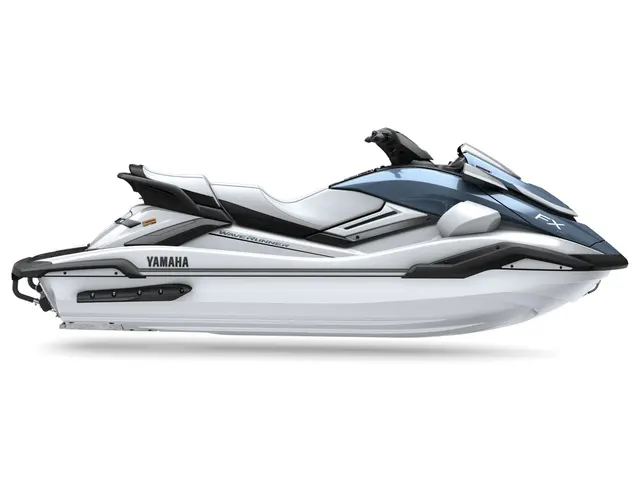
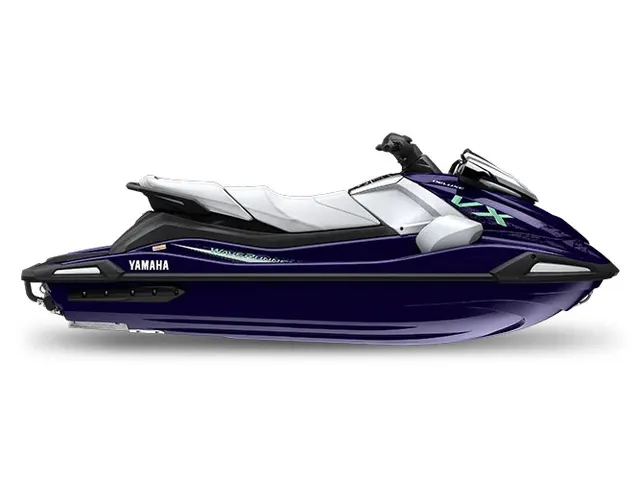
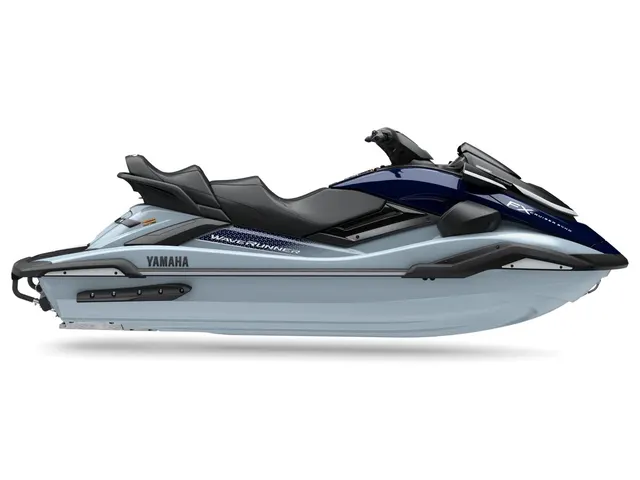
| Yamaha VX Deluxe (three-seat recreation PWC) | 2025–2026 | $12,899–$13,499 |
| Sea-Doo GTX Limited 325 (flagship touring PWC) | 2026 | $22,549–$22,949 |
| Crownline 200 FS (deck and fish-ski boat) | 2024 | $49,990, MSRP $59,990 |
| ALERA M23Q (premium pontoon) | 2026 | $116,560, MSRP $129,208 |
| Premier 250 Solaris REV (premium tritoon) | 2025 | $167,869 |
Two things to read out of that table. First, the entire PWC lineup fits inside the price of one entry-level boat. Second, boats spread across an enormous range — a fish-and-ski deck boat and a premium tritoon are not remotely the same purchase, and the pontoon end of this market is a luxury category. The tritoon side is covered in our pontoon buyer’s guide; the PWC side in the PWC buyer’s guide. Freight, prep, tax, and registration are on top of every line above.
What each costs to keep
Nobody can hand you a single ownership number honestly — it depends on where you store it, how you insure it, and how hard you ride. But the shape of the difference is consistent:
- Storage. A PWC on a trailer in your garage costs nothing. A boat that will not fit in a garage needs a rack, a slip, or a lift. In Lee and Collier counties that is the single largest recurring cost of boat ownership, and it starts the month you take delivery.
- Fuel. A PWC burns meaningfully less per hour than a 24-foot boat with a big outboard on the back. It also has a much smaller tank, which is a range limit rather than a saving.
- Service. Both want the same saltwater discipline: flush after every ride, rinse everything, watch the anodes. There is simply less of a PWC to maintain, and it comes to the service department on its own trailer.
- Registration. Florida registers by length class, so a PWC lands in the cheapest classes and a 24-foot boat in the next one up — § 328.72, Fla. Stat. (2026). The details, including the trailer, are in our registration and titling guide.
- Sales tax. Six percent state, plus the county surtax on the first five thousand dollars of the item — the sales tax guide has the county-by-county math and the vessel tax cap.
Trailering, launching, and the ramp
This is where PWC ownership quietly wins for a lot of families. A PWC and its trailer back down a ramp in a minute, float off in inches of water, and can be pushed around a parking lot by one person. If you have never launched anything before, you will be competent by the third trip.
A boat is a bigger commitment at every step: a heavier tow, a longer ramp cycle, a courtesy dock you have to hold in wind and current, and docking skills that take a season to feel natural. None of that is a reason to avoid it — it is a reason to be honest about who in the household is going to do it, and how often.
Crew, fishing, and the actual Saturday
Two riders is a PWC’s comfortable crew, and there is no shade, no head, and nowhere to put a cooler that is not a hatch. That is fine for a fast morning and wrong for a long day with grandparents.
Boats scale the other way. The Premier 250 Solaris REV listing shows seating for 17 — that is a category of day a PWC cannot attempt.
Fishing splits the same way. Purpose-built fishing PWC are real and popular here, with livewells and rod holders, and they will get you into skinny backwater a bigger hull cannot reach. What they cannot give you is deck space, shade, and three people casting at once. If fishing is the point rather than a bonus, look at boats.
And the sandbar Saturday, which is the most Southwest Florida question of all: both work, but they work differently. A PWC gets you there fast and beaches easily. A boat is the destination once you arrive — the shade, the music, the cooler, and the place to sit down.
The rules are nearly identical
Neither choice gets you out of the paperwork. Both must be titled and registered in Florida, and both operators need the Boating Safety Education Identification Card if born on or after January 1, 1988, to operate anything over 10 horsepower — § 327.395, Fla. Stat. (2026).
PWC then add rules a boat does not carry: everyone aboard or under tow wears a non-inflatable life jacket, the cutoff lanyard attaches to the operator, and there is no riding from a half hour after sunset to a half hour before sunrise — § 327.39, Fla. Stat. (2026). That last one is the rule people forget when they picture sunset cruises. Sunset cruises are a boat activity.
Which one should you buy?
| You are… | Buy |
|---|---|
| A couple who both want to drive | Two PWC, and stop pretending one will be enough |
| A family with teenagers | Two three-seat PWC, or one boat if the teenagers do not ride |
| A canal-home owner with a lift | Whichever you will step onto most — usually the boat |
| An angler first | A boat, unless your water is genuinely skinny backcountry |
| Entertaining four or more adults | A pontoon or tritoon |
| Testing whether you like boating at all | A PWC, every time — lower entry, easier exit, better resale demand here |
| Short on storage or tow vehicle | A PWC |
The answer a lot of people land on
Buy the PWC first. It is the cheaper mistake if you are wrong, the easier machine to sell if life changes, and the fastest way to learn this coast — its zones, its tides, its afternoon storms — before you commit to a hull that needs a slip.
Plenty of local families end up with both: a boat for the long days and a machine or two on a trailer for the mornings when one person wants an hour of water and nobody else is awake. That is not indecision. That is the correct answer arrived at expensively.
If you are still narrowing it down, start with buying your first jet ski in Southwest Florida, then walk the floor. Both sides of this decision are parked in the same building in Bonita Springs, which makes the comparison a lot easier to make in person than on a spec sheet. The rest of the water content lives in The Boathouse.
Laws current as of September 2026; verify with FWC/FLHSMV before you ride or launch. General information, not legal advice.
Power Lodge Florida, 28470 S Tamiami Trail, Bonita Springs — live inventory and today's price.
Quick answers
- Is a jet ski cheaper than a boat?
- Substantially, at every stage. On the Power Lodge floor as of September 2026, new personal watercraft were listed from $11,799 while the least expensive boat was listed at $49,990. Storage, fuel, and service scale the same way.
- Should I buy a jet ski or a boat for a family of four?
- A family of four fits on two three-seat personal watercraft or in one boat. Choose the boat if the day is about staying out together — shade, a cooler, lunch, and fishing. Choose two PWC if the day is about riding and the kids are old enough to ride their own.
- Can you fish from a jet ski?
- Yes, and purpose-built fishing PWC exist with livewells and rod holders. What they cannot give you is deck space, shade, and a place to stand and cast with three friends. Serious flats and nearshore anglers usually end up in a boat.
- Is a jet ski easier to launch than a boat?
- Much easier, especially alone. A PWC and trailer back down a ramp quickly, float off in inches of water, and are easy to hold at a courtesy dock. Docking a 24-foot boat in wind and current is a skill that takes a season to get comfortable with.
- Do jet skis and boats have the same rules in Florida?
- Mostly. Both must be titled and registered, and both operators need the Boating Safety Education ID Card if born on or after January 1, 1988. Personal watercraft add rules: worn non-inflatable life jackets, the cutoff lanyard, and no operation from a half hour after sunset to a half hour before sunrise.