Review · The Boathouse
Yamaha GP SVHO Review (and GP HO): Race-Bred WaveRunners for Riders Who Want the Edge
The lightest fast hull Yamaha builds, in two states of tune. One of them is the smartest performance buy on the floor, and it is not the supercharged one.
By The Outpost CrewUpdated 7 min read
How this review was built: from Yamaha's published specs, professional road tests, owner reports, and what the Power Lodge crew sees on the showroom floor and in the service bay — not a first-hand test ride. Prices are MSRP unless the live listing below says otherwise.How we review →
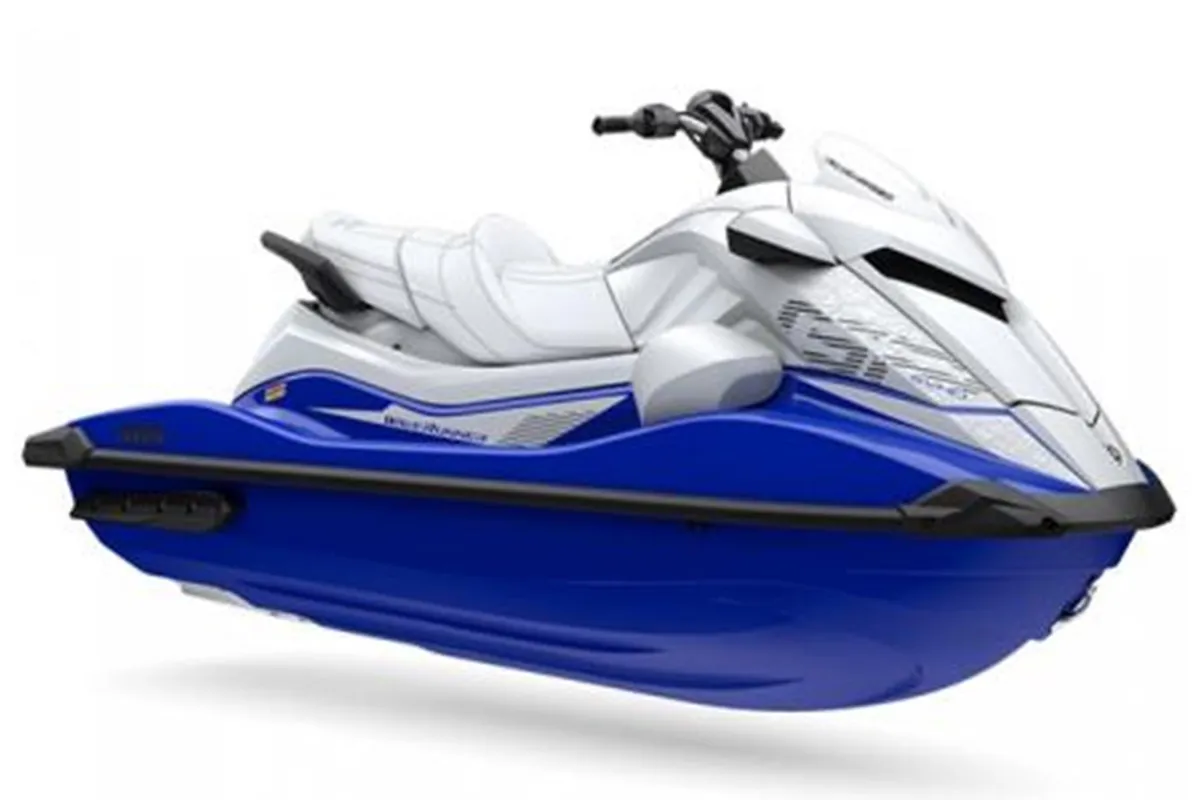
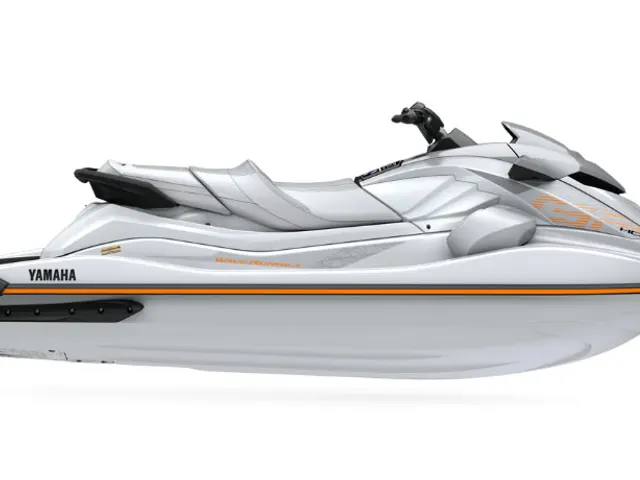
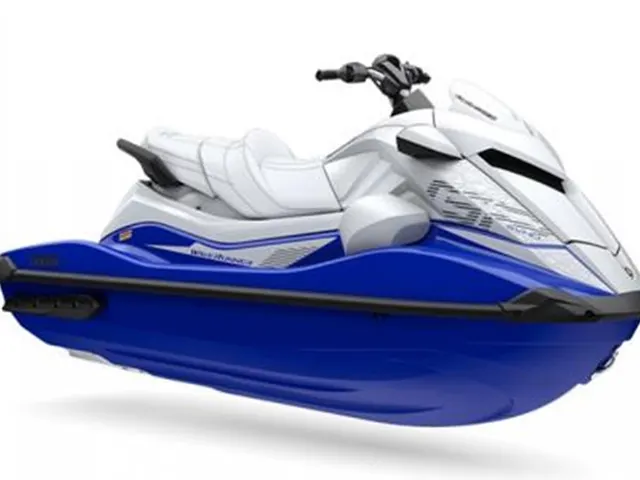
The Yamaha GP is the WaveRunner® for people who care more about the first 200 feet after a buoy than about anything that happens in a straight line. It is Yamaha’s performance hull: 10 feet 9 inches, the lightest fast platform the company builds, and the direct descendant of the GP1800R that spent years winning closed-course races. Power Lodge has it in both states of tune — two 2025 GP SVHO with Audio at $18,299 as listed, and two 2026 GP HO with Audio at $16,699.
The one thing to know before the specs: the GP HO is the version most riders should buy. It gives up roughly two miles an hour of top speed to the supercharged SVHO and saves you a supercharger, a third of the fuel bill at full throttle, and $1,600 as listed.
The other thing to know is who this hull is not for. Reviewers are unusually direct about it, and so are we.
What the Yamaha GP is
Yamaha’s performance line sits between the recreation VX hulls and the big FX touring platform, and it goes about it from the opposite direction: instead of adding length for comfort, the GP takes weight out for response. The NanoXcel2 hull material is what does it — jetdrift notes the current-generation GP hull came in 18 percent lighter than the one before it.
The result is 730 pounds dry for the Yamaha GP HO and 774 for the GP SVHO, against 948 for an FX Cruiser SVHO with the same supercharged engine. That is 174 pounds, or roughly a passenger, removed from a machine with identical power.
Both stocked trims include factory audio, which is not a given elsewhere in the Yamaha range for these model years — the with-Audio units are separate SKUs, and the plain versions genuinely do not have speakers. There is also one used 2021 GP1800R SVHO on the floor, the model this hull descends from directly.
| Spec | 2026 GP HO with Audio | 2025 GP SVHO with Audio |
|---|---|---|
| Engine | 1,898cc, four-cylinder, naturally aspirated | 1,812cc SVHO, four-cylinder, supercharged |
| Horsepower | Not published by Yamaha; about 200 hp estimated by jetdrift | Not published by Yamaha; about 250 hp estimated by jetdrift |
| Top speed | About 63–65 mph (jetdrift chart) | About 67 mph, limited (jetdrift chart) |
| Length × width | 10 ft 9 in × 4 ft 0 in | 10 ft 9 in × 4 ft 0 in |
| Dry weight | 730 lb | 774 lb |
| Seating | 3 riders | 3 riders |
| Fuel capacity | 18.5 gal | 18.5 gal |
| Storage | 28.4 gal | 28.4 gal |
| Trim | Performance automatic trim | Performance automatic trim |
| Reverse and braking | RiDE dual-throttle reverse and deceleration | RiDE dual-throttle reverse and deceleration |
| Listed at Power Lodge, September 2026 | $16,699 (2 units, 2026 model year) | $18,299 (2 units, 2025 model year) |
| MSRP, 2027 model year (Yamaha site) | From $17,499 | From $19,999 |
Source: yamahawaverunners.com (2027 model-year listings; same hull and engines as the units in stock). Specs and pricing are the manufacturer's published figures and can change by model year.
Engine and performance: HO or SVHO?
This is the whole decision, so here it is in numbers rather than adjectives.
The GP SVHO runs the supercharged, intercooled 1,812cc four. jetdrift reports 67 to 69 mph and 0 to 30 mph in under two seconds, and measures fuel consumption at over 20 gallons per hour at wide-open throttle. Closed-course figures for derestricted machines run higher; the machine you buy is limited, like every flagship in the category.
The GP HO runs the naturally aspirated 1,898cc engine — the largest-displacement engine without a supercharger in any personal watercraft (PWC), by Yamaha’s own claim. jetdrift puts it at about 200 hp estimated, 63 to 65 mph, and 13 to 14 gallons per hour at wide-open throttle.
So the supercharger buys you roughly two to four miles an hour of top speed, a harder shove between 30 and 60, and about a 50 percent increase in fuel burn when you are actually using it. On a hull that weighs 44 pounds less without it.
Where the SVHO earns the money is repeated hard acceleration — buoy work, running a course, jumping a wake and getting straight back on the throttle. Where the HO wins is every other Saturday, and every fuel stop.
On the water: what a race hull does and does not do
The GP’s calling card is direction change. jetdrift describes the platform as the “#1 choice for championship riders” and singles out its precise, fast turning, along with a top-loader intake grate that keeps the pump hooked up in chop where a lesser design would ventilate. That last one is not a marketing detail: losing the pump mid-corner in a two-foot bay chop is exactly the moment a race hull earns its design.
Here is the trade, stated by the same reviewers who like the machine. jetdrift is explicit that the GP is not a beginner’s WaveRunner and that families should look at the FX series instead. The swim platform is smaller than a touring machine’s. Storage is 28.4 gallons — respectable, but 16 gallons behind an FX Cruiser SVHO. And the seat is shaped for a rider who is holding on, not for a passenger who is lounging.
In Southwest Florida terms: the GP is superb from the Imperial River out through Estero Bay on a morning with some texture in the water, and it is the wrong machine for a three-adult run to a sandbar with a cooler. Both of those are honest days on the water. Only one of them is this hull’s.
Performance automatic trim helps more than the spec sheet suggests. It keeps the bow attitude sensible as speed and chop change, which on a light hull is the difference between a machine that feels lively and one that feels nervous.
What reviewers and owners say
jetdrift’s GP1800R coverage is the deepest sourced material on this platform and it cuts both ways: championship pedigree, precise handling, strong hookup — alongside a blunt warning that this is not a first machine and not a family one.
The head-to-head that matters most inside Yamaha’s own range is the GP against the FX Limited SVHO, which jetdrift has also written up. Same engine, two philosophies: 174 fewer pounds and a shorter hull against comfort, storage, and a bigger screen.
The used 2021 GP1800R SVHO on the floor is worth understanding in that context. It is the machine that made this hull’s reputation — the closed-course winner whose name still turns up in every performance-PWC argument — and it shares the supercharged 1,812cc engine with the current GP SVHO. The differences are generational rather than fundamental: a slightly smaller 24.6-gallon storage compartment and an older display. Someone who wants the race hull and does not need the newest screen has an argument to make there.
Owner culture around the GP is the most active in the Yamaha world — this is the platform people modify, and supercharger and clutch service history is the first thing experienced buyers ask about on a used one. The forums where those conversations live were not reachable during this research pass, so take that as a widely reported theme rather than a sourced claim. Our sourcing standards are on How we review.
Living with a GP in Southwest Florida
The salt routine is the same as every machine here and just as non-negotiable: flush after every ride in salt or brackish water, then rinse the hull and trailer. Details are in our salt-water maintenance guide. On the SVHO, put the supercharger service interval from the owner’s manual on a calendar.
The upside of a light hull shows up on land. At 730 to 774 pounds dry, a GP is meaningfully easier to launch, retrieve, and shuffle around a driveway than a 948-pound FX — a real advantage at a crowded ramp, and the reason some owners keep a GP as a second machine. Our trailering and launching guide has the ramp technique.
One local note: the GP rewards water with some chop in it and punishes indifference in a no-wake zone, where a nervous hull and a heavy throttle hand are a poor combination. The zones themselves are mapped in our guide to manatee zones and no-wake rules.
Recalls and known issues
None found for the Yamaha GP HO, GP SVHO, or GP1800R in the U.S. Coast Guard recall database as of September 2026, based on a spot-check of uscgboating.org’s recall listing. The manufacturer filter in that database is unreliable, so treat it as a point-in-time check.
That check matters more on a used machine. A PWC carries a HIN rather than a VIN — have the dealer run the specific hull’s HIN before you sign, and on the used GP1800R ask for the service history alongside it.
Price and what is on the floor
Two 2026 GP HO with Audio units are listed at $16,699 as of September 2026, and two 2025 GP SVHO with Audio units at $18,299, both matching the feed MSRP for their model years. Yamaha’s site lists the 2027 GP HO from $17,499 and the 2027 GP SVHO from $19,999.
There is also a used 2021 GP1800R SVHO on the floor — the previous-generation race machine, with 24.6 gallons of storage and the same supercharged engine family. The dealer does not publish a price on that unit, so see today’s price at Power Lodge. On any used supercharged machine, the questions are hours, service records, and whether the supercharger has been apart.
Freight, prep, and Florida tax, title, and registration are additional on every new-unit figure above.
How does the GP compare?
Inside Yamaha, the fork is comfort against response. The FX Cruiser SVHO at $21,599 as listed has the identical supercharged engine in a hull that is 12 inches longer, 174 pounds heavier, and carries 16 more gallons of gear. The VX Cruiser HO at $14,899 as listed has the same 1,898cc engine as the GP HO in the recreation hull, for about $1,800 less — slower to turn, far easier to live with.
Across the aisle, the Sea-Doo cross-shop depends on which GP you are looking at. The GTX 230 at $18,149 as listed matches the GP SVHO on price and top speed while being a touring machine rather than a sport one. The RXP-X 325 is the true rival to the GP SVHO — 325 published horsepower on a solo-focused hull, one on the floor at $21,099 as listed — and it is the machine GP buyers argue with most.
If you are still working out which class you belong in, the PWC buyer’s guide lays out the segments and where each one stops making sense.
Highs
- Lightest fast hull Yamaha builds — 730 lb for the GP HO
- Precise, quick direction change with genuine race pedigree
- Top-loader intake grate keeps the pump hooked up in chop
- GP HO delivers about 65 mph without a supercharger
- Factory audio on both stocked trims
- Easier to launch and trailer than a full-size touring machine
Lows
- Reviewers say plainly it is not a beginner machine
- 28.4 gallons of storage and a small swim platform
- Race-inspired seat is not a passenger lounge
- SVHO burns over 20 gal/hr at wide-open throttle
- Yamaha publishes no horsepower figures
- Only two of each trim on the floor
Live inventory and today's price on both GP trims.
Quick answers
- How fast is a Yamaha GP SVHO?
- About 67 mph as delivered — the limited top speed every flagship personal watercraft observes. jetdrift reports 67 to 69 mph for the GP SVHO and 0 to 30 mph in under two seconds, which is the number that actually describes the machine.
- What is the difference between the Yamaha GP HO and GP SVHO?
- The hull is identical. The GP HO runs the naturally aspirated 1,898cc engine, about 200 hp by jetdrift's estimate and roughly 65 mph. The GP SVHO runs the supercharged 1,812cc SVHO, about 250 hp estimated and 67 mph limited, and it burns considerably more fuel.
- Is the Yamaha GP good for beginners?
- No, and reviewers say so plainly. jetdrift calls the GP hull inappropriate for new riders: it is quick to change direction, the swim platform is small, and the power arrives fast. A VX or an FX is the machine to learn on.
- Can three people ride a Yamaha GP?
- It is rated for three riders, but the GP is a performance hull with a race-inspired seat and 28.4 gallons of storage. jetdrift's advice for families is the FX series instead, and that is the right call.
- How much is a Yamaha GP SVHO?
- Power Lodge lists two 2025 GP SVHO with Audio units at $18,299 as of September 2026, matching the feed MSRP for that model year. Yamaha's site lists the 2027 GP SVHO from $19,999.