Review · The Stable
Kawasaki Ninja 650 Review: The Everyday Sportbike for Riders Who Have Outgrown the 500
Nobody's dream bike, and that is most of the point. This is the motorcycle people keep for six years.
By The Outpost CrewUpdated 7 min read
How this review was built: from Kawasaki's published specs, professional road tests, owner reports, and what the Power Lodge crew sees on the showroom floor and in the service bay — not a first-hand test ride. Prices are MSRP unless the live listing below says otherwise.How we review →
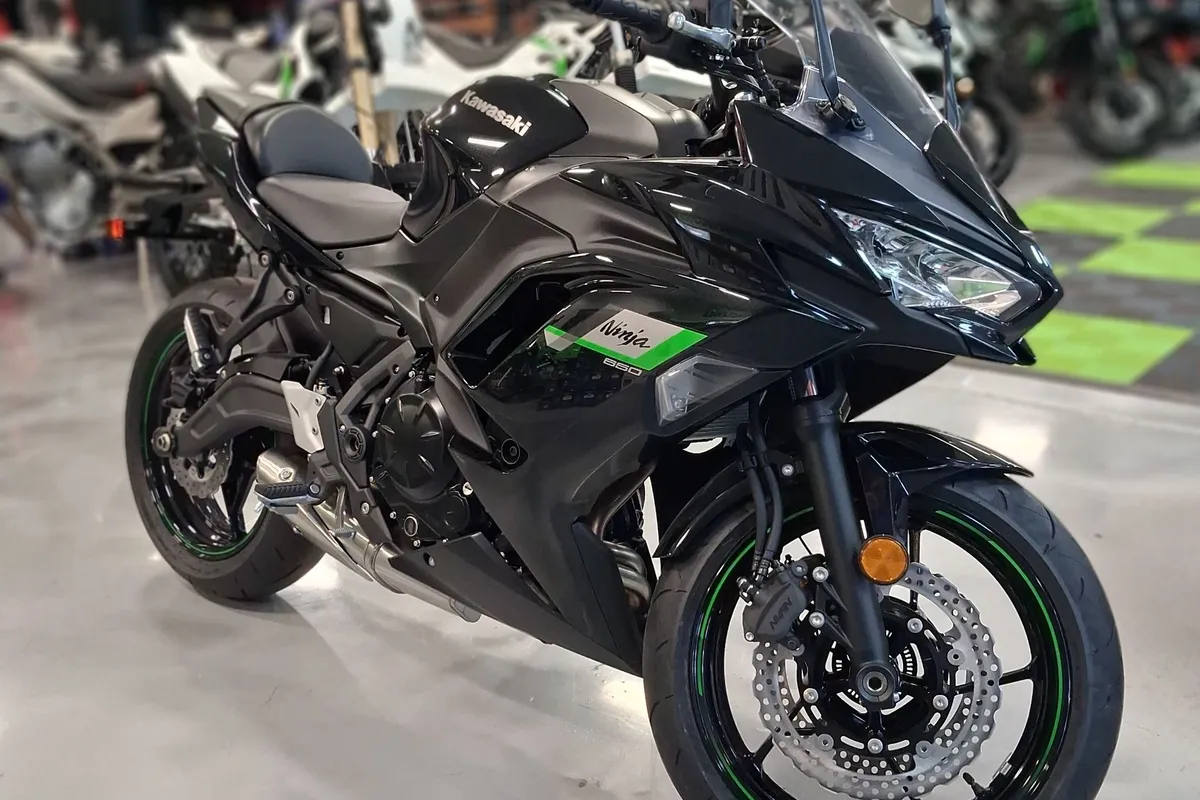
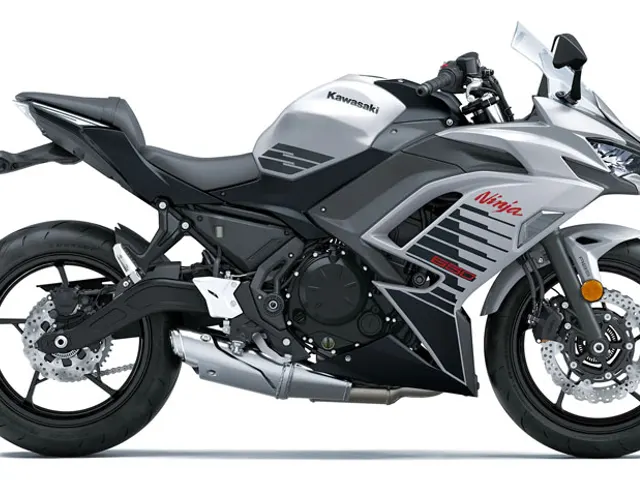
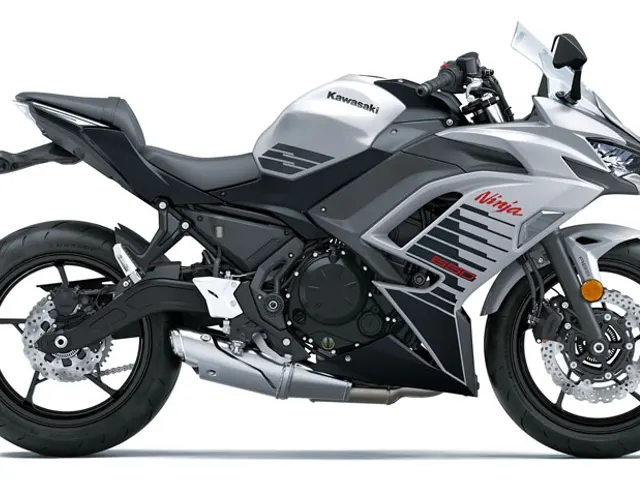
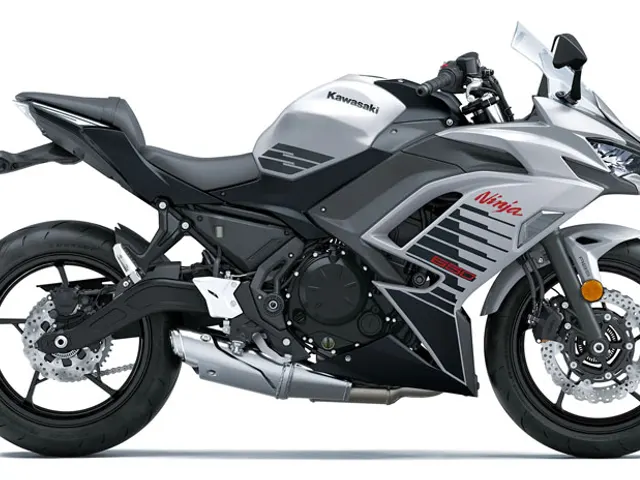
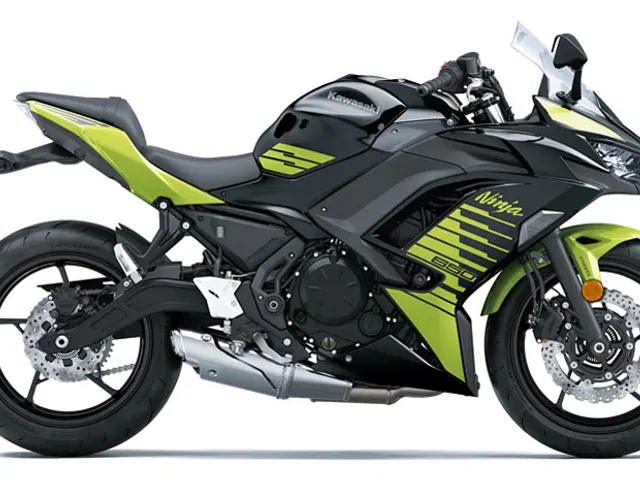
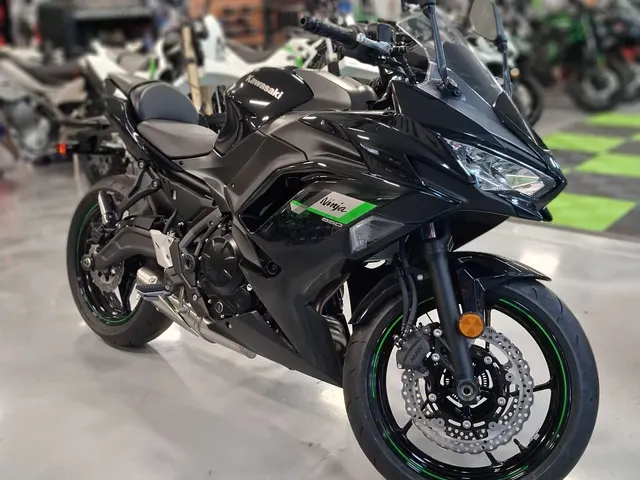
The 2026 Kawasaki Ninja 650 is the sportbike you buy when you have learned enough to know what you actually want, which for most people turns out to be more midrange and a seat you can sit on for two hours. It is a 649cc parallel twin making a published 67.0 horsepower and 48.5 lb-ft, in a 425.6-pound motorcycle with a 31.1-inch seat.
Who it is for: a rider stepping up from a 300 or a 500, a commuter who wants sport bodywork without sport ergonomics, and anyone who occasionally carries a passenger. Who it is not for: a first-time rider, and anyone shopping for track days.
The one thing to know: this bike is deliberately unexciting on paper, and that is why people keep them. It does everything a normal rider does, competently, for years, without asking anything of you.
What the Kawasaki Ninja 650 is
The middle rung of Kawasaki’s Ninja ladder. Above the Ninja 500 and well below the ZX supersport bikes, with full fairing, a twin-cylinder engine tuned for the street, and a riding position that is sport-shaped rather than sport-committed.
Kawasaki has been building a 650 twin in this slot for two decades and the formula has not moved much, because it did not need to. Six hundred forty-nine cubic centimeters of parallel twin is a superb amount of engine for public roads: enough torque to pass a truck in top gear, not enough power to get away from a rider who is paying attention.
Two bikes are on the floor from adjacent model years — four 2026 Ninja 650 ABS units and one 2025 — which is a useful thing when you are shopping, and a thing to be careful about. On the 2026 bike, Kawasaki’s own page lists KTRC traction control and smartphone connectivity through the Rideology app as standard, with ABS on the ABS models. The 2025 unit is listed in our feed without the ABS badge, so ask for the spec card on that specific machine rather than trusting a summary — rider-aid content is exactly what moves between model years and trims on a bike like this, and two minutes with the actual sheet settles it.
| Engine | 649cc liquid-cooled parallel twin, four-stroke |
|---|---|
| Horsepower (Kawasaki published) | 67.0 hp @ 8,000 rpm |
| Torque (Kawasaki published) | 48.5 lb-ft @ 6,700 rpm |
| Transmission | Six-speed with assist and slipper clutch |
| Seat height | 31.1 in |
| Curb weight | 425.6 lb (ABS) |
| Fuel capacity | 4.0 gal |
| Brakes | Front and rear disc; ABS on the ABS models |
| Traction control | KTRC (Kawasaki Traction Control), standard for 2026 |
| Connectivity | Smartphone pairing via Rideology the App |
| MSRP, 2026 ABS | $8,199 |
| Listed on our floor, 2026 ABS | $7,699 |
| Listed on our floor, 2025 | $6,899 (MSRP $7,399) |
Source: kawasaki.com. Specs and pricing are the manufacturer's published figures and can change by model year.
Engine and performance: 48.5 lb-ft is the real number
The horsepower figure is not what makes this motorcycle work. The 48.5 lb-ft at 6,700 rpm is, and more precisely the fact that most of it is available a long way below that.
Practically, that means the Ninja 650 does not require anything from you. Sixth gear at 50 mph, roll the throttle, and it goes. There is no downshift-twice ritual to pass a landscaping trailer on Bonita Beach Road, and no penalty for being in the wrong gear because there is no wrong gear.
Against the Ninja 500 that most buyers are stepping off, the gap is more real than the 16 published horsepower suggests, because the extra torque sits everywhere in the range rather than at the top. Against a four-cylinder like the ZX-4RR, the philosophies invert completely: the 400 four wants 11,000 rpm and the 650 twin never asks for it.
The assist and slipper clutch does two useful things and one of them is invisible. The light lever you notice in February traffic. The other you never see: it settles the rear wheel when a tired rider drops two gears at once, so the bad moment simply does not happen.
On the road
The ergonomics are the reason this bike converts commuters into long-term owners. The bars are higher and closer than the bodywork implies, the seat is genuinely a seat, and the pegs do not fold you up. RideApart’s test of the platform landed on friendly torque and a comfortable sport riding position, and that is the machine six model years later.
At 425.6 pounds it is substantial without being heavy, and the 31.1-inch seat puts most adults flat-footed or close to it. The 4.0-gallon tank gives real range, which matters east of Naples where the gas stations are spaced for cars.
The place it is honestly good and rarely credited is two-up. Press coverage has consistently rated the Ninja 650’s pillion accommodation as the best in the small-Ninja range. That is a low bar cleared well rather than a touring endorsement — an hour to Boca Grande with a passenger is pleasant, and a day is not.
What it is not is a track bike. The suspension is set for road compliance and the engine makes its power where road riding happens. Press consensus has been consistent about this since the platform launched, and Kawasaki sells you a ZX-6R if that is what you wanted.
What reviewers and owners say
The perennial second bike. The press position on the Ninja 650 has not moved in years: the right motorcycle for someone outgrowing a 300 or 500, and the wrong one for someone chasing lap times. That consistency is worth more than a rave.
Low-maintenance loyalty. The strongest theme in owner reporting is unglamorous — these bikes get ridden a lot and go wrong rarely. Riders keep them for years and replace them with another one.
Buzzy mirrors. The most common owner complaint, raised the way people raise things they have decided to live with. At certain revs the mirrors blur.
The rear shock. The second complaint, and the more substantive one. The budget shock is the component owners upgrade first when they start riding harder or carrying a passenger regularly. It is a known and solvable weak point rather than a defect.
Living with a Ninja 650 in Southwest Florida
Heat. August stop-and-go cooks every bike in this class, and the 650 is no exception — though a twin cooks its rider more gently than a four does, which is a real point in its favor here. Mesh gear and route timing do the rest — our heat and rain playbook has the specifics.
Salt. Coastal parking puts the chain and every exposed fastener on borrowed time. Wash the salt off and lube ahead of the mileage interval, and keep Kawasaki’s oil and valve schedule honest rather than stretching it because the bike feels fine.
Storms. Summer rain runs on a schedule you can plan around, and ABS plus decent tread turns it into an inconvenience rather than a hazard. Hurricane season runs June 1 to November 30; when a storm is coming, the bike rides it out indoors on a tender.
The roads suit it. Tamiami Trail east to Everglades City, the Sanibel and Captiva run, Corkscrew Road on a Sunday morning — flat, long, and open is what a 650 twin is for. They are all mapped in the best motorcycle rides in Southwest Florida.
Recalls and known issues
For the 2025 and 2026 Kawasaki Ninja 650, none found in the NHTSA database as of September 2026.
That covers the model, not the machine in front of you. Run the VIN at nhtsa.gov/recalls before you sign anything, new or used. Thirty seconds, and it is the only way to be certain about one specific motorcycle.
Price and what is on the floor
As of September 2026 the Power Lodge floor holds four 2026 Ninja 650 ABS units listed at $7,699, against an $8,199 MSRP for that model year, and one 2025 unit listed at $6,899 against a $7,399 MSRP for its year. Freight, prep, tax, and tag are separate — ask for an out-the-door figure, which is the only number worth comparing against anything you saw online.
The model-year question is the interesting one here, and it is worth about $800. Sit on both, ask for both spec cards, and decide whether whatever separates them is worth the difference to you specifically.
How it compares
Kawasaki Ninja 500 ABS, from $5,799 at MSRP, is the bike most Ninja 650 buyers are stepping off. It is 48 pounds lighter with a 30.9-inch seat and 51 published horsepower, and it is the better first motorcycle by a clear margin. If you are not certain you have outgrown it, you have not. The Ninja 500 review makes that case in full.
Kawasaki Ninja ZX-6R, listed from $11,399 on our floor, is the next rung and a completely different animal: a 636cc supersport four with a published 127 horsepower, a 32.7-inch seat, and roughly 11 more pounds. It is more motorcycle than most riders use on public roads, and about $3,700 more.
Kawasaki Z650 ABS, listed at $7,249 against a $7,749 MSRP for the 2025 model year, is this engine in a naked chassis with a lower 30.9-inch seat. If it is the fairing you are unsure about, ride that before you decide against the platform.
Honda CB650R E-Clutch, listed at $8,699, is the cross-shop worth taking seriously and it is on the same floor. About $1,000 more buys a 649cc inline-four with more top-end and less midrange, plus an automated clutch. Different character, same money bracket — see the CB650R E-Clutch review.
Shoppers coming from the Suzuki SV650 side of the market will find the Ninja 650 the more modern, better-equipped bike; shoppers from a bigger naked will find it modest. Both reactions are correct.
Highs
- 48.5 lb-ft at 6,700 rpm — usable torque everywhere in the range
- Sport bodywork with genuinely comfortable ergonomics
- Assist and slipper clutch lightens the lever in traffic
- Best pillion accommodation of the small Ninjas
- Reputation for going a long time without trouble
Lows
- Budget rear shock is the first thing owners upgrade
- Mirrors blur at certain revs
- Not a track bike, and not pretending to be
- Still a step too much motorcycle for a first-time rider
- 31.1-inch seat is taller than the cruiser alternatives
Everything on this page comes from Kawasaki’s published specifications, professional road tests, owner reports, and what the crew sees on the floor and in the service bay. Our standard is on how we review. If you are not licensed yet, the Florida motorcycle endorsement guide is the first step, and the rest of the street coverage is in The Stable.
Five units across two model years. Live inventory and today's price.
Quick answers
- Is the Kawasaki Ninja 650 a good motorcycle?
- Yes, and it is the one we point riders at when they have outgrown a 300 or a 500. Kawasaki publishes 67.0 horsepower and 48.5 lb-ft from the 649cc twin, in a 425.6-pound bike with a 31.1-inch seat and a relaxed sport riding position.
- Is the Kawasaki Ninja 650 good for beginners?
- It is doable for a disciplined adult, but the Ninja 500 is the safer start. The 650 carries about 48 more pounds and 16 more published horsepower, and the power arrives lower in the rev range, which is exactly where an inexperienced right hand causes trouble.
- How fast is the Kawasaki Ninja 650?
- Kawasaki does not publish a top speed. It publishes 67.0 horsepower at 8,000 rpm and 48.5 lb-ft at 6,700 rpm, which means the posted 70 on I-75 or Alligator Alley happens well below peak with a large reserve for passing.
- What is the difference between the Ninja 650 and the ZX-6R?
- Different missions entirely. The Ninja 650 is a 649cc twin making its torque at 6,700 rpm for commuting and weekend riding. The ZX-6R is a 636cc supersport four with a published 127 horsepower that lives near 15,000 rpm and costs about $4,000 more.
- Is the Kawasaki Ninja 650 good two-up?
- It is the best of the small Ninjas for a passenger — press coverage has consistently rated its pillion accommodation above the 500's. Do not confuse that with a touring bike; it is a comfortable hour rather than a comfortable day.
- How much is the Kawasaki Ninja 650?
- Four 2026 Ninja 650 ABS units are listed at $7,699 on the Power Lodge floor as of September 2026, against an $8,199 MSRP for that model year, plus one 2025 unit listed at $6,899 against a $7,399 MSRP. Freight, prep, tax, and tag are extra.