Review · The Boathouse
Sea-Doo FishPro Trophy 170 Review: Fishing the Southwest Florida Backcountry From a PWC
A 146-inch hull with a livewell, a pedestal seat, and a trolling mode — built for exactly the shallow, mangrove-lined water that a flats boat costs four times as much to reach.
By The Outpost CrewUpdated 8 min read
How this review was built: from Sea-Doo's published specs, professional road tests, owner reports, and what the Power Lodge crew sees on the showroom floor and in the service bay — not a first-hand test ride. Prices are MSRP unless the live listing below says otherwise.How we review →
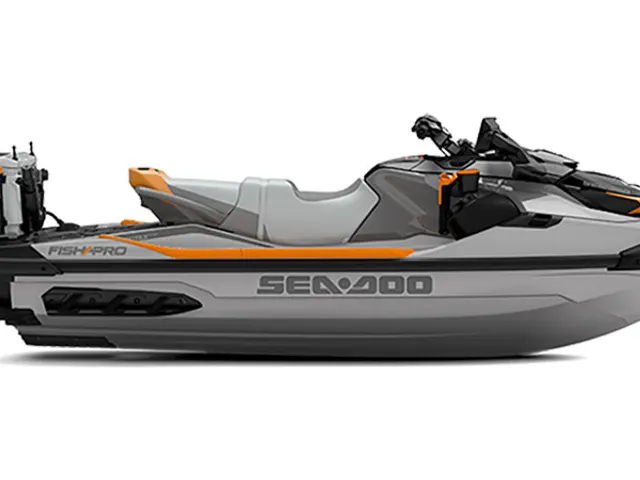
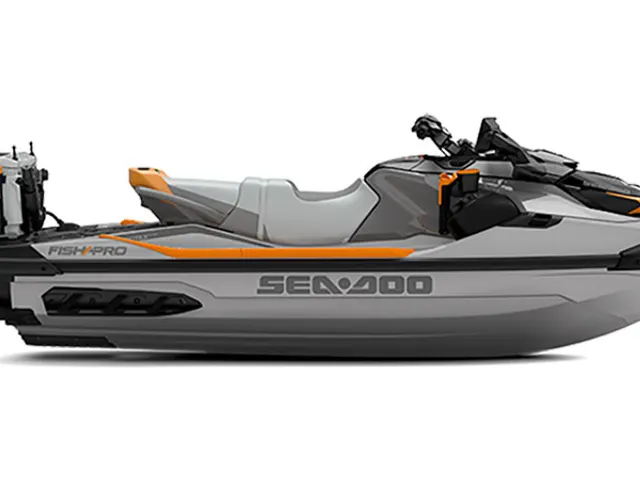
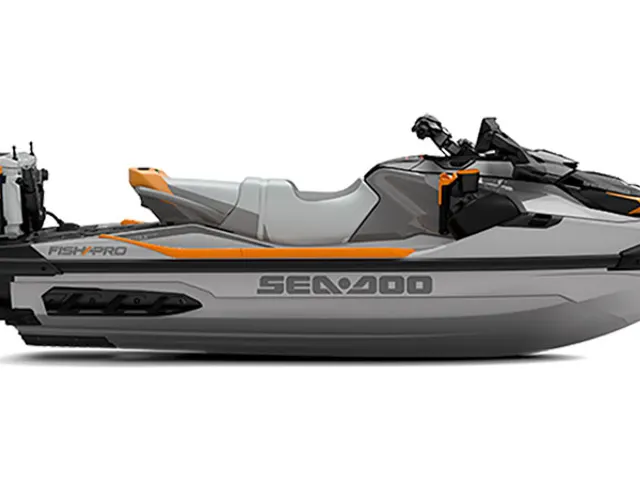
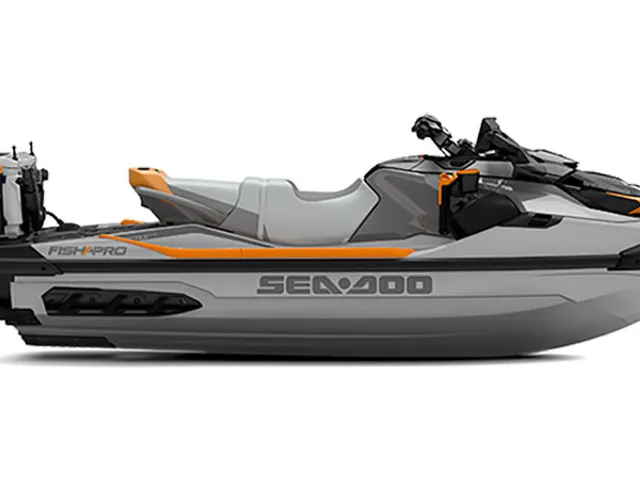
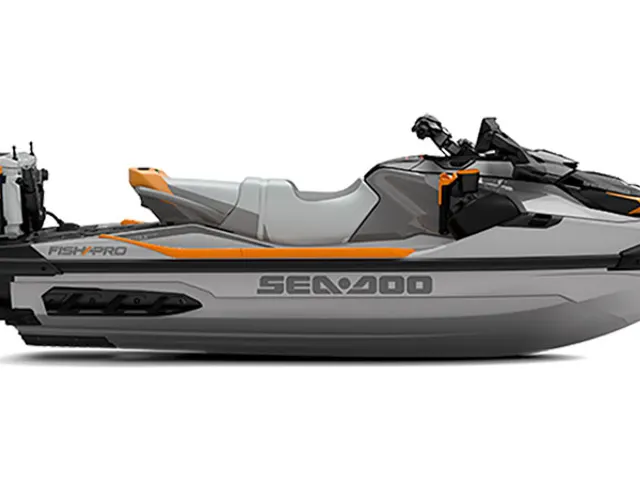
The 2026 Sea-Doo® FishPro Trophy 170 is a personal watercraft (PWC) built to be fished from, and it is the only machine on the Power Lodge floor that can honestly claim it. The hull is stretched to 146.8 inches, the rear section of the seat converts to a pedestal, there are five rod holders, a 13.5-gallon quick-connect cooler doubles as a livewell, and the machine has a trolling mode. Five are in stock, listed from $21,899 to $22,649 as of September 2026.
The one thing to know: this is not a flats boat, and the shops that sell flats boats will tell you so at length. What it is instead is a machine that draws very little water, gets to Pine Island Sound or the edge of the Ten Thousand Islands quickly, and costs a fraction of what a purpose-built skiff does — while carrying a fraction of the gear and one fewer angler.
For a certain kind of Southwest Florida fishing — solo or two-up, shallow, mangrove-lined, back where a bigger boat has to think about it — that trade is a good one.
What the Sea-Doo FishPro Trophy 170 is
Sea-Doo builds a small sport-fishing family, and the Trophy is the top of it. The starting point is the ST3 touring hull, extended to 146.8 inches — nearly a foot longer than a GTX — for stability at rest, which is the condition a fishing platform actually spends most of its time in.
The equipment list from Sea-Doo’s own model page is specific and worth reading before you take anyone’s summary of it: five fishing rod holders, a fish finder and GPS, the modular swivel seat whose rear portion transforms into a pedestal seat, a quick-connect livewell, a bench seat, trolling mode, gunwale footrests, an anchoring system, and a LinQ cooler with livewell rated at 13.5 gallons.
Two items on the machines in stock come from the dealer’s unit sheet rather than that page: the fish finder is specified as a Garmin 9-inch GPS unit with an in-hull mid-CHIRP transducer, and the units carry iDF and iBR along with a 100-watt audio system. Sea-Doo’s model page describes the electronics generically, so confirm the exact hardware on the specific hull.
All five units on the floor are 2026 machines in Shark Grey/Orange Crush.
| Engine | Rotax 1630 ACE, three-cylinder, naturally aspirated |
|---|---|
| Horsepower | 170 hp, published by Sea-Doo |
| Length × width | 146.8 in × 49.6 in |
| Dry weight | 898 lb |
| Seating | 3 riders; modular swivel seat with pedestal conversion |
| Fuel capacity | 18.5 gal |
| Total storage | 40.7 gal, including the LinQ fishing cooler (39.6 gal listed on the units in stock) |
| Livewell | LinQ cooler with livewell, 13.5 gal, quick-connect |
| Rod holders | 5 |
| Fishing modes | Trolling mode |
| Anchoring | Anchoring system |
| Footrests | Gunwale footrests |
| Display | 10.25-inch touch display |
| Top speed | About 55–58 mph (jetdrift) |
| Listed at Power Lodge, September 2026 | $21,899–22,649 (5 units, 2026 model year) |
| MSRP, 2027 model year (Sea-Doo site, September 2026) | From $22,949 |
Source: sea-doo.brp.com (2027 listing, same generation); Garmin, iDF, iBR and audio details from the Power Lodge unit sheet. Specs and pricing are the manufacturer's published figures and can change by model year.
Engine and performance: why 170 horsepower is the right number
The naturally aspirated Rotax 1630 ACE at 170 published horsepower is the same engine used in the GTX 170, and on a fishing machine it is the correct choice rather than a compromise. jetdrift puts the FishPro at about 55 to 58 mph and — more usefully — at roughly 63 miles of conservative range.
Range is the specification that governs a fishing day. An 18.5-gallon tank on a naturally aspirated engine is what lets you run from a ramp near Bonita Springs down past Wiggins Pass, fish for several hours at trolling speeds, and get back without arithmetic. A supercharged machine would be faster to the spot and considerably worse at everything after that.
Trolling mode is the other half of the drivetrain story. It holds a low, steady speed the throttle alone cannot manage smoothly, which is the difference between actually trolling a bait and repeatedly overshooting it. jetdrift’s review treats it as one of the features that makes the platform legitimate rather than decorative.
On the water: fishing a PWC in Southwest Florida
The case for this machine is geographic. Estero Bay, the back side of Pine Island Sound, the mangrove edges south toward the Ten Thousand Islands — this is shallow, structure-heavy water where draft matters more than length and where a big boat spends its day being careful. A PWC gets in, gets shallow, and gets out.
Three features do the real work once you are there. The pedestal seat is the one jetdrift singles out, calling the swivel arrangement transformative, and the reasoning is obvious the first time you think about casting: sitting astride a saddle facing forward is a terrible fishing position, and sitting sideways on a pedestal with your feet on the gunwale footrests is a normal one. The livewell is a quick-connect unit that comes off entirely when you are not fishing, which keeps the machine usable as a machine. And iDF — Sea-Doo’s Intelligent Debris-Free pump — earns its name in grass and around structure, where the alternative is getting in the water to clear the intake.
Now the honest limits. Storage is 40.7 gallons total by Sea-Doo’s figure, and the units in stock list 39.6 — generous for a PWC, small for a fishing platform. There is no shade, no dry cabin, and nowhere to get out of the 3:40 storm. Three seats and 898 pounds dry means two anglers and gear is the practical load, not three anglers and gear.
And there is one behavior that owners on the Seadooforum fishing board raise repeatedly and that anyone buying this machine should know before the first trip: sitting at anchor with the stern to a swell can put water over the back of a PWC. A thread there documents a 2022 FishPro Sport that hydro-locked while anchored and fishing. Anchor bow into the swell, keep an eye on the bilge, and treat the anchoring system as a tool that requires a decision about orientation rather than a park brake.
What reviewers and owners say
jetdrift’s FishPro review is the deepest sourced coverage of the platform and it is favorable on specifics rather than in general: the swivel seat, the quick-connect livewell, the dual-battery setup, and iDF around structure, plus the speed and range figures above.
Owner conversation on Seadooforum’s fishing board is the most useful reading a prospective buyer can do, precisely because it is not promotional. The recurring threads are worth naming plainly: questions about whether livewell issues on earlier model years were resolved, an iBR failure reported on a 2021 Trophy, the anchored hydro-lock incident mentioned above, and a general insistence on watching bilge drains. Alongside those sits genuine enthusiasm from people running these machines into open water.
None of that reads as a machine to avoid. It reads as a machine with more systems than a standard PWC — a livewell pump, a fish finder, a dual battery, an anchoring system — and correspondingly more things that want checking before a trip.
Living with a FishPro Trophy in Southwest Florida
The flush-and-rinse routine after every salt ride applies with extra force here, because the livewell plumbing and the transducer are additional salt-water paths that a standard machine does not have. Our salt-water maintenance guide has the sequence; add the livewell pump and hoses to it.
At 898 pounds dry and 146.8 inches long, this is a big PWC and it wants a trailer sized accordingly. Our trailering and launching guide covers ramp technique. Where the length pays off is at rest — this is the most stable machine on our floor to stand or lean on, which is the entire point.
For where to actually take it, our guide to riding and fishing water in Southwest Florida covers the bays, passes, and backcountry runs, including which of them are worth the trip and which are more work than they look.
Recalls and known issues
None found for the Sea-Doo FishPro Trophy in the U.S. Coast Guard recall database as of September 2026, based on a spot-check of uscgboating.org’s recall listing. The BRP entries present in that database are for the Sea-Doo Switch pontoon line, which Power Lodge does not stock.
The database’s manufacturer filter is unreliable, so treat that as a point-in-time check. A PWC carries a HIN rather than a VIN — have the dealer run the specific hull’s HIN for open campaigns before delivery, and given the owner reports above, ask specifically about the livewell and iBR systems on the unit you are buying.
Price and what is on the floor
Five 2026 FishPro Trophy 170 units are listed from $21,899 to $22,649 as of September 2026, with the feed MSRP for that model year at $22,649. Sea-Doo’s site lists the 2027 FishPro Trophy from $22,949.
That is flagship money for a 170-horsepower machine, and it should be understood as what it is: you are paying for the fishing package and the stretched hull, not for performance. Freight, prep, and Florida tax, title, and registration are additional.
How does the FishPro Trophy compare?
Inside Sea-Doo’s range, the honest alternative is the GTX 170: the same engine and the same braking and debris systems on a shorter hull for $17,149 as listed. If you will fish from the machine four times a year, buy the GTX and a rod holder. If fishing is the reason you are buying at all, the Trophy’s livewell, pedestal seat, trolling mode, and anchoring system are not things you can retrofit convincingly. The Wake Pro 230 at $18,599 as listed is the other specialist in the family, aimed at towing rather than fishing.
Across the aisle, Yamaha’s answer is the accessory route rather than a purpose-built machine — an FX HO with Audio at $17,799 as listed plus the mounts and gear to make it fish. That approach saves money and gives up the pedestal seat, the integrated livewell, and trolling mode, which is a real gap rather than a marketing one.
If you are still deciding whether a PWC is the right platform at all, our comparison of a PWC against a boat is the more useful starting point, and the PWC buyer’s guide maps the rest of the field.
Highs
- Purpose-built fishing package: livewell, pedestal seat, five rod holders, trolling mode
- 146.8-inch hull is the most stable platform on our floor at rest
- About 63 miles of conservative range from a naturally aspirated engine
- iDF clears grass from the pump without getting in the water
- Quick-connect cooler comes off when you are not fishing
- 10.25-inch display and Garmin electronics on the units in stock
Lows
- Flagship price for a 170-horsepower machine
- 898 lb dry and nearly 12.5 feet long — a serious trailer job
- No shade, no dry storage, no shelter from an afternoon storm
- Two anglers and gear is the real load
- Owner reports of livewell and iBR issues on earlier model years
- Water over the stern at anchor is a documented risk
Live inventory and today's price on all five.
Quick answers
- Does the Sea-Doo FishPro Trophy have a livewell?
- Yes. Sea-Doo lists a LinQ cooler with livewell at 13.5 gallons, described as a quick-connect unit, which counts toward the 40.7 gallons of total storage on the model page. It comes off the machine when you are not fishing.
- How fast is a Sea-Doo FishPro Trophy?
- About 55 to 58 mph, per jetdrift, from the naturally aspirated 170-horsepower Rotax 1630 ACE. jetdrift also puts conservative range at around 63 miles, which is the number that matters more when you are planning a run into the backcountry.
- How many rod holders does the FishPro Trophy have?
- Five, per Sea-Doo's model page, alongside the anchoring system, gunwale footrests, and the modular seat whose rear section converts to a pedestal seat.
- Do you need a fishing license to fish from a personal watercraft in Florida?
- Yes. Florida requires a recreational saltwater license to take or attempt to take saltwater species, and it applies regardless of the vessel you are fishing from. Licenses are issued through GoOutdoorsFlorida.com and county tax collectors — check FWC for the current categories and exemptions.
- Sea-Doo FishPro Trophy or GTX 170 — what is the difference?
- Same 170-horsepower engine, different mission. The Trophy adds 11 inches of hull, the livewell, five rod holders, the pedestal seat, trolling mode, and the anchoring system, for roughly $4,750 to $5,500 more as listed. If you will not fish from it, the GTX 170 is the better buy.